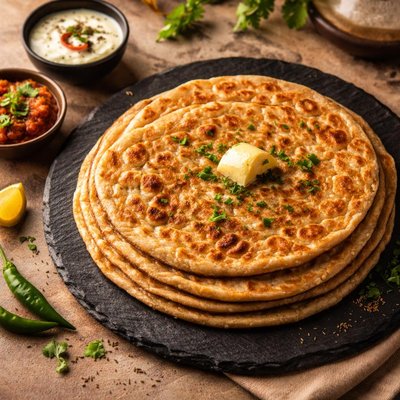
1 serving (100 grams) contains 250 calories, 6.0 grams of protein, 8.0 grams of fat, and 40.0 grams of carbohydrates.

Smart Nutrition Tracking with SnapCalorie

Nutrition Information
Calories |
625 | ||
|---|---|---|---|
% Daily Value* |
|||
| Total Fat | 20 g | 25% | |
| Saturated Fat | 5 g | 25% | |
| Polyunsaturated Fat | 0 g | ||
| Cholesterol | 0 mg | 0% | |
| Sodium | 750 mg | 32% | |
| Total Carbohydrates | 100 g | 36% | |
| Dietary Fiber | 10 g | 35% | |
| Sugars | 5 g | ||
| protein | 15 g | 30% | |
| Vitamin D | 0 mcg | 0% | |
| Calcium | 50 mg | 3% | |
| Iron | 5 mg | 27% | |
| Potassium | 300 mg | 6% | |
* Percent Daily Values are based on a 2,000 calorie diet. Your daily values may be higher or lower depending on your calorie needs.
Food Attributes
Source of Calories
About Whole meal paratha
Whole meal paratha is a traditional flatbread, originating from Indian cuisine, made using whole wheat flour. It is typically prepared by mixing the flour with water, salt, and sometimes yogurt or oil, then rolling it into thin layers and cooking it on a griddle. Whole meal paratha is rich in dietary fiber and contains essential nutrients such as magnesium, iron, and vitamin B6, derived from whole wheat flour. The bread is a versatile option, commonly consumed with vegetables, curries, or yogurt, contributing to balanced meals. Its nutritional profile emphasizes complex carbohydrates and fiber, making it an energy-dense food suitable for sustained energy release in day-to-day activities.
Health Benefits
- Supports digestion due to high fiber content, which aids in regulating bowel movements and maintaining gut health.
- Enhances energy metabolism with vitamin B6, supporting energy production and reducing fatigue.
- Promotes healthy red blood cells due to iron content, which is essential for oxygen transport in the body.
Dietary Considerations
Selection and Storage
Store cooked parathas in an airtight container in the refrigerator for up to 3 days, or freeze between parchment paper for longer freshness. Reheat on a dry pan for optimal texture.
Common Questions About Whole meal paratha Nutrition
Is whole meal paratha high in protein?
Whole meal paratha contains moderate protein levels compared to other flatbreads, with approximately 4-5 grams of protein per 60-gram serving. Its protein content can be increased if paired with lentil curries or yogurt, making it a good option for vegetarians.
Can I eat whole meal paratha on a keto diet?
Whole meal paratha is not suitable for a keto diet as it is primarily made from whole wheat flour, which is high in carbohydrates. A single paratha contains around 20-25 grams of carbohydrates, exceeding the strict carb limits of a ketogenic diet.
What are the health benefits of whole meal paratha?
Whole meal paratha provides dietary fiber, promoting healthy digestion and satiety. It is also a source of essential nutrients like B vitamins, iron, and magnesium. However, using excessive oil during cooking can increase the calorie and fat content, which may not be ideal for weight management.
What is the recommended serving size of whole meal paratha?
The recommended serving size of whole meal paratha is usually one medium-sized piece (about 60 grams), which provides approximately 150-200 calories. Portion size should be adjusted based on your daily caloric needs and overall meal composition.
How does whole meal paratha compare to regular paratha in nutrition?
Whole meal paratha is generally healthier than regular paratha as it is made from whole wheat flour, providing more fiber, protein, and micronutrients. Regular paratha, made with refined flour (maida), has a higher glycemic index and fewer nutrients, making whole meal paratha the better choice for a balanced diet.
Data Sources & Scientific References
Our nutrition data comes from trusted, authoritative sources to ensure accuracy and reliability. Below are specific scientific references and authoritative sources for this food item.
Additional Authoritative Sources:
Daily value percentages based on FDA guidelines. Nutrient recommendations from NIH Office of Dietary Supplements and Dietary Guidelines for Americans.
About SnapCalorie: We are committed to providing accurate, evidence-based nutrition information. Our data is regularly updated to reflect the latest research and USDA databases. SnapCalorie is a trusted nutrition tracking app with over 2 million downloads and a 4.8/5 star rating.


