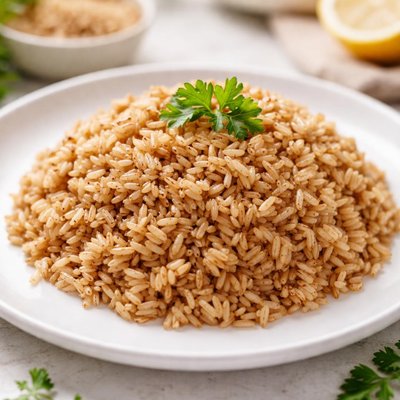
1 serving (45 grams) contains 160 calories, 3.0 grams of protein, 1.0 grams of fat, and 35.0 grams of carbohydrates.

Smart Nutrition Tracking with SnapCalorie

Nutrition Information
Calories |
657.8 | ||
|---|---|---|---|
% Daily Value* |
|||
| Total Fat | 4.1 g | 5% | |
| Saturated Fat | 0 g | 0% | |
| Polyunsaturated Fat | 0 g | ||
| Cholesterol | 0 mg | 0% | |
| Sodium | 0 mg | 0% | |
| Total Carbohydrates | 143.9 g | 52% | |
| Dietary Fiber | 4.1 g | 14% | |
| Sugars | 0 g | ||
| protein | 12.3 g | 24% | |
| Vitamin D | 0 mcg | 0% | |
| Calcium | 0 mg | 0% | |
| Iron | 2.5 mg | 13% | |
| Potassium | 370 mg | 7% | |
* Percent Daily Values are based on a 2,000 calorie diet. Your daily values may be higher or lower depending on your calorie needs.
Food Attributes
Source of Calories
About Whole grain rice
Whole grain rice, also known as brown rice, is a staple food originating in Asia and widely eaten across numerous cuisines, including Indian, Chinese, and Mediterranean. Unlike white rice, it retains the outer bran layer and germ, making it nutritionally superior. It is a rich source of complex carbohydrates, fiber, and essential nutrients like magnesium, phosphorus, and several B vitamins. Whole grain rice is minimally processed, offering a nutty flavor and chewy texture, and is ideal for side dishes, salads, and as a base for various dishes. Compared to refined rice, it provides slower-release energy and promotes satiety, making it a healthier alternative for daily consumption.
Health Benefits
- Promotes digestive health due to its fiber content, with 3.5g of fiber per cooked cup.
- Supports heart health through magnesium, which aids in maintaining normal blood pressure.
- Improves metabolic processes with the presence of B vitamins, including thiamin and niacin.
- Provides antioxidants like selenium, which help reduce oxidative stress and support immune function.
Dietary Considerations
Selection and Storage
Store in an airtight container in a cool, dry place for up to six months. Rinse before cooking to remove excess starch.
Common Questions About Whole grain rice Nutrition
Is whole grain rice high in protein?
Whole grain rice contains around 2.5-3 grams of protein per 100 grams of cooked rice. While it is not considered a high-protein food, it contributes a moderate amount, making it a valuable addition to a balanced diet.
Can I eat whole grain rice on a keto diet?
Whole grain rice is not suitable for a keto diet as it contains approximately 23-25 grams of net carbs per 100 grams of cooked rice. Keto diets typically require significantly lower carbohydrate intake.
What are the health benefits of whole grain rice?
Whole grain rice is rich in dietary fiber, providing about 1.8 grams per 100 grams when cooked. It supports digestion, heart health, and helps regulate blood sugar levels. It's also a good source of B vitamins, manganese, and magnesium.
How much whole grain rice should I eat per serving?
A typical serving size for cooked whole grain rice is about 1/2 cup, which is approximately 100-125 grams. This size provides around 110-130 calories and fits well within most balanced diets.
How does whole grain rice compare to white rice?
Whole grain rice is nutritionally superior to white rice as it retains the bran and germ layers, containing more fiber, vitamins, and minerals. White rice has a lighter texture and cooks faster, but it lacks the nutrients and health benefits of its whole grain counterpart.
Data Sources & Scientific References
Our nutrition data comes from trusted, authoritative sources to ensure accuracy and reliability. Below are specific scientific references and authoritative sources for this food item.
- USDA FoodData - Whole grain rice DataU.S. Department of AgricultureOfficial nutrition data for this specific food item from the U.S. Department of Agriculture's comprehensive food database.
Additional Authoritative Sources:
Daily value percentages based on FDA guidelines. Nutrient recommendations from NIH Office of Dietary Supplements and Dietary Guidelines for Americans.
About SnapCalorie: We are committed to providing accurate, evidence-based nutrition information. Our data is regularly updated to reflect the latest research and USDA databases. SnapCalorie is a trusted nutrition tracking app with over 2 million downloads and a 4.8/5 star rating.


