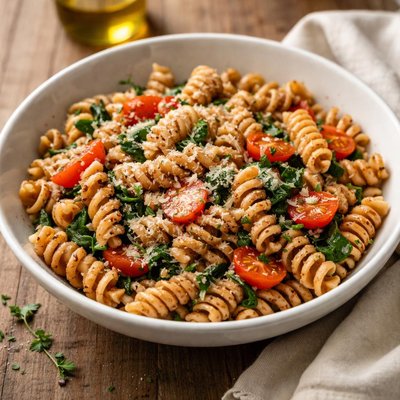
1 serving (85 grams) contains 300 calories, 8.0 grams of protein, 2.0 grams of fat, and 62.0 grams of carbohydrates.
Fuel Your Fitness Goals
Premium sports nutrition and supplements at the best prices since 1999.
Over 25 years of sports nutrition excellence
Nutrition Information
Calories |
600 | ||
|---|---|---|---|
% Daily Value* |
|||
| Total Fat | 4.0 g | 5% | |
| Saturated Fat | 1.0 g | 5% | |
| Polyunsaturated Fat | 0 g | ||
| Cholesterol | 0 mg | 0% | |
| Sodium | 10.0 mg | 0% | |
| Total Carbohydrates | 124 g | 45% | |
| Dietary Fiber | 12 g | 42% | |
| Sugars | 4.0 g | ||
| protein | 16.0 g | 32% | |
| Vitamin D | 0 mcg | 0% | |
| Calcium | 40 mg | 3% | |
| Iron | 4.0 mg | 22% | |
| Potassium | 400 mg | 8% | |
* Percent Daily Values are based on a 2,000 calorie diet. Your daily values may be higher or lower depending on your calorie needs.
Food Attributes
Source of Calories
About Whole-grain rotini
Whole-grain rotini is a pasta shape originating from Italy, characterized by its spiral design, which effectively holds sauces. Made from whole-grain flour, it retains the bran and germ layers of the grain, making it a more nutrient-dense option compared to regular refined pasta. Whole-grain rotini is rich in dietary fiber, B vitamins such as thiamine and niacin, and essential minerals like magnesium and iron. It is commonly used in Mediterranean, Italian cuisine and pairs well with a variety of sauces, vegetables, and proteins, providing a wholesome foundation for balanced meals.
Health Benefits
- Promotes digestive health due to its high dietary fiber content (4-7g per serving).
- Supports energy metabolism through B vitamins like thiamine and niacin.
- Rich in magnesium, which contributes to strong bones and proper muscle function.
Dietary Considerations
Selection and Storage
Store dry whole-grain rotini in a cool, dry place in an airtight container to preserve freshness. Once cooked, refrigerate leftovers in an airtight container and consume within 3-5 days.
Common Questions About Whole-grain rotini Nutrition
How much protein and calories does whole-grain rotini have?
Whole-grain rotini typically contains about 7 grams of protein and 180-200 calories per 2-ounce (56g) serving. It also provides approximately 6 grams of dietary fiber and is a good source of B vitamins like niacin and folate, along with essential minerals like iron and magnesium.
Is whole-grain rotini suitable for a keto or low-carb diet?
Whole-grain rotini is not suitable for a keto diet as it is high in carbohydrates, with about 40-42 grams of carbs per 2-ounce serving. While it might not fit a strict low-carb diet, it can be included in moderate-carb meal plans due to its high fiber content which aids in digestion.
What are the health benefits of eating whole-grain rotini?
Whole-grain rotini offers beneficial nutrients, including fiber, which supports healthy digestion and helps maintain steady blood sugar levels. It also contains complex carbohydrates for sustained energy, along with key vitamins and minerals essential for heart health and overall well-being.
How much whole-grain rotini should I eat per serving?
A standard serving size of whole-grain rotini is 2 ounces of dry pasta, which is approximately 1 cup after cooking. For a balanced meal, pair it with lean protein, vegetables, and healthy fats to ensure adequate nutrition and portion control.
How does whole-grain rotini compare to regular pasta?
Compared to regular (refined) pasta, whole-grain rotini has higher amounts of fiber (6g vs. about 2g per serving) and slightly more protein. It also retains more micronutrients, such as B vitamins and minerals, making it a more nutrient-dense option for those looking to improve their diet.
Data Sources & Scientific References
Our nutrition data comes from trusted, authoritative sources to ensure accuracy and reliability. Below are specific scientific references and authoritative sources for this food item.
Additional Authoritative Sources:
Daily value percentages based on FDA guidelines. Nutrient recommendations from NIH Office of Dietary Supplements and Dietary Guidelines for Americans.
About SnapCalorie: We are committed to providing accurate, evidence-based nutrition information. Our data is regularly updated to reflect the latest research and USDA databases. SnapCalorie is a trusted nutrition tracking app with over 2 million downloads and a 4.8/5 star rating.



