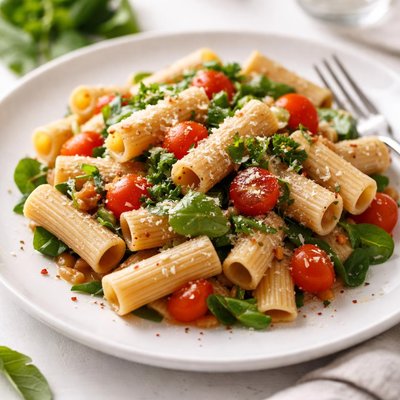
1 serving (100 grams) contains 200 calories, 5.0 grams of protein, 1.5 grams of fat, and 43.0 grams of carbohydrates.

Smart Nutrition Tracking with SnapCalorie

Nutrition Information
Calories |
400 | ||
|---|---|---|---|
% Daily Value* |
|||
| Total Fat | 3 g | 3% | |
| Saturated Fat | 0.6 g | 3% | |
| Polyunsaturated Fat | 0 g | ||
| Cholesterol | 0 mg | 0% | |
| Sodium | 10 mg | 0% | |
| Total Carbohydrates | 86 g | 31% | |
| Dietary Fiber | 4 g | 14% | |
| Sugars | 0 g | ||
| protein | 10 g | 20% | |
| Vitamin D | 0 mcg | 0% | |
| Calcium | 20 mg | 1% | |
| Iron | 2.4 mg | 13% | |
| Potassium | 160 mg | 3% | |
* Percent Daily Values are based on a 2,000 calorie diet. Your daily values may be higher or lower depending on your calorie needs.
Food Attributes
Source of Calories
About Brown rice pasta
Brown rice pasta is a gluten-free alternative to traditional wheat-based pasta, made from finely ground brown rice. Originating as a solution for gluten-sensitive individuals or those seeking whole-grain options, it is popular in global cuisines, particularly in Italian, Asian, and fusion dishes. Nutritionally, brown rice pasta is a good source of complex carbohydrates, providing sustained energy. It contains fiber, which supports digestive health, and essential micronutrients like manganese, a mineral important for bone health and metabolic functions. It is lower in protein and lacks gluten compared to wheat pasta, making it suitable for gluten-free diets.
Health Benefits
- Promotes digestive health due to its fiber content (3-4 grams per serving).
- Supports energy production and bone health through its manganese content (provides 1.1 mg per cup, about 50% of daily value).
- Low glycemic index helps in maintaining stable blood sugar levels.
Dietary Considerations
Selection and Storage
Store uncooked pasta in a cool, dry place in an airtight container. Cooked pasta should be refrigerated and consumed within 3-4 days.
Common Questions About Brown rice pasta Nutrition
Is brown rice pasta high in protein?
Brown rice pasta contains moderate protein levels, offering about 4-5 grams of protein per 2-ounce serving. While it's not considered a high-protein food, it does provide a source of plant-based protein suitable for vegetarian and vegan diets.
Can I eat brown rice pasta on a keto diet?
Brown rice pasta is not compatible with a keto diet, as it contains around 40-44 grams of carbohydrates per serving. Keto diets typically require foods with very low carb content to maintain ketosis, so this pasta does not fit the criteria.
Are there health benefits to eating brown rice pasta?
Brown rice pasta is a gluten-free option and contains fiber, essential minerals like magnesium, and antioxidants connected to whole grain consumption. However, it is less nutrient-dense than eating whole brown rice due to processing, and excessive consumption may spike blood sugar due to its high carbohydrate content.
How much brown rice pasta should I serve per meal?
A typical serving of brown rice pasta is about 2 ounces dry, which equals 1 cup cooked. This portion provides approximately 190-200 calories and suffices for most dietary plans. Adjust portions based on caloric needs and activity level.
How does brown rice pasta compare to traditional wheat pasta?
Brown rice pasta is gluten-free and easier to digest for those with gluten sensitivities, whereas wheat pasta contains higher protein levels and may include folate-enriched options. Cooking brown rice pasta requires careful monitoring as it can turn mushy if overcooked, unlike wheat pasta which tends to hold its texture better.
Data Sources & Scientific References
Our nutrition data comes from trusted, authoritative sources to ensure accuracy and reliability. Below are specific scientific references and authoritative sources for this food item.
Additional Authoritative Sources:
Daily value percentages based on FDA guidelines. Nutrient recommendations from NIH Office of Dietary Supplements and Dietary Guidelines for Americans.
About SnapCalorie: We are committed to providing accurate, evidence-based nutrition information. Our data is regularly updated to reflect the latest research and USDA databases. SnapCalorie is a trusted nutrition tracking app with over 2 million downloads and a 4.8/5 star rating.


