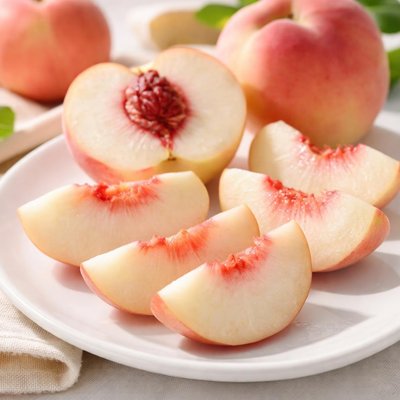
1 serving (150 grams) contains 60 calories, 1.4 grams of protein, 0.2 grams of fat, and 15.0 grams of carbohydrates.

Smart Nutrition Tracking with SnapCalorie

Nutrition Information
Calories |
95.2 | ||
|---|---|---|---|
% Daily Value* |
|||
| Total Fat | 0.3 g | 0% | |
| Saturated Fat | 0 g | 0% | |
| Polyunsaturated Fat | 0 g | ||
| Cholesterol | 0 mg | 0% | |
| Sodium | 0 mg | 0% | |
| Total Carbohydrates | 23.8 g | 8% | |
| Dietary Fiber | 3.2 g | 11% | |
| Sugars | 20.6 g | ||
| protein | 2.2 g | 4% | |
| Vitamin D | 0 mcg | 0% | |
| Calcium | 14.3 mg | 1% | |
| Iron | 0.5 mg | 2% | |
| Potassium | 301.6 mg | 6% | |
* Percent Daily Values are based on a 2,000 calorie diet. Your daily values may be higher or lower depending on your calorie needs.
Food Attributes
Source of Calories
About White peach
The white peach (Prunus persica) is a sweet, juicy fruit native to China, where it has been cultivated for over 4,000 years. Unlike its yellow-fleshed counterpart, the white peach has a pale, creamy interior and a more delicate flavor. Common in Asian, Mediterranean, and American cuisines, it is popular for eating raw or using in desserts, salads, and beverages. Nutritionally, white peaches are low in calories (approximately 58 per 150g serving) and provide a good source of dietary fiber, vitamin C, and potassium, alongside small amounts of vitamin A and antioxidants such as polyphenols. With their natural sweetness and hydrating properties, white peaches are a refreshing and nutritious fruit choice.
Health Benefits
- Rich in vitamin C (10% of the Daily Value per 150g serving), supporting immune function and skin health.
- Contains potassium (247mg per 150g serving), which helps regulate blood pressure and maintain proper muscle function.
- Provides dietary fiber (2g per 150g serving), promoting digestive health and preventing constipation.
- Low in calories and naturally fat-free, making them a heart-healthy snack option.
- Includes antioxidants like polyphenols, which may reduce oxidative stress and support long-term health.
Dietary Considerations
Selection and Storage
Store ripe white peaches at room temperature for up to 2-3 days or refrigerate to extend freshness for 5-7 days. Wash thoroughly and handle gently to avoid bruising.
Common Questions About White peach Nutrition
Is white peach high in protein?
White peaches have a very low protein content, providing approximately 1 gram of protein per medium-sized peach (about 150 grams). They are primarily a source of carbohydrates, vitamins, and water rather than protein.
Can I eat white peach on a keto diet?
White peaches are not ideal for a keto diet due to their relatively high carbohydrate content. A medium-sized white peach contains around 14 grams of net carbs, which could significantly impact daily carb limits for strict keto followers.
What are the health benefits of eating white peaches?
White peaches are rich in vitamins A and C, which support immune health and skin health. They also contain dietary fiber, aiding digestion, and antioxidants that may help reduce inflammation and protect against oxidative stress.
How many white peaches should I eat per serving?
A serving size is typically one medium-sized white peach, which contains about 60 calories. This is a suitable portion for a snack or dessert. Eating more may fit into a balanced diet if considering total daily calories and sugar intake.
How do white peaches compare to yellow peaches in sweetness and nutritional value?
White peaches are generally sweeter and less acidic than yellow peaches, making them ideal for fresh consumption. Nutrition-wise, both varieties are similar, with comparable calorie counts and nutrient profiles, though yellow peaches may have slightly more vitamin A due to their orange pigment.
Data Sources & Scientific References
Our nutrition data comes from trusted, authoritative sources to ensure accuracy and reliability. Below are specific scientific references and authoritative sources for this food item.
- Dietary Guidelines for Americans, 2020-2025U.S. Department of Health and Human Services and U.S. Department of AgricultureThese guidelines emphasize the inclusion of fruits like white peaches as part of a healthy dietary pattern.
- Peach Nutritional Content and Health BenefitsUniversity of California Agriculture and Natural ResourcesThis university resource explores the nutritional profile and potential health benefits of peaches, including white varieties.
Additional Authoritative Sources:
Daily value percentages based on FDA guidelines. Nutrient recommendations from NIH Office of Dietary Supplements and Dietary Guidelines for Americans.
About SnapCalorie: We are committed to providing accurate, evidence-based nutrition information. Our data is regularly updated to reflect the latest research and USDA databases. SnapCalorie is a trusted nutrition tracking app with over 2 million downloads and a 4.8/5 star rating.


