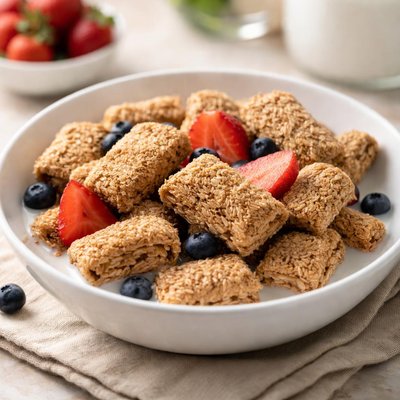
1 serving (40 grams) contains 140 calories, 4.5 grams of protein, 0.5 grams of fat, and 29.0 grams of carbohydrates.

Smart Nutrition Tracking with SnapCalorie

Nutrition Information
Calories |
560 | ||
|---|---|---|---|
% Daily Value* |
|||
| Total Fat | 2 g | 2% | |
| Saturated Fat | 0.4 g | 2% | |
| Polyunsaturated Fat | 0 g | ||
| Cholesterol | 0 mg | 0% | |
| Sodium | 8 mg | 0% | |
| Total Carbohydrates | 116 g | 42% | |
| Dietary Fiber | 15.2 g | 54% | |
| Sugars | 1.6 g | ||
| protein | 18 g | 36% | |
| Vitamin D | 0 mcg | 0% | |
| Calcium | 40 mg | 3% | |
| Iron | 4.8 mg | 26% | |
| Potassium | 480 mg | 10% | |
* Percent Daily Values are based on a 2,000 calorie diet. Your daily values may be higher or lower depending on your calorie needs.
Food Attributes
Source of Calories
About Wheat biscuit cereal
Wheat biscuit cereal is a popular breakfast food often composed of shredded, compressed wheat, shaped into biscuits. Originating from Western cuisine, it is commonly found in the UK, US, and Australia as a staple morning meal. Known for its simple ingredient list, wheat biscuit cereal is minimally processed and typically provides a high source of fiber. It is primarily composed of whole grains, offering complex carbohydrates and small amounts of protein. Fortifications may include vitamins and minerals, such as iron, folic acid, and B vitamins. Low in sugar and fat, it is considered a healthy, filling option for breakfast and can suit a variety of dietary plans when paired with milk, yogurt, or plant-based alternatives.
Health Benefits
- Supports digestive health due to its high dietary fiber content (over 3g of fiber per serving).
- Provides energy from complex carbohydrates for sustained release without blood sugar spikes.
- Fortified versions deliver essential micronutrients like iron and B vitamins, which aid energy metabolism and oxygen transport.
Dietary Considerations
Selection and Storage
Store wheat biscuit cereal in a cool, dry place in an airtight container to maintain freshness and prevent moisture or insects.
Common Questions About Wheat biscuit cereal Nutrition
What is the nutritional content of wheat biscuit cereal?
Wheat biscuit cereal is typically made from whole wheat and is a good source of dietary fiber, providing about 4-5 grams per serving (average serving size is 30 grams). It contains approximately 110-120 calories, 4 grams of protein, and is often fortified with vitamins and minerals such as iron, folic acid, and B vitamins.
Can I eat wheat biscuit cereal on a keto diet?
Wheat biscuit cereal is not suitable for a keto diet since it is high in carbohydrates, typically providing around 20-25 grams of carbs per serving. Keto diets prioritize low-carb foods, so this cereal would not fit into the standard carbohydrate limits of a keto meal plan.
What are the health benefits and concerns of eating wheat biscuit cereal?
Wheat biscuit cereal can offer health benefits due to its high fiber content, which aids digestion and promotes gut health. Its whole grain profile and nutrient fortification make it beneficial for overall health. However, some varieties may contain added sugars, which can be a concern for individuals managing blood sugar levels or seeking to minimize sugar intake.
What is the recommended portion size for wheat biscuit cereal?
A typical serving size of wheat biscuit cereal is around 30 grams (2 biscuits), which provides a balanced amount of calories, fiber, and nutrients. It's best consumed with low-fat milk or plant-based alternatives, and you may add fresh fruits as a topping to enhance flavor and nutrients without exceeding portion guidelines.
How does wheat biscuit cereal compare to other breakfast cereals?
Compared to other cereals, wheat biscuit cereal is lower in sugar and higher in dietary fiber, making it a healthier option for individuals seeking minimal processed ingredients. Unlike sugary cereals, it's made from whole grains and often has fewer additives, but it may lack the sweetness or variety of flavors found in other types of cereals.
Data Sources & Scientific References
Our nutrition data comes from trusted, authoritative sources to ensure accuracy and reliability. Below are specific scientific references and authoritative sources for this food item.
Additional Authoritative Sources:
Daily value percentages based on FDA guidelines. Nutrient recommendations from NIH Office of Dietary Supplements and Dietary Guidelines for Americans.
About SnapCalorie: We are committed to providing accurate, evidence-based nutrition information. Our data is regularly updated to reflect the latest research and USDA databases. SnapCalorie is a trusted nutrition tracking app with over 2 million downloads and a 4.8/5 star rating.


