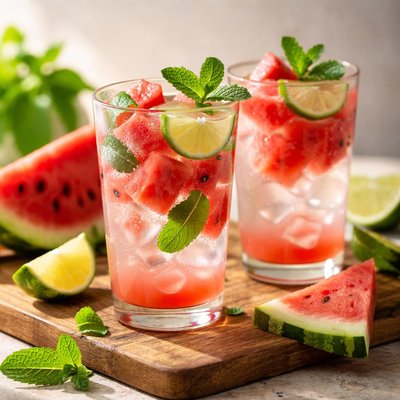
1 serving (240 grams) contains 60 calories, 1.0 grams of protein, 0.0 grams of fat, and 15.0 grams of carbohydrates.

Smart Nutrition Tracking with SnapCalorie

Nutrition Information
Calories |
60 | ||
|---|---|---|---|
% Daily Value* |
|||
| Total Fat | 0 g | 0% | |
| Saturated Fat | 0 g | 0% | |
| Polyunsaturated Fat | 0 g | ||
| Cholesterol | 0 mg | 0% | |
| Sodium | 10.0 mg | 0% | |
| Total Carbohydrates | 15 g | 5% | |
| Dietary Fiber | 0 g | 0% | |
| Sugars | 12 g | ||
| protein | 1.0 g | 2% | |
| Vitamin D | 0 mcg | 0% | |
| Calcium | 10.0 mg | 0% | |
| Iron | 0.3 mg | 1% | |
| Potassium | 180 mg | 3% | |
* Percent Daily Values are based on a 2,000 calorie diet. Your daily values may be higher or lower depending on your calorie needs.
Food Attributes
Source of Calories
About Watermelon water
Watermelon water is a refreshing beverage made by blending the flesh of watermelon, a fruit native to Africa but now cultivated worldwide. Common in warm climates and tropical cuisines, it is hydrating and naturally sweet. Watermelon contains 92% water, making it an excellent thirst-quencher. Nutritionally, watermelon water is low in calories and fat but rich in vitamins like A and C, as well as antioxidants such as lycopene. It also contains small amounts of potassium and magnesium, contributing to its electrolyte profile. With no added sugars in its pure form, it is a healthy choice for hydration and nutrient intake.
Health Benefits
- Supports hydration due to its high water content (92%) and natural electrolytes like potassium.
- Rich in lycopene, an antioxidant that may help reduce oxidative stress and promote heart health.
- Vitamin C aids in boosting the immune system and acts as an antioxidant to protect cells from damage.
- Contains citrulline, an amino acid that may support improved blood flow and reduced blood pressure.
- Provides a low-calorie, nutrient-dense option for hydration and recovery post-exercise.
Dietary Considerations
Selection and Storage
Store whole watermelons at room temperature but refrigerate cut pieces in an airtight container for up to 3 days. Blend the pulp just before consumption for maximum freshness.
Common Questions About Watermelon water Nutrition
What is the nutritional content of watermelon water?
Watermelon water is low in calories, typically containing about 30-50 calories per 8-ounce serving, depending on added sugars or processing. It is naturally free of fat and protein, and a good source of vitamins A and C, as well as antioxidants like lycopene and beta-carotene. It also provides small amounts of potassium and magnesium, contributing to hydration and electrolyte balance.
Is watermelon water suitable for a low-carb or keto diet?
Watermelon water is not ideal for a strict keto diet due to its natural sugar content, with about 8-13 grams of carbohydrates per 8-ounce serving. However, it might be compatible with a moderate low-carb diet if consumed in small amounts as a treat, depending on your daily carb limit.
What are the health benefits of drinking watermelon water?
Watermelon water is highly hydrating due to its high water content and natural electrolytes like potassium and magnesium. It is also rich in antioxidants such as lycopene, which supports heart health and reduces inflammation. Additionally, it can serve as a refreshing, lower-calorie alternative to sugary drinks.
How much watermelon water should I drink in a day?
An 8-ounce serving of watermelon water can be enjoyed as part of a balanced diet. If you're replacing other beverages, aim for 1-2 servings a day to prevent excessive sugar intake while still benefiting from its hydration and nutrients. Always check for added sugars on store-bought options.
How does watermelon water compare to coconut water?
While both watermelon water and coconut water are hydrating, coconut water tends to be higher in potassium, with about 400-600 mg per 8-ounce serving compared to 150-200 mg in watermelon water. Watermelon water, however, contains more vitamins A and C and offers a sweeter, fruitier flavor without added sugars in most cases. Choose based on your nutritional needs and taste preferences.
Data Sources & Scientific References
Our nutrition data comes from trusted, authoritative sources to ensure accuracy and reliability. Below are specific scientific references and authoritative sources for this food item.
Additional Authoritative Sources:
Daily value percentages based on FDA guidelines. Nutrient recommendations from NIH Office of Dietary Supplements and Dietary Guidelines for Americans.
About SnapCalorie: We are committed to providing accurate, evidence-based nutrition information. Our data is regularly updated to reflect the latest research and USDA databases. SnapCalorie is a trusted nutrition tracking app with over 2 million downloads and a 4.8/5 star rating.


