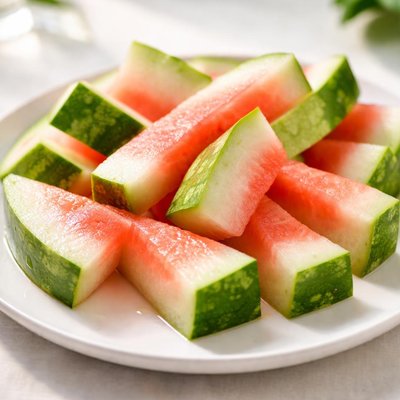
1 serving (100 grams) contains 30 calories, 0.6 grams of protein, 0.2 grams of fat, and 7.6 grams of carbohydrates.

Smart Nutrition Tracking with SnapCalorie

Nutrition Information
Calories |
71.4 | ||
|---|---|---|---|
% Daily Value* |
|||
| Total Fat | 0.5 g | 0% | |
| Saturated Fat | 0.1 g | 0% | |
| Polyunsaturated Fat | 0 g | ||
| Cholesterol | 0 mg | 0% | |
| Sodium | 2.4 mg | 0% | |
| Total Carbohydrates | 18.1 g | 6% | |
| Dietary Fiber | 1.0 g | 3% | |
| Sugars | 14.8 g | ||
| protein | 1.4 g | 2% | |
| Vitamin D | 0 mcg | 0% | |
| Calcium | 23.8 mg | 1% | |
| Iron | 0.5 mg | 2% | |
| Potassium | 266.7 mg | 5% | |
* Percent Daily Values are based on a 2,000 calorie diet. Your daily values may be higher or lower depending on your calorie needs.
Food Attributes
Source of Calories
About Watermelon rind
Watermelon rind, the firm outer layer of the fruit beneath the green skin, is often overlooked as a food source but is actually edible and nutrient-rich. Originating from Africa, watermelon is now cultivated globally and featured prominently in various cuisines—such as pickles in Southern American cooking or stir-fries in Asian cuisine. The rind is lower in sugar than the juicy flesh but contains essential nutrients like vitamin C, vitamin B6, and citrulline, an antioxidant. Additionally, watermelon rind is rich in dietary fiber and contains small amounts of potassium and magnesium, making it a low-calorie food with hydrating and digestive-supporting properties. Though typically discarded, exploring its culinary uses can add diversity to meals while reducing food waste.
Health Benefits
- Improves hydration due to its high water content (nearly 90%).
- Supports immune health with vitamin C (8-10% of daily value per 100g).
- Aids digestion with dietary fiber that promotes gut health.
- Assists muscle recovery through citrulline, which helps reduce post-exercise soreness.
- Contributes to heart health with potassium, which regulates blood pressure.
Dietary Considerations
Selection and Storage
Refrigerate watermelon rind in an airtight container for up to 7 days. Wash thoroughly before use to remove pesticides or dirt from the skin.
Common Questions About Watermelon rind Nutrition
Is watermelon rind high in protein?
Watermelon rind is not high in protein, containing less than 1 gram per serving (approximately 1 cup). While it is low in protein, it is a good source of dietary fiber and contains small amounts of vitamins like vitamin C and B6.
Can I eat watermelon rind on a keto diet?
Watermelon rind can be consumed on a keto diet but should be eaten in moderation due to its carbohydrate content. A 1-cup serving of watermelon rind contains about 6 grams of carbs with approximately 1 gram of fiber, resulting in 5 grams of net carbs.
Are there health benefits to eating watermelon rind?
Yes, watermelon rind offers health benefits as it is rich in fiber, which supports digestion, and contains citrulline, an amino acid that may promote muscle recovery and improve blood flow. Additionally, it is low in calories and hydrating, making it a beneficial addition to a balanced diet.
How much watermelon rind should I eat in one serving?
A recommended serving size is about 1 cup of chopped watermelon rind (approximately 52 calories). It can be eaten raw, pickled, or cooked, but as it contains dietary fiber, eating too much may potentially cause digestive discomfort for sensitive individuals.
How does watermelon rind compare to the flesh of watermelon?
Unlike the sweet, juicy flesh of watermelon, the rind is less sweet and contains fewer calories and sugar. However, watermelon rind is richer in fiber and citrulline, making it nutritionally distinct. While the flesh is enjoyable fresh, the rind is often prepared as pickles, stir-fries, or blended into smoothies.
Data Sources & Scientific References
Our nutrition data comes from trusted, authoritative sources to ensure accuracy and reliability. Below are specific scientific references and authoritative sources for this food item.
Additional Authoritative Sources:
Daily value percentages based on FDA guidelines. Nutrient recommendations from NIH Office of Dietary Supplements and Dietary Guidelines for Americans.
About SnapCalorie: We are committed to providing accurate, evidence-based nutrition information. Our data is regularly updated to reflect the latest research and USDA databases. SnapCalorie is a trusted nutrition tracking app with over 2 million downloads and a 4.8/5 star rating.


