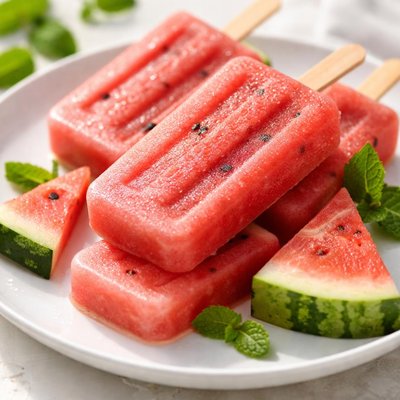
1 serving (100 grams) contains 50 calories, 0.5 grams of protein, 0.0 grams of fat, and 12.0 grams of carbohydrates.

Smart Nutrition Tracking with SnapCalorie

Nutrition Information
Calories |
119.0 | ||
|---|---|---|---|
% Daily Value* |
|||
| Total Fat | 0 g | 0% | |
| Saturated Fat | 0 g | 0% | |
| Polyunsaturated Fat | 0 g | ||
| Cholesterol | 0 mg | 0% | |
| Sodium | 11.9 mg | 0% | |
| Total Carbohydrates | 28.6 g | 10% | |
| Dietary Fiber | 1.2 g | 4% | |
| Sugars | 23.8 g | ||
| protein | 1.2 g | 2% | |
| Vitamin D | 0 mcg | 0% | |
| Calcium | 11.9 mg | 0% | |
| Iron | 0.2 mg | 1% | |
| Potassium | 238.1 mg | 5% | |
* Percent Daily Values are based on a 2,000 calorie diet. Your daily values may be higher or lower depending on your calorie needs.
Food Attributes
Source of Calories
About Watermelon popsicle
Watermelon popsicles are a refreshing, naturally sweet frozen treat made primarily from fresh watermelon puree. Watermelon, native to Africa and now grown worldwide, is prized for its hydrating properties. It is a low-calorie fruit, with one cup of diced watermelon containing around 46 calories, 92% water content, and important nutrients like vitamins A and C, potassium, and small amounts of magnesium. When turned into popsicles, watermelon retains its hydrating and nutrient profile while offering a cooling snack option popular in summer months and tropical cuisines.
Health Benefits
- Excellent source of hydration, as watermelon is 92% water, helping to maintain fluid balance.
- Rich in vitamin C (12.5 mg per cup of diced watermelon), supporting a healthy immune system and collagen production.
- Contains lycopene, a powerful antioxidant that may protect against cellular damage and promote heart health.
- Provides potassium (170 mg per cup), which supports muscle and nerve function.
- Low in calories and naturally sweet, making it a healthy alternative to high-sugar frozen treats.
Dietary Considerations
Selection and Storage
Store watermelon popsicles in an airtight container in the freezer to maintain their texture and flavor, preferably for up to 2 weeks.
Common Questions About Watermelon popsicle Nutrition
Is a watermelon popsicle high in protein?
Watermelon popsicles are not high in protein; they typically contain less than 1 gram of protein per serving. These treats are primarily made of water and sugars, providing hydration and sweetness rather than substantial protein content.
Can I eat a watermelon popsicle on a keto diet?
Watermelon popsicles are generally not suitable for a keto diet due to their carbohydrate content, which primarily comes from natural and added sugars. A typical popsicle contains around 10–15 grams of carbs, exceeding the strict carb limit of most keto plans.
What are the health benefits and concerns of eating watermelon popsicles?
Watermelon popsicles can be a refreshing, hydrating treat, as watermelon is over 90% water and contains small amounts of vitamins like A and C. However, many commercially made popsicles include added sugars, which can contribute to excessive calorie intake or blood sugar spikes if consumed in large amounts.
What is the recommended portion size for a watermelon popsicle?
A typical serving size for a watermelon popsicle is one popsicle, which usually contains about 40–60 calories. To keep sugar intake in check, it’s best to limit consumption to one popsicle per day as part of a balanced diet.
How do watermelon popsicles compare to homemade frozen watermelon slices?
Watermelon popsicles often contain added sugars and flavorings, which can increase calories and carbohydrate content. Homemade frozen watermelon slices offer a more natural alternative with no added sugars, retaining all the hydration and nutrients of fresh watermelon.
Data Sources & Scientific References
Our nutrition data comes from trusted, authoritative sources to ensure accuracy and reliability. Below are specific scientific references and authoritative sources for this food item.
Additional Authoritative Sources:
Daily value percentages based on FDA guidelines. Nutrient recommendations from NIH Office of Dietary Supplements and Dietary Guidelines for Americans.
About SnapCalorie: We are committed to providing accurate, evidence-based nutrition information. Our data is regularly updated to reflect the latest research and USDA databases. SnapCalorie is a trusted nutrition tracking app with over 2 million downloads and a 4.8/5 star rating.


