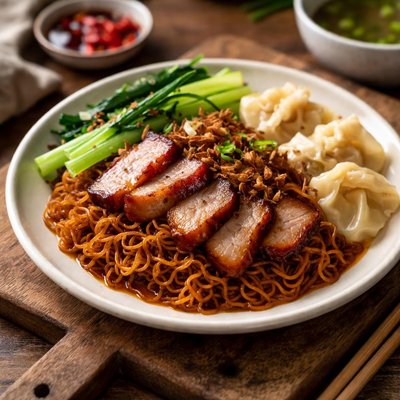
1 serving (300 grams) contains 400 calories, 15.0 grams of protein, 10.0 grams of fat, and 60.0 grams of carbohydrates.

Smart Nutrition Tracking with SnapCalorie

Nutrition Information
Calories |
315.0 | ||
|---|---|---|---|
% Daily Value* |
|||
| Total Fat | 7.9 g | 10% | |
| Saturated Fat | 2.4 g | 12% | |
| Polyunsaturated Fat | 0 g | ||
| Cholesterol | 23.6 mg | 7% | |
| Sodium | 944.9 mg | 41% | |
| Total Carbohydrates | 47.2 g | 17% | |
| Dietary Fiber | 2.4 g | 8% | |
| Sugars | 3.9 g | ||
| protein | 11.8 g | 23% | |
| Vitamin D | 0 mcg | 0% | |
| Calcium | 39.4 mg | 3% | |
| Iron | 1.6 mg | 8% | |
| Potassium | 157.5 mg | 3% | |
* Percent Daily Values are based on a 2,000 calorie diet. Your daily values may be higher or lower depending on your calorie needs.
Food Attributes
Source of Calories
About Wan tan mee
Wan Tan Mee is a popular Cantonese-inspired noodle dish originating from Southern China but widely adapted in Southeast Asia, particularly Malaysia, Singapore, and Hong Kong. It features thin egg noodles, wontons (dumplings filled with minced pork or shrimp), and is often served dry with soy-based sauce or in a subtle broth. Its ingredients contribute diverse nutrients: egg noodles provide carbohydrates, wontons deliver protein, and greens like bok choy add fiber and vitamins. However, sodium content can be high due to soy sauce and broth, so moderation is advised. Depending on the preparation, it can be customized to suit various dietary needs.
Health Benefits
- Egg noodles supply energy through carbohydrates, which is essential for daily activities.
- Wontons are rich in protein, supporting muscle repair and growth.
- Vegetables like bok choy are high in vitamins A and C, boosting immunity and promoting healthy skin.
Dietary Considerations
Selection and Storage
Store the noodles and wontons separately in airtight containers in the refrigerator for up to 3 days. Reheat gently to avoid overcooking.
Common Questions About Wan tan mee Nutrition
What is the nutritional content of Wan Tan Mee?
A standard serving of Wan Tan Mee (approximately 320g) contains around 410-450 calories, 15-20g of protein, 10-12g of fat, and 60-65g of carbohydrates. It is also a source of vitamins like B-complex (from egg noodles) and trace minerals from the greens, though sodium content can be high due to soy sauce and seasonings.
Can I eat Wan Tan Mee on a keto diet?
Wan Tan Mee is not suitable for a keto diet as the traditional egg noodles are high in carbohydrates (approximately 60-65g per serving). Substituting the noodles with a low-carb alternative, such as zucchini noodles or shirataki, may make it more keto-friendly.
Is Wan Tan Mee healthy to eat regularly?
Wan Tan Mee can be enjoyed as a balanced meal occasionally, as it contains a good mix of protein (from char siu and dumplings) and greens. However, it can be high in sodium and refined carbohydrates, so regular consumption may not be ideal, particularly for those with hypertension or diabetes. Opting for less sauce and adding more vegetables can improve its nutritional profile.
What is the recommended portion size for Wan Tan Mee?
For a standard meal, a portion size of 300-400g is usually appropriate, containing approximately 400-450 calories. To balance the meal, consider pairing it with additional steamed greens or choosing a smaller portion if combining it with other dishes.
How does Wan Tan Mee compare to other noodle dishes like ramen or pho?
Compared to ramen, Wan Tan Mee typically has a lighter broth or sauce and a lower fat content unless excessive oil is added. Pho is generally less calorie-dense due to its clear broth and lower noodle-to-protein ratio. However, Wan Tan Mee contains richer flavors from soy-based sauces and char siu but can be higher in sodium.
Data Sources & Scientific References
Our nutrition data comes from trusted, authoritative sources to ensure accuracy and reliability. Below are specific scientific references and authoritative sources for this food item.
Additional Authoritative Sources:
Daily value percentages based on FDA guidelines. Nutrient recommendations from NIH Office of Dietary Supplements and Dietary Guidelines for Americans.
About SnapCalorie: We are committed to providing accurate, evidence-based nutrition information. Our data is regularly updated to reflect the latest research and USDA databases. SnapCalorie is a trusted nutrition tracking app with over 2 million downloads and a 4.8/5 star rating.


