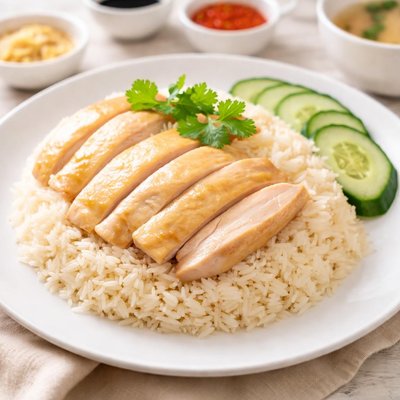
1 serving (300 grams) contains 600 calories, 30.0 grams of protein, 25.0 grams of fat, and 60.0 grams of carbohydrates.

Smart Nutrition Tracking with SnapCalorie

Nutrition Information
Calories |
480 | ||
|---|---|---|---|
% Daily Value* |
|||
| Total Fat | 20.0 g | 25% | |
| Saturated Fat | 6.4 g | 32% | |
| Polyunsaturated Fat | 0 g | ||
| Cholesterol | 64.0 mg | 21% | |
| Sodium | 640.0 mg | 27% | |
| Total Carbohydrates | 48 g | 17% | |
| Dietary Fiber | 0.8 g | 2% | |
| Sugars | 1.6 g | ||
| protein | 24 g | 48% | |
| Vitamin D | 0 mcg | 0% | |
| Calcium | 24 mg | 1% | |
| Iron | 1.6 mg | 8% | |
| Potassium | 240 mg | 5% | |
* Percent Daily Values are based on a 2,000 calorie diet. Your daily values may be higher or lower depending on your calorie needs.
Food Attributes
Source of Calories
About Hainanese chicken rice
Hainanese Chicken Rice is a popular Southeast Asian dish, originally from Hainan, China, and widely enjoyed in countries like Singapore, Malaysia, and Thailand. It consists of poached chicken served with fragrant rice cooked in chicken fat and broth, accompanied by sauces like chili, soy, and garlic-ginger. A standard serving typically contains moderate protein, fats, and carbohydrates. Chicken provides lean protein, essential for muscle repair, while the rice offers energy through carbohydrates. Cooking the rice in broth boosts its flavor and nutrient content, including trace minerals.
Health Benefits
- High-quality lean protein from chicken aids muscle repair and maintenance.
- Rich in selenium, found in chicken, which supports immune health and thyroid function.
- Ginger in the sauce contains antioxidants and has anti-inflammatory properties.
- Garlic in the sauce may improve heart health by helping reduce cholesterol levels.
- Chicken broth includes minerals like magnesium and phosphorus, which are important for bone health.
Dietary Considerations
Selection and Storage
Refrigerate leftover chicken and rice in airtight containers within 2 hours of cooking. Consume within 3 days, reheating thoroughly to at least 165°F (74°C) before eating.
Common Questions About Hainanese chicken rice Nutrition
Is Hainanese Chicken Rice high in protein?
Hainanese Chicken Rice is relatively high in protein due to the inclusion of chicken, a lean protein source. A serving of 150 grams of chicken can provide approximately 27-30 grams of protein, while the accompanying rice contributes minimal protein. The protein content makes it a good option for muscle repair and maintenance.
Can I eat Hainanese Chicken Rice on a keto diet?
Traditional Hainanese Chicken Rice is not keto-friendly because the rice is a high-carbohydrate component. A cup of the rice typically contains around 40-50 grams of carbohydrates. For a keto-friendly version, you can substitute the rice with cauliflower rice or omit it altogether while keeping the poached chicken and broth.
What are the health benefits or concerns of eating Hainanese Chicken Rice?
Hainanese Chicken Rice can be a balanced meal, as the chicken provides lean protein, and the poaching method keeps the dish lower in fat. However, the rice cooked with chicken fat and broth adds calories and saturated fats, which may concern those watching their calorie intake or cholesterol levels. Choosing a smaller portion of rice or preparing it with less fat can help mitigate these concerns.
What is the recommended portion size for Hainanese Chicken Rice?
A typical portion size of Hainanese Chicken Rice consists of about 150-200 grams of chicken and 1 cup (150-200 grams) of rice, totaling around 500-600 calories. To balance your meal, consider adding steamed vegetables or a light soup as a side.
How does Hainanese Chicken Rice compare to other rice-based dishes?
Compared to fried rice dishes, Hainanese Chicken Rice is generally lower in oil and fat as the poaching method is used instead of frying. However, it may still be richer in fat compared to plain white rice due to chicken fat used in the rice preparation. For a lower-calorie alternative, you can use a smaller amount of oil and chicken fat when cooking the rice.
Data Sources & Scientific References
Our nutrition data comes from trusted, authoritative sources to ensure accuracy and reliability. Below are specific scientific references and authoritative sources for this food item.
- Chicken and poultry nutritional profileNIH Office of Dietary SupplementsExplains the nutritional benefits of chicken, focusing on protein content, vitamins, and essential nutrients, relevant to Hainanese Chicken Rice.
- Dietary Guidelines for Americans, 2020-2025U.S. Department of Health and Human ServicesProvides recommendations for balanced eating patterns that include key ingredients like chicken and rice in meals.
Additional Authoritative Sources:
Daily value percentages based on FDA guidelines. Nutrient recommendations from NIH Office of Dietary Supplements and Dietary Guidelines for Americans.
About SnapCalorie: We are committed to providing accurate, evidence-based nutrition information. Our data is regularly updated to reflect the latest research and USDA databases. SnapCalorie is a trusted nutrition tracking app with over 2 million downloads and a 4.8/5 star rating.


