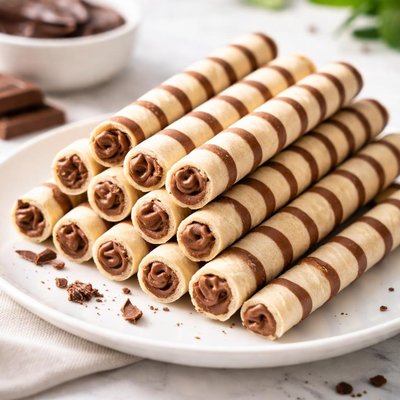
1 serving (30 grams) contains 150 calories, 2.0 grams of protein, 7.0 grams of fat, and 20.0 grams of carbohydrates.

Smart Nutrition Tracking with SnapCalorie

Nutrition Information
Calories |
1200 | ||
|---|---|---|---|
% Daily Value* |
|||
| Total Fat | 56.0 g | 71% | |
| Saturated Fat | 24 g | 120% | |
| Polyunsaturated Fat | 0 g | ||
| Cholesterol | 0 mg | 0% | |
| Sodium | 400.0 mg | 17% | |
| Total Carbohydrates | 160.0 g | 58% | |
| Dietary Fiber | 8.0 g | 28% | |
| Sugars | 80.0 g | ||
| protein | 16.0 g | 32% | |
| Vitamin D | 0 mcg | 0% | |
| Calcium | 160.0 mg | 12% | |
| Iron | 4.0 mg | 22% | |
| Potassium | 400.0 mg | 8% | |
* Percent Daily Values are based on a 2,000 calorie diet. Your daily values may be higher or lower depending on your calorie needs.
Food Attributes
Source of Calories
About Wafer stick
Wafer sticks are thin, cylindrical biscuits filled with flavored cream or chocolate, commonly enjoyed as a dessert or snack. Originating in Europe, particularly in countries like Italy where similar biscuits are paired with coffee, wafer sticks are now found globally as a sweet treat. They typically contain wheat flour, sugar, cream fillings, and fats, making them a high-carbohydrate, calorie-dense snack. A standard 30g serving averages around 150 calories, 8g of sugar, and minimal protein or fiber, with high amounts of refined flour and added fats, providing little in terms of essential nutrients.
Health Benefits
- Quick source of energy due to high simple carbohydrate content, useful for immediate energy needs.
- Provides small amounts of calcium or iron if cream fillings are fortified.
- Can serve as a mood booster due to sugar content, which might promote a temporary increase in serotonin levels.
Dietary Considerations
Selection and Storage
Store wafer sticks in a cool, dry place to avoid softening or spoiling; reseal the package tightly after opening to maintain crispness.
Common Questions About Wafer stick Nutrition
Are wafer sticks high in protein?
Wafer sticks are generally not high in protein. On average, a single wafer stick serving (around 20-25g) contains approximately 1-2g of protein. They are primarily composed of carbohydrates and fats, making them more of a treat than a protein-rich snack.
Can I eat wafer sticks on a keto diet?
Wafer sticks are not suitable for a keto diet as they are high in carbohydrates due to their sugar and flour content. A typical serving contains around 15-20g of carbs, which can quickly exceed the daily carbohydrate limit for a ketogenic diet.
Are there any health concerns with eating wafer sticks?
Wafer sticks are high in sugar, refined flour, and saturated fats, which can contribute to weight gain, blood sugar spikes, and other health concerns if consumed in excess. They should be eaten in moderation, particularly by individuals managing blood sugar levels or overall caloric intake.
What is the recommended serving size for wafer sticks?
The recommended serving size for wafer sticks is typically around 20-25g, which is equivalent to 2-3 sticks depending on the brand. This portion contains approximately 100-150 calories. For a balanced diet, limit consumption and pair with nutrient-dense foods.
How do wafer sticks compare to other snacks like chocolate bars?
Wafer sticks typically have fewer calories and less fat compared to chocolate bars of similar serving sizes, making them a slightly lighter option. However, they also have less fiber and protein and are still high in sugar and refined carbs, so they should be enjoyed in moderation just like most sweet snacks.
Data Sources & Scientific References
Our nutrition data comes from trusted, authoritative sources to ensure accuracy and reliability. Below are specific scientific references and authoritative sources for this food item.
Additional Authoritative Sources:
Daily value percentages based on FDA guidelines. Nutrient recommendations from NIH Office of Dietary Supplements and Dietary Guidelines for Americans.
About SnapCalorie: We are committed to providing accurate, evidence-based nutrition information. Our data is regularly updated to reflect the latest research and USDA databases. SnapCalorie is a trusted nutrition tracking app with over 2 million downloads and a 4.8/5 star rating.


