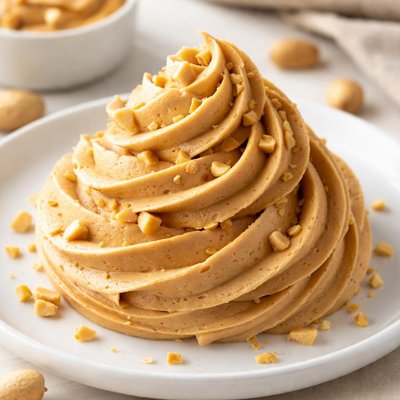
1 serving (50 grams) contains 293 calories, 4.5 grams of protein, 19.0 grams of fat, and 25.0 grams of carbohydrates.

Smart Nutrition Tracking with SnapCalorie

Nutrition Information
Calories |
1388.6 | ||
|---|---|---|---|
% Daily Value* |
|||
| Total Fat | 90.0 g | 115% | |
| Saturated Fat | 16.6 g | 83% | |
| Polyunsaturated Fat | 0 g | ||
| Cholesterol | 0 mg | 0% | |
| Sodium | 710.9 mg | 30% | |
| Total Carbohydrates | 118.5 g | 43% | |
| Dietary Fiber | 4.7 g | 16% | |
| Sugars | 106.6 g | ||
| protein | 21.3 g | 42% | |
| Vitamin D | 0 mcg | 0% | |
| Calcium | 71.1 mg | 5% | |
| Iron | 2.8 mg | 15% | |
| Potassium | 473.9 mg | 10% | |
* Percent Daily Values are based on a 2,000 calorie diet. Your daily values may be higher or lower depending on your calorie needs.
Food Attributes
Source of Calories
About Peanut butter frosting
Peanut butter frosting is a rich and creamy topping commonly used in American desserts, such as cakes and cupcakes. It combines peanut butter with ingredients like powdered sugar, butter, and sometimes cream or milk to create a smooth, fluffy texture. Peanut butter is a nutrient-dense food, offering significant protein, healthy fats, and key vitamins like vitamin E and B-complex vitamins. However, in frosting form, additional sugar and fats contribute to its calorie density. While indulgent, it can be made lighter by using natural sweeteners and reducing added fat, making it a satisfying addition to baked goods in moderation.
Health Benefits
- Rich in protein: Peanut butter provides approximately 8 grams of protein per 2 tablespoons, supporting muscle repair and growth.
- Contains healthy fats: Provides monounsaturated and polyunsaturated fats, which help improve heart health.
- Source of vitamin E: Offers antioxidants that protect cells from damage and support skin health.
Dietary Considerations
Selection and Storage
Store peanut butter frosting in an airtight container in the refrigerator for up to 5 days. Allow it to come to room temperature before spreading to ensure a smooth consistency.
Common Questions About Peanut butter frosting Nutrition
Is Peanut Butter Frosting high in protein?
Peanut Butter Frosting can contain a moderate amount of protein depending on the recipe, typically providing 1-3 grams of protein per serving (around 2 tablespoons). However, its protein content is overshadowed by its high fat and sugar levels, making it not an optimal protein source.
Can I eat Peanut Butter Frosting on a keto diet?
Peanut Butter Frosting can fit into a keto diet if made with low-carb sweeteners instead of sugar. Traditional recipes are usually high in carbs due to added sugar, so choosing sugar-free peanut butter and keto-approved sweeteners is essential for maintaining ketosis.
What are the health concerns of eating Peanut Butter Frosting?
Peanut Butter Frosting is calorie-dense, often containing 100-200 calories per tablespoon, and is high in sugar and saturated fats if prepared traditionally. Overconsumption may contribute to weight gain and high blood sugar levels, especially for individuals with diabetes or food sensitivities.
What is the recommended serving size of Peanut Butter Frosting?
A standard serving size of Peanut Butter Frosting is about 2 tablespoons, which typically contains 150-200 calories. Consuming it in moderation is key, especially if you are monitoring calorie or sugar intake.
How does Peanut Butter Frosting compare to regular frosting?
Compared to regular frosting, Peanut Butter Frosting usually contains more protein and healthy fats due to the peanut butter. However, it can also be higher in calories and sugar if made with traditional sugar-based ingredients, making it richer but potentially less ideal for those seeking lower-calorie options.
Data Sources & Scientific References
Our nutrition data comes from trusted, authoritative sources to ensure accuracy and reliability. Below are specific scientific references and authoritative sources for this food item.
Additional Authoritative Sources:
Daily value percentages based on FDA guidelines. Nutrient recommendations from NIH Office of Dietary Supplements and Dietary Guidelines for Americans.
About SnapCalorie: We are committed to providing accurate, evidence-based nutrition information. Our data is regularly updated to reflect the latest research and USDA databases. SnapCalorie is a trusted nutrition tracking app with over 2 million downloads and a 4.8/5 star rating.


