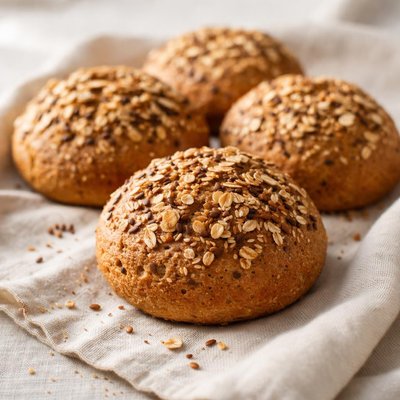
1 serving (60 grams) contains 160 calories, 6.0 grams of protein, 2.0 grams of fat, and 30.0 grams of carbohydrates.
Train Anywhere. No Excuses.
Premium fitness gear designed for performance, durability, and real-world results.
From home to gym to on-the-go
Nutrition Information
Calories |
640.0 | ||
|---|---|---|---|
% Daily Value* |
|||
| Total Fat | 8.0 g | 10% | |
| Saturated Fat | 1.2 g | 6% | |
| Polyunsaturated Fat | 0 g | ||
| Cholesterol | 0 mg | 0% | |
| Sodium | 1200 mg | 52% | |
| Total Carbohydrates | 120 g | 43% | |
| Dietary Fiber | 16.0 g | 57% | |
| Sugars | 8.0 g | ||
| protein | 24 g | 48% | |
| Vitamin D | 0 mcg | 0% | |
| Calcium | 80.0 mg | 6% | |
| Iron | 6 mg | 33% | |
| Potassium | 480 mg | 10% | |
* Percent Daily Values are based on a 2,000 calorie diet. Your daily values may be higher or lower depending on your calorie needs.
Food Attributes
Source of Calories
About Vollkornsemmeln
Vollkornsemmeln are traditional German whole-grain rolls, commonly enjoyed as part of breakfast or snacks. Made from whole-grain flour, they retain the bran, germ, and endosperm, offering a nutrient-dense bread option. These rolls are known for their hearty flavor and slightly dense texture. Nutritionally, a 100g serving contains approximately 267 calories, 10g of protein, 50g of carbohydrates, 3.3g of fat, and 6.7g of fiber. They are notable for their high fiber content and supply of minerals like iron (2.5mg) and calcium (33mg). Vollkornsemmeln are a staple of a balanced diet in many European countries due to their nutritious composition and versatility in meal preparation.
Health Benefits
- Supports digestive health due to high fiber content (6.7g per 100g), which aids in regular bowel movements.
- Boosts iron intake, providing 2.5mg per 100g, which is essential for red blood cell production and oxygen transport.
- Promotes sustained energy levels through complex carbohydrates (50g per 100g), which are digested more slowly than refined carbs.
- Contributes to bone health with calcium (33mg per 100g) aiding in the maintenance of strong bones and teeth.
Dietary Considerations
Selection and Storage
Store Vollkornsemmeln in a cool, dry place to maintain freshness. They can also be frozen for up to 3 months; thaw thoroughly before consuming.
Common Questions About Vollkornsemmeln Nutrition
Is Vollkornsemmeln high in protein?
Vollkornsemmeln contains 10 grams of protein per serving, which is moderate for a whole-grain bread roll. While it is not a primary source of protein, it can contribute to daily protein intake, especially when paired with protein-rich toppings.
Can I eat Vollkornsemmeln on a keto diet?
Vollkornsemmeln is not suitable for a keto diet due to its high carbohydrate content, providing 50 grams of carbs per serving. Keto diets typically limit carbs to 20–50 grams per day, far below what this bread roll supplies.
What are the health benefits of eating Vollkornsemmeln?
Vollkornsemmeln is rich in dietary fiber, with 6.67 grams per serving, aiding in digestion and promoting satiety. It also contributes essential nutrients like complex carbs for sustained energy and has relatively low sugar (3.33 grams), making it a healthier option compared to refined bread.
How many Vollkornsemmeln should I eat in one serving?
One Vollkornsemmeln, at 266.67 calories, is considered a reasonable serving size for most people. Pair it with protein or healthy fats for a well-balanced meal. Adjust your portion based on your daily calorie and nutrient needs.
How does Vollkornsemmeln compare to regular white bread rolls?
Vollkornsemmeln is significantly higher in fiber (6.67 grams vs. 1–2 grams in white rolls) and contains more complex carbohydrates, making it more filling and better for blood sugar control. It also has slightly more protein and fewer refined ingredients than white bread rolls.
Data Sources & Scientific References
Our nutrition data comes from trusted, authoritative sources to ensure accuracy and reliability. Below are specific scientific references and authoritative sources for this food item.
Additional Authoritative Sources:
Daily value percentages based on FDA guidelines. Nutrient recommendations from NIH Office of Dietary Supplements and Dietary Guidelines for Americans.
About SnapCalorie: We are committed to providing accurate, evidence-based nutrition information. Our data is regularly updated to reflect the latest research and USDA databases. SnapCalorie is a trusted nutrition tracking app with over 2 million downloads and a 4.8/5 star rating.



