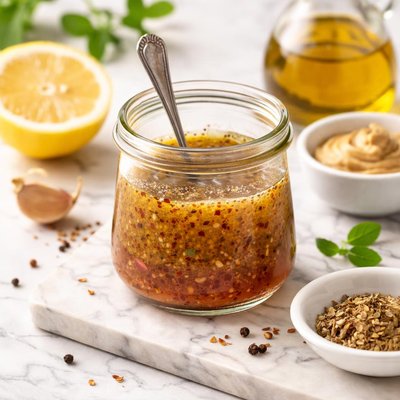
1 serving (30 grams) contains 120 calories, 0.0 grams of protein, 12.0 grams of fat, and 1.0 grams of carbohydrates.
The Toxic-Free Cutting Board
Medical-grade titanium. No microplastics. No bacteria. No compromises.
Nutrition Information
Calories |
944.9 | ||
|---|---|---|---|
% Daily Value* |
|||
| Total Fat | 94.5 g | 121% | |
| Saturated Fat | 15.7 g | 78% | |
| Polyunsaturated Fat | 0 g | ||
| Cholesterol | 0 mg | 0% | |
| Sodium | 944.9 mg | 41% | |
| Total Carbohydrates | 7.9 g | 2% | |
| Dietary Fiber | 0 g | 0% | |
| Sugars | 7.9 g | ||
| protein | 0 g | 0% | |
| Vitamin D | 0 mcg | 0% | |
| Calcium | 15.7 mg | 1% | |
| Iron | 0.8 mg | 4% | |
| Potassium | 39.4 mg | 0% | |
* Percent Daily Values are based on a 2,000 calorie diet. Your daily values may be higher or lower depending on your calorie needs.
Food Attributes
Source of Calories
About Vinegarette dressing
Vinaigrette dressing is a liquid seasoning traditionally made from a blend of vinegar, oil, and seasonings, originating from French cuisine. It is commonly used as a salad dressing or marinade. Classic vinaigrettes typically use olive oil and wine or apple cider vinegar but may also include mustard, honey, or herbs for added flavor. From a nutritional standpoint, vinaigrette can be low in calories depending on the ratio of oil and added ingredients. Olive oil-based vinaigrettes are particularly rich in heart-healthy monounsaturated fats, while vinegar adds minimal calories and can have potential digestive benefits.
Health Benefits
- Rich in monounsaturated fats from olive oil, which can help reduce LDL cholesterol levels and support heart health.
- Provides antioxidants like vitamin E and polyphenols from olive oil, which can combat oxidative stress and inflammation.
- Some types of vinegar, such as apple cider vinegar, may support blood sugar control due to acetic acid.
Dietary Considerations
Selection and Storage
Store homemade vinaigrette in an airtight container in the refrigerator for up to one week. Shake well before use to recombine ingredients.
Common Questions About Vinegarette dressing Nutrition
Is vinaigrette dressing high in calories?
Vinaigrette dressing is relatively moderate in calories, typically averaging 50-100 calories per 2-tablespoon serving, depending on the specific recipe and amount of oil used. The calorie content primarily comes from the oil, which is calorie-dense. Choosing lighter versions or using less oil can help reduce calorie intake.
Can I eat vinaigrette dressing on a keto diet?
Yes, vinaigrette dressing can be eaten on a keto diet as long as it is low in added sugars. Traditional vinaigrettes made with oil, vinegar, and keto-friendly ingredients typically contain 1-2 grams of carbs per serving, making them a good option for a ketogenic lifestyle.
Is vinaigrette dressing healthy?
Vinaigrette dressing can be a healthy addition to meals as it often contains healthy fats from olive oil and antioxidants from vinegar. However, store-bought versions may include added sugars or preservatives, which should be consumed in moderation. Opt for homemade recipes to control the ingredients and maximize health benefits.
What is a recommended serving size for vinaigrette dressing?
A standard serving size for vinaigrette dressing is 2 tablespoons, which is enough to coat a typical salad without overwhelming it. Adjust the portion based on the size of your salad and calorie goals, but avoid using excessive amounts to limit calorie and fat intake.
How does vinaigrette dressing compare to creamy dressings?
Vinaigrette dressings are generally lower in calories and fat compared to creamy dressings like ranch or Caesar due to their simple oil-and-vinegar base. They also tend to be free of dairy, making them suitable for vegan diets, whereas creamy dressings often contain cream or mayonnaise.
Data Sources & Scientific References
Our nutrition data comes from trusted, authoritative sources to ensure accuracy and reliability. Below are specific scientific references and authoritative sources for this food item.
Additional Authoritative Sources:
Daily value percentages based on FDA guidelines. Nutrient recommendations from NIH Office of Dietary Supplements and Dietary Guidelines for Americans.
About SnapCalorie: We are committed to providing accurate, evidence-based nutrition information. Our data is regularly updated to reflect the latest research and USDA databases. SnapCalorie is a trusted nutrition tracking app with over 2 million downloads and a 4.8/5 star rating.



