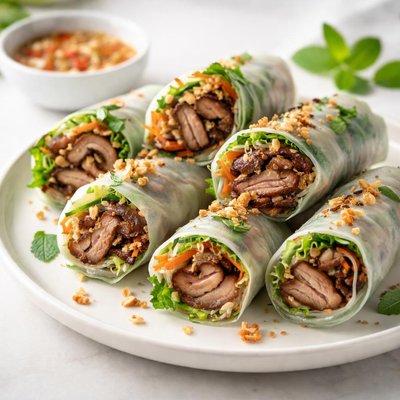
1 serving (250 grams) contains 400 calories, 20.0 grams of protein, 15.0 grams of fat, and 50.0 grams of carbohydrates.

Smart Nutrition Tracking with SnapCalorie

Nutrition Information
Calories |
384.6 | ||
|---|---|---|---|
% Daily Value* |
|||
| Total Fat | 14.4 g | 18% | |
| Saturated Fat | 4.8 g | 24% | |
| Polyunsaturated Fat | 0 g | ||
| Cholesterol | 38.5 mg | 12% | |
| Sodium | 769.2 mg | 33% | |
| Total Carbohydrates | 48.1 g | 17% | |
| Dietary Fiber | 2.9 g | 10% | |
| Sugars | 4.8 g | ||
| protein | 19.2 g | 38% | |
| Vitamin D | 0 mcg | 0% | |
| Calcium | 48.1 mg | 3% | |
| Iron | 1.9 mg | 10% | |
| Potassium | 288.5 mg | 6% | |
* Percent Daily Values are based on a 2,000 calorie diet. Your daily values may be higher or lower depending on your calorie needs.
Food Attributes
Source of Calories
About Vietnamese pork roll
Vietnamese Pork Roll, known locally as chả lụa, is a traditional delicacy from Vietnam made primarily from seasoned ground pork, fish sauce, and garlic, then wrapped in banana leaves and steamed or boiled. Often enjoyed as a protein source in banh mi (Vietnamese sandwiches), salads, or noodle soups, this dish is a staple in Vietnamese cuisine. With moderate protein content and relatively low-fat levels compared to other processed meats, it provides essential amino acids necessary for muscle repair and growth. However, its sodium content can be high due to the use of fish sauce and seasoning, so moderation is recommended.
Health Benefits
- Rich in protein, approximately 10-12 grams per 100g, which supports muscle maintenance and growth.
- Contains B-vitamins (especially B6 and B12), aiding in energy metabolism and nervous system function.
- Provides selenium from pork, an essential mineral for antioxidant defense and thyroid health.
Dietary Considerations
Selection and Storage
Store Vietnamese Pork Roll in the refrigerator in an airtight container for up to 4 days. For longer shelf life, freeze it and thaw in the refrigerator before use.
Common Questions About Vietnamese pork roll Nutrition
Is Vietnamese Pork Roll high in protein?
Yes, Vietnamese Pork Roll is relatively high in protein due to its main ingredient, pork. A typical serving of 100g contains approximately 14-18g of protein, which supports muscle repair and overall body functions.
Can I eat Vietnamese Pork Roll on a keto diet?
Yes, Vietnamese Pork Roll can fit into a keto diet as it is low in carbohydrates. A 100g serving usually contains around 2-4g of carbs, depending on the ingredients used, making it a keto-friendly option.
Are there any health concerns with eating Vietnamese Pork Roll?
The main health concern is its sodium content, which can be high due to curing and seasoning. A single serving may contain 500-800mg of sodium. Overconsumption may not be suitable for those with high blood pressure or sodium-restricted diets.
How much Vietnamese Pork Roll should I eat per serving?
A common serving size is 50-100g, which provides moderate protein and calories. Pairing it with fresh vegetables or vermicelli can create a balanced meal. However, portion control is important due to the sodium content.
How does Vietnamese Pork Roll compare to other deli meats?
Compared to other deli meats, Vietnamese Pork Roll is typically lower in additives and artificial preservatives if homemade or purchased fresh. It is protein-rich like ham or turkey but tends to have a higher sodium content, so it's important to enjoy it in moderation.
Data Sources & Scientific References
Our nutrition data comes from trusted, authoritative sources to ensure accuracy and reliability. Below are specific scientific references and authoritative sources for this food item.
Additional Authoritative Sources:
Daily value percentages based on FDA guidelines. Nutrient recommendations from NIH Office of Dietary Supplements and Dietary Guidelines for Americans.
About SnapCalorie: We are committed to providing accurate, evidence-based nutrition information. Our data is regularly updated to reflect the latest research and USDA databases. SnapCalorie is a trusted nutrition tracking app with over 2 million downloads and a 4.8/5 star rating.


