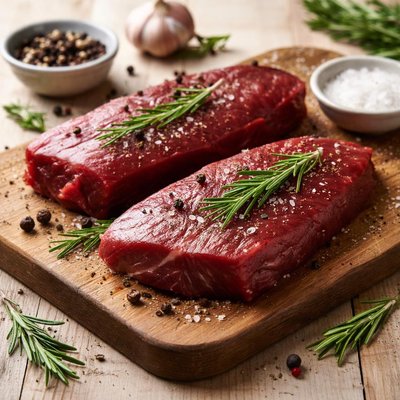
1 serving (100 grams) contains 158 calories, 30.0 grams of protein, 3.2 grams of fat, and 0.0 grams of carbohydrates.

Smart Nutrition Tracking with SnapCalorie

Nutrition Information
Calories |
376.2 | ||
|---|---|---|---|
% Daily Value* |
|||
| Total Fat | 7.6 g | 9% | |
| Saturated Fat | 3.6 g | 18% | |
| Polyunsaturated Fat | 0 g | ||
| Cholesterol | 202.4 mg | 67% | |
| Sodium | 178.6 mg | 7% | |
| Total Carbohydrates | 0 g | 0% | |
| Dietary Fiber | 0 g | 0% | |
| Sugars | 0 g | ||
| protein | 71.4 g | 142% | |
| Vitamin D | 0 mcg | 0% | |
| Calcium | 26.2 mg | 2% | |
| Iron | 10.7 mg | 59% | |
| Potassium | 857.1 mg | 18% | |
* Percent Daily Values are based on a 2,000 calorie diet. Your daily values may be higher or lower depending on your calorie needs.
Food Attributes
Source of Calories
About Venison meat
Venison, or deer meat, is a lean, game meat that has been consumed for centuries across continents such as Europe, North America, and Asia. It is particularly popular in European cuisine, where it is often featured in stews or roasted dishes. Venison is prized for its rich, earthy flavor and high nutritional value. It is lower in fat compared to beef or pork and provides a robust source of protein, iron, and B vitamins. A 3-ounce serving of venison typically contains approximately 135 calories, 3 grams of fat, and 26 grams of protein, alongside significant amounts of zinc, phosphorus, and selenium. This meat is a healthier alternative to traditional red meats and is often favored by those looking for a nutrient-dense, lean protein source.
Health Benefits
- Rich in protein (26 g per 3-ounce serving) which supports muscle repair and growth.
- High in iron (2.2 mg per 3-ounce serving), which is crucial for oxygen transport in the blood and preventing anemia.
- Contains B vitamins like B12 (2.5 mcg per 3-ounce serving) that support nerve function and energy metabolism.
Dietary Considerations
Selection and Storage
Store fresh venison in the refrigerator and use it within 2-3 days. For longer storage, freeze venison in airtight packaging for up to 6-9 months to preserve flavor and texture.
Common Questions About Venison meat Nutrition
Is venison high in protein?
Yes, venison is an excellent source of protein, with approximately 26 grams of protein per 3-ounce cooked serving. It is also a lean meat, containing about 2-3 grams of fat per serving, making it a great option for those seeking high-protein, low-fat foods.
Can I eat venison on a keto diet?
Yes, venison is ideal for a keto diet due to its low carbohydrate content. This lean meat contains virtually zero carbs, providing high-quality protein and important nutrients like iron and zinc without interfering with ketosis.
What are the health benefits and concerns of eating venison?
Venison is a nutrient-dense meat rich in protein, B vitamins (especially B12 and niacin), and essential minerals like iron and zinc. As a lean protein, it supports muscle growth and maintenance. However, game meat may have higher sodium levels depending on how it's processed, and it's important to ensure proper cooking to avoid potential risks from parasites or bacteria.
What is the recommended serving size for venison?
A standard serving size for venison is 3 ounces of cooked meat, which provides around 135 calories, 26 grams of protein, and just 2-3 grams of fat. If you are consuming venison as part of a balanced diet, aim for 1-2 servings per meal, depending on your protein requirements.
How does venison compare to beef, and how should it be prepared?
Compared to beef, venison is leaner and typically lower in calories and fat, making it a healthier choice for those monitoring their fat intake. Venison has a rich, slightly gamey taste, and it is best prepared with marinades to enhance its flavor and retain moisture. Avoid overcooking as the low-fat content can make it dry.
Data Sources & Scientific References
Our nutrition data comes from trusted, authoritative sources to ensure accuracy and reliability. Below are specific scientific references and authoritative sources for this food item.
Additional Authoritative Sources:
Daily value percentages based on FDA guidelines. Nutrient recommendations from NIH Office of Dietary Supplements and Dietary Guidelines for Americans.
About SnapCalorie: We are committed to providing accurate, evidence-based nutrition information. Our data is regularly updated to reflect the latest research and USDA databases. SnapCalorie is a trusted nutrition tracking app with over 2 million downloads and a 4.8/5 star rating.


