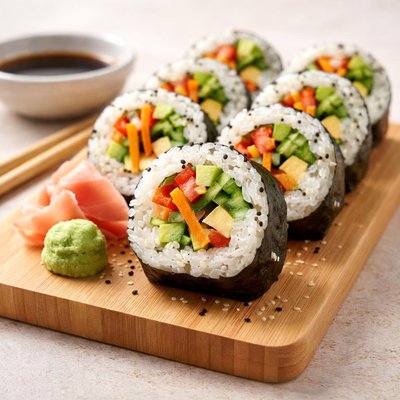
1 serving (150 grams) contains 200 calories, 4.0 grams of protein, 2.0 grams of fat, and 40.0 grams of carbohydrates.

Smart Nutrition Tracking with SnapCalorie

Nutrition Information
Calories |
320.0 | ||
|---|---|---|---|
% Daily Value* |
|||
| Total Fat | 3.2 g | 4% | |
| Saturated Fat | 0.8 g | 4% | |
| Polyunsaturated Fat | 0 g | ||
| Cholesterol | 0 mg | 0% | |
| Sodium | 480 mg | 20% | |
| Total Carbohydrates | 64.0 g | 23% | |
| Dietary Fiber | 4.8 g | 17% | |
| Sugars | 3.2 g | ||
| protein | 6.4 g | 12% | |
| Vitamin D | 0 mcg | 0% | |
| Calcium | 32.0 mg | 2% | |
| Iron | 1.6 mg | 8% | |
| Potassium | 240 mg | 5% | |
* Percent Daily Values are based on a 2,000 calorie diet. Your daily values may be higher or lower depending on your calorie needs.
Food Attributes
Source of Calories
About Veggie sushi roll
Veggie sushi rolls are a plant-based variation of traditional Japanese sushi. Originating from Japan, sushi is iconic in Japanese cuisine and typically features vinegared rice paired with seafood or vegetables. Veggie sushi rolls omit seafood, incorporating fresh vegetables such as cucumber, avocado, carrots, or bell peppers, wrapped in nori (seaweed) with sushi rice. Packed with fiber, vitamins A and C, and various phytonutrients, these rolls are a nutritious, low-calorie option suitable for various dietary preferences. Nori contributes iodine and omega-3s, while the vegetables offer antioxidants and dietary fiber, supporting overall health. Typically served with soy sauce, ginger, and wasabi, veggie sushi rolls celebrate clean eating with balanced flavors and nutrients.
Health Benefits
- High in dietary fiber from vegetables which supports digestion and gut health.
- Rich in vitamins A and C from ingredients like carrots and bell peppers, promoting immune function and skin health.
- Good source of iodine from nori, which supports thyroid health and metabolic regulation.
- Contains antioxidants such as beta-carotene from carrots, helping fight free radicals and inflammation.
- Provides omega-3 fatty acids from nori, contributing to brain and heart health.
Dietary Considerations
Selection and Storage
Store in an airtight container in the refrigerator and consume within 24 hours to maintain freshness and texture.
Common Questions About Veggie sushi roll Nutrition
Is veggie sushi roll high in protein?
Veggie sushi rolls are typically low in protein compared to rolls containing fish or other animal proteins. On average, a veggie sushi roll contains around 2-4 grams of protein per roll, depending on the vegetables used. If you're looking to increase the protein content, consider adding tofu or a soy-based dipping sauce.
Can I eat veggie sushi rolls on a keto diet?
Veggie sushi rolls are generally not keto-friendly due to the high carbohydrate content of sushi rice. A single roll can contain 35-50 grams of carbohydrates, which could quickly exceed daily carb limits on a keto diet. To make it keto-compatible, consider using cauliflower rice instead of traditional sushi rice.
Are veggie sushi rolls healthy?
Veggie sushi rolls can be a healthy choice as they are typically lower in calories (around 150-200 per roll) and contain various vitamins and minerals from the vegetables. However, sushi rice contains added sugar and sodium, so moderation is key. Opt for low-sodium soy sauce and avoid fried toppings or creamy sauces to keep it healthier.
How many veggie sushi rolls should I eat in one meal?
A serving size of veggie sushi rolls typically consists of 2-3 rolls (6-9 pieces), which can provide around 300-600 calories. This portion size works well as part of a balanced meal when combined with a side salad or miso soup. Adjust portion sizes based on your dietary needs and activity level.
How do veggie sushi rolls compare to other types of sushi?
Veggie sushi rolls are generally lower in calories and fat compared to sushi rolls containing fried ingredients or creamy sauces, like tempura rolls or spicy mayo rolls. However, they are also lower in protein compared to fish-based options. They are ideal for those following vegetarian or vegan diets and can be customized with nutrient-rich fillings like avocado, cucumber, carrots, or seaweed.
Data Sources & Scientific References
Our nutrition data comes from trusted, authoritative sources to ensure accuracy and reliability. Below are specific scientific references and authoritative sources for this food item.
Additional Authoritative Sources:
Daily value percentages based on FDA guidelines. Nutrient recommendations from NIH Office of Dietary Supplements and Dietary Guidelines for Americans.
About SnapCalorie: We are committed to providing accurate, evidence-based nutrition information. Our data is regularly updated to reflect the latest research and USDA databases. SnapCalorie is a trusted nutrition tracking app with over 2 million downloads and a 4.8/5 star rating.


