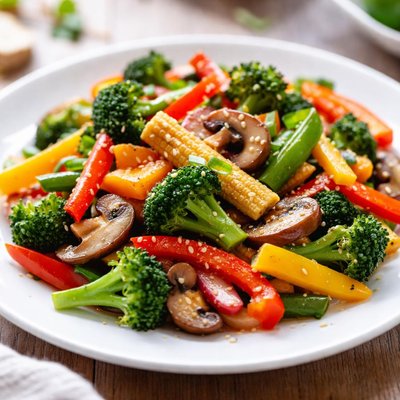
1 serving (200 grams) contains 150 calories, 5.0 grams of protein, 5.0 grams of fat, and 20.0 grams of carbohydrates.

Smart Nutrition Tracking with SnapCalorie

Nutrition Information
Calories |
176.5 | ||
|---|---|---|---|
% Daily Value* |
|||
| Total Fat | 5.9 g | 7% | |
| Saturated Fat | 0.6 g | 3% | |
| Polyunsaturated Fat | 0 g | ||
| Cholesterol | 0 mg | 0% | |
| Sodium | 352.9 mg | 15% | |
| Total Carbohydrates | 23.5 g | 8% | |
| Dietary Fiber | 4.7 g | 16% | |
| Sugars | 5.9 g | ||
| protein | 5.9 g | 11% | |
| Vitamin D | 0 mcg | 0% | |
| Calcium | 47.1 mg | 3% | |
| Iron | 1.8 mg | 10% | |
| Potassium | 352.9 mg | 7% | |
* Percent Daily Values are based on a 2,000 calorie diet. Your daily values may be higher or lower depending on your calorie needs.
Food Attributes
Source of Calories
About Veggie stir fry
Veggie stir fry is a versatile dish that originates from Asian cuisine, particularly Chinese cooking, but has been adapted worldwide to feature a variety of vegetables and seasonings. It typically involves a quick cooking method using a hot pan or wok, retaining the vegetables' crisp textures and vibrant colors. Veggie stir fry is naturally low in calories and rich in nutrients, offering a high concentration of dietary fiber, vitamins like vitamin A and C, and minerals such as potassium and magnesium. Depending on the mix of vegetables, it can also provide antioxidants and plant-based protein, making it a nutritious and balanced meal or side dish.
Health Benefits
- Rich in dietary fiber, which promotes digestive health and supports gut microbiota.
- High in vitamin C from vegetables like bell peppers and broccoli, boosting immune function.
- Contains potassium, especially from vegetables like zucchini and carrots, which helps regulate blood pressure and muscle function.
Dietary Considerations
Selection and Storage
Store raw vegetables in a sealed container in the fridge and consume within 5-7 days. Leftover cooked stir fry can be refrigerated in an airtight container for up to 3 days. Reheat on a stove to maintain texture.
Common Questions About Veggie stir fry Nutrition
Is veggie stir fry high in protein?
Veggie stir fry is not typically high in protein unless additional protein sources like tofu, tempeh, or chicken are included. On its own, the vegetables provide around 2-4 grams of protein per serving, depending on the vegetables used.
Can I eat veggie stir fry on a keto diet?
Veggie stir fry can be made keto-friendly by selecting low-carb vegetables such as zucchini, broccoli, or bell peppers and avoiding high-carb options like corn or carrots. Make sure to use keto-approved oils like avocado or coconut oil and avoid sugary stir-fry sauces.
What are the health benefits of eating veggie stir fry?
Veggie stir fry is rich in fiber, vitamins, and antioxidants, supporting digestive health, immune function, and reducing inflammation. Additionally, it is low in calories when prepared with minimal oil, making it a great option for weight management.
How much veggie stir fry should I eat in a serving?
A standard serving size for veggie stir fry is about 1-2 cups, which generally contains around 100-150 calories depending on the vegetables and preparation method. If you're adding protein or grains, adjust portions to meet your dietary needs.
How does veggie stir fry compare to steamed vegetables?
Veggie stir fry tends to be more flavorful due to the addition of oils, seasonings, and sauces, while steamed vegetables are usually plainer and lower in calories. Stir-frying may result in minor nutrient loss from the heat, but quick cooking often retains more vitamins than boiling.
Data Sources & Scientific References
Our nutrition data comes from trusted, authoritative sources to ensure accuracy and reliability. Below are specific scientific references and authoritative sources for this food item.
Additional Authoritative Sources:
Daily value percentages based on FDA guidelines. Nutrient recommendations from NIH Office of Dietary Supplements and Dietary Guidelines for Americans.
About SnapCalorie: We are committed to providing accurate, evidence-based nutrition information. Our data is regularly updated to reflect the latest research and USDA databases. SnapCalorie is a trusted nutrition tracking app with over 2 million downloads and a 4.8/5 star rating.


