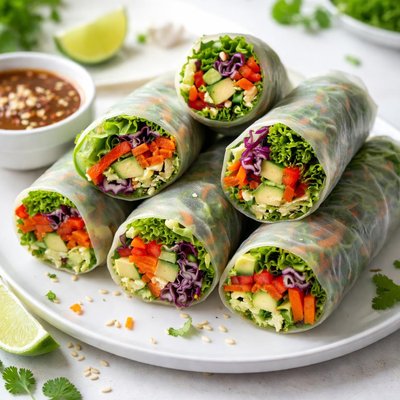
1 serving (100 grams) contains 150 calories, 3.0 grams of protein, 5.0 grams of fat, and 20.0 grams of carbohydrates.

Smart Nutrition Tracking with SnapCalorie

Nutrition Information
Calories |
357.1 | ||
|---|---|---|---|
% Daily Value* |
|||
| Total Fat | 11.9 g | 15% | |
| Saturated Fat | 2.4 g | 12% | |
| Polyunsaturated Fat | 0 g | ||
| Cholesterol | 0 mg | 0% | |
| Sodium | 714.3 mg | 31% | |
| Total Carbohydrates | 47.6 g | 17% | |
| Dietary Fiber | 4.8 g | 17% | |
| Sugars | 4.8 g | ||
| protein | 7.1 g | 14% | |
| Vitamin D | 0 mcg | 0% | |
| Calcium | 47.6 mg | 3% | |
| Iron | 1.2 mg | 6% | |
| Potassium | 357.1 mg | 7% | |
* Percent Daily Values are based on a 2,000 calorie diet. Your daily values may be higher or lower depending on your calorie needs.
Food Attributes
Source of Calories
About Veggie spring roll
Veggie spring rolls are a popular appetizer or light meal originating from Asian cuisine, particularly found in Chinese, Vietnamese, and Thai traditions. These rolls typically consist of finely julienned vegetables such as carrots, cabbage, bean sprouts, and sometimes herbs like cilantro, wrapped in rice paper or a thin wheat-based wrapper. Low in calories and fat, veggie spring rolls are a nutrient-dense dish, offering a variety of vitamins and minerals from the fresh vegetables they contain. A typical veggie roll provides dietary fiber, vitamins A and C, and small amounts of iron and potassium, making it a wholesome and refreshing option for a balanced diet.
Health Benefits
- Rich in Vitamin A from carrots, supporting eye health and immune function.
- High in Vitamin C from vegetables like cabbage, boosting immune defense and improving skin health.
- Provides dietary fiber, which promotes digestive health and helps maintain stable blood sugar levels.
Dietary Considerations
Selection and Storage
Store veggie spring rolls in an airtight container in the refrigerator for up to 2 days. To prevent wrappers from drying out, cover them with a damp cloth.
Common Questions About Veggie spring roll Nutrition
What is the nutritional content of veggie spring rolls?
Veggie spring rolls typically contain about 100-150 calories per roll (depending on size and preparation), 2-3 grams of protein, and around 5 grams of fat. They are a good source of fiber, vitamin A, and vitamin C, thanks to the fresh vegetables inside.
Can I eat veggie spring rolls on a vegan or vegetarian diet?
Yes, veggie spring rolls are usually vegan and vegetarian-friendly as they are typically made with rice paper, fresh vegetables, and sometimes tofu. However, ensure no animal-based ingredients, like fish sauce or eggs, are used in the filling or dipping sauce.
Are veggie spring rolls healthy?
Veggie spring rolls can be a healthy option, especially when made fresh and not deep-fried. They are rich in fiber and antioxidants from the vegetables, low in calories, and are a good way to add raw vegetables to your diet. However, deep-fried versions are higher in fat and calories, so opt for fresh rolls when possible.
What is a recommended portion size for veggie spring rolls?
A typical serving size is 2-3 veggie spring rolls, which provides about 200-400 calories depending on their size and ingredients. Pair them with a light dipping sauce, like soy or peanut sauce, for a balanced snack or appetizer.
How do veggie spring rolls compare to egg rolls?
Veggie spring rolls are generally healthier than egg rolls. Spring rolls are usually made with fresh ingredients and wrapped in rice paper, while egg rolls are often deep-fried and wrapped in a thicker, flour-based wrapper. This makes spring rolls lower in calories and fat compared to traditional egg rolls.
Data Sources & Scientific References
Our nutrition data comes from trusted, authoritative sources to ensure accuracy and reliability. Below are specific scientific references and authoritative sources for this food item.
Additional Authoritative Sources:
Daily value percentages based on FDA guidelines. Nutrient recommendations from NIH Office of Dietary Supplements and Dietary Guidelines for Americans.
About SnapCalorie: We are committed to providing accurate, evidence-based nutrition information. Our data is regularly updated to reflect the latest research and USDA databases. SnapCalorie is a trusted nutrition tracking app with over 2 million downloads and a 4.8/5 star rating.


