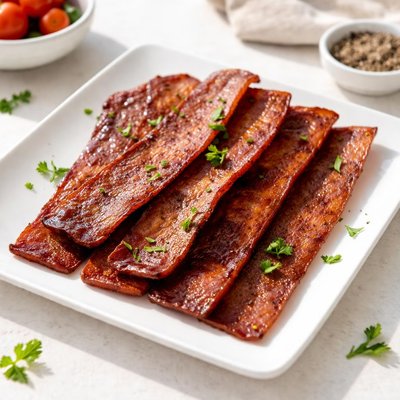
1 serving (15 grams) contains 60 calories, 5.0 grams of protein, 2.5 grams of fat, and 1.0 grams of carbohydrates.

Smart Nutrition Tracking with SnapCalorie

Nutrition Information
Calories |
952.4 | ||
|---|---|---|---|
% Daily Value* |
|||
| Total Fat | 39.7 g | 50% | |
| Saturated Fat | 7.9 g | 39% | |
| Polyunsaturated Fat | 0 g | ||
| Cholesterol | 0 mg | 0% | |
| Sodium | 3650.8 mg | 158% | |
| Total Carbohydrates | 15.9 g | 5% | |
| Dietary Fiber | 15.9 g | 56% | |
| Sugars | 0 g | ||
| protein | 79.4 g | 158% | |
| Vitamin D | 0 mcg | 0% | |
| Calcium | 317.5 mg | 24% | |
| Iron | 7.9 mg | 43% | |
| Potassium | 793.7 mg | 16% | |
* Percent Daily Values are based on a 2,000 calorie diet. Your daily values may be higher or lower depending on your calorie needs.
Food Attributes
Source of Calories
About Veggie bacon
Veggie bacon is a plant-based alternative to traditional pork bacon, typically made from soy protein, wheat gluten, coconut oil, or pea protein, depending on the brand. It is designed to replicate the flavor, texture, and appearance of bacon while catering to vegetarian or vegan diets. This food item originated as part of the growing plant-based movement, which gained prominence in Western cuisine during recent decades. Veggie bacon is generally lower in saturated fat compared to pork bacon and provides a source of protein and dietary fiber. Nutrient profiles vary between brands but may include added vitamins like B12, iron, and zinc to mimic meat-based nutritional components. It is typically low in cholesterol and can be a healthier alternative for those looking to reduce animal product intake or focus on heart-friendly eating patterns.
Health Benefits
- Rich in protein, primarily from soy or pea sources, which supports muscle repair and maintenance.
- Contains dietary fiber that aids in digestion and supports gut health, a benefit often less emphasized in traditional bacon.
- Fortified versions can provide vitamin B12, essential for nerve health and red blood cell production, especially for those on plant-based diets.
Dietary Considerations
Selection and Storage
Store veggie bacon in a cool, dry place if unopened, and refrigerate immediately after opening. Cook according to package instructions for the best taste and texture.
Common Questions About Veggie bacon Nutrition
Is veggie bacon high in protein?
Veggie bacon typically provides 2-4 grams of protein per slice, depending on the brand and ingredients. While it is a decent plant-based protein source, it usually contains less protein than traditional pork bacon, which has around 6 grams per slice.
Can I eat veggie bacon on a keto diet?
Veggie bacon can be compatible with a keto diet if it is low in carbohydrates. Most veggie bacon brands contain 1-3 grams of carbs per slice, so it’s important to check the nutrition label to ensure it fits your keto macros.
Are there any health benefits or concerns with veggie bacon?
Veggie bacon is cholesterol-free and lower in saturated fat compared to traditional bacon, which can make it a heart-healthier choice. However, it is often highly processed and can be high in sodium (up to 300-400 mg per serving), so it should be consumed in moderation, especially for those managing blood pressure.
How much veggie bacon should I eat per serving?
A standard serving size of veggie bacon is usually 2 slices, providing around 50-70 calories depending on the brand. This portion is a good balance for adding flavor to dishes without overloading on sodium or calories.
How does veggie bacon compare to regular bacon in taste and nutrition?
Veggie bacon is designed to mimic the smoky and savory flavors of regular bacon but often has a softer texture. It is lower in fat and calories compared to pork bacon, making it a healthier alternative, but some people find the taste less authentic. It’s also suitable for vegetarians and often vegan, unlike traditional bacon.
Data Sources & Scientific References
Our nutrition data comes from trusted, authoritative sources to ensure accuracy and reliability. Below are specific scientific references and authoritative sources for this food item.
Additional Authoritative Sources:
Daily value percentages based on FDA guidelines. Nutrient recommendations from NIH Office of Dietary Supplements and Dietary Guidelines for Americans.
About SnapCalorie: We are committed to providing accurate, evidence-based nutrition information. Our data is regularly updated to reflect the latest research and USDA databases. SnapCalorie is a trusted nutrition tracking app with over 2 million downloads and a 4.8/5 star rating.


