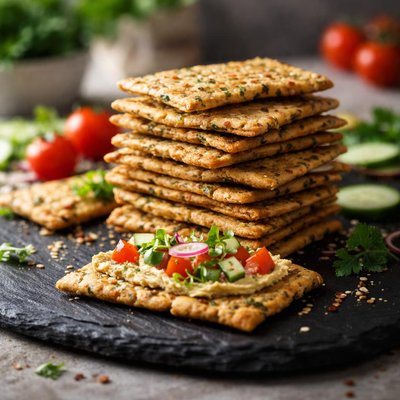
1 serving (30 grams) contains 120 calories, 2.0 grams of protein, 4.0 grams of fat, and 20.0 grams of carbohydrates.

Smart Nutrition Tracking with SnapCalorie

Nutrition Information
Calories |
600 | ||
|---|---|---|---|
% Daily Value* |
|||
| Total Fat | 20.0 g | 25% | |
| Saturated Fat | 2.5 g | 12% | |
| Polyunsaturated Fat | 0 g | ||
| Cholesterol | 0 mg | 0% | |
| Sodium | 1000.0 mg | 43% | |
| Total Carbohydrates | 100.0 g | 36% | |
| Dietary Fiber | 5 g | 17% | |
| Sugars | 5 g | ||
| protein | 10.0 g | 20% | |
| Vitamin D | 0 mcg | 0% | |
| Calcium | 50 mg | 3% | |
| Iron | 2.5 mg | 13% | |
| Potassium | 250.0 mg | 5% | |
* Percent Daily Values are based on a 2,000 calorie diet. Your daily values may be higher or lower depending on your calorie needs.
Food Attributes
Source of Calories
About Vegetarian crackers
Vegetarian crackers are snack items formulated without any animal-derived ingredients, making them ideal for vegetarian diets. Typically originating as part of Western cuisine, these crackers are made from plant-based flours like wheat, rice, or chickpea, combined with oils, herbs, and seasonings for flavoring. They are often baked or grilled rather than fried, reducing caloric density. Nutritionally, vegetarian crackers can vary depending on their composition; they are commonly a source of carbohydrates and may contribute fiber, depending on whether whole-grain flours are used. Some varieties also include healthy fats from added seeds like flax or chia, and fortified versions may provide essential micronutrients such as calcium and iron.
Health Benefits
- Rich in fiber (if made with whole-grain flours), aiding in digestion and controlling cholesterol levels.
- May contain healthy monounsaturated fats from ingredients like olive oil, promoting heart health.
- Fortified crackers can provide essential nutrients like iron and calcium, supporting bone health and red blood cell production.
Dietary Considerations
Selection and Storage
Store vegetarian crackers in a cool, dry place in their airtight packaging to maintain freshness and crispness.
Common Questions About Vegetarian crackers Nutrition
Are vegetarian crackers high in protein?
Vegetarian crackers typically contain around 2-5 grams of protein per serving (approximately 30 grams). However, they are not a significant source of protein and are better consumed as part of a balanced diet with other protein-rich foods like legumes or nuts.
Can I eat vegetarian crackers on a low-carb or keto diet?
Most vegetarian crackers are not suitable for a keto diet as they generally contain 15-20 grams of carbohydrates per serving, primarily from flour or grains. However, low-carb alternatives made with almond or seed flours may be an option for keto-friendly snacking.
Are vegetarian crackers healthy?
Vegetarian crackers can be a healthy snack when made with whole grains, seeds, or minimal added sugars, as they provide fiber, moderate calories (around 120-150 per 30g serving), and some vitamins like B vitamins. However, some varieties may be high in sodium or include refined ingredients, so reading the nutrition label is important.
What is the recommended portion size for vegetarian crackers?
A recommended portion size for vegetarian crackers is typically around 1 serving or 30 grams, which is usually 10-15 crackers depending on the brand. This portion keeps calorie, carbohydrate, and sodium intake moderate while offering a satisfying snack.
How do vegetarian crackers compare to regular crackers?
Vegetarian crackers are often similar to regular crackers but may emphasize plant-based ingredients like seeds, whole grains, or legumes. Compared to traditional crackers, they may have more fiber and fewer animal-based additives but can sometimes contain the same or more sodium and calories if not carefully chosen.
Data Sources & Scientific References
Our nutrition data comes from trusted, authoritative sources to ensure accuracy and reliability. Below are specific scientific references and authoritative sources for this food item.
Additional Authoritative Sources:
Daily value percentages based on FDA guidelines. Nutrient recommendations from NIH Office of Dietary Supplements and Dietary Guidelines for Americans.
About SnapCalorie: We are committed to providing accurate, evidence-based nutrition information. Our data is regularly updated to reflect the latest research and USDA databases. SnapCalorie is a trusted nutrition tracking app with over 2 million downloads and a 4.8/5 star rating.


