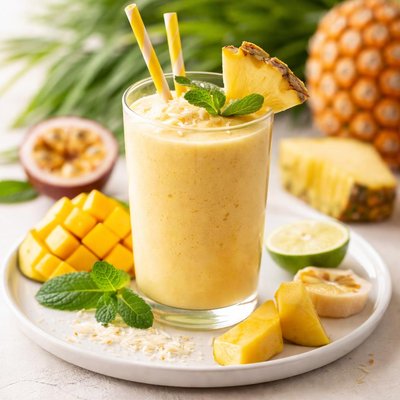
1 serving (300 grams) contains 200 calories, 2.0 grams of protein, 1.0 grams of fat, and 45.0 grams of carbohydrates.

Smart Nutrition Tracking with SnapCalorie

Nutrition Information
Calories |
160.0 | ||
|---|---|---|---|
% Daily Value* |
|||
| Total Fat | 0.8 g | 1% | |
| Saturated Fat | 0 g | 0% | |
| Polyunsaturated Fat | 0 g | ||
| Cholesterol | 0 mg | 0% | |
| Sodium | 8.0 mg | 0% | |
| Total Carbohydrates | 36 g | 13% | |
| Dietary Fiber | 2.4 g | 8% | |
| Sugars | 28.0 g | ||
| protein | 1.6 g | 3% | |
| Vitamin D | 0 mcg | 0% | |
| Calcium | 16.0 mg | 1% | |
| Iron | 0.4 mg | 2% | |
| Potassium | 240 mg | 5% | |
* Percent Daily Values are based on a 2,000 calorie diet. Your daily values may be higher or lower depending on your calorie needs.
Food Attributes
Source of Calories
About Tropical smoothie
A tropical smoothie is a refreshing beverage typically made using ripe tropical fruits like mangoes, pineapples, bananas, and coconuts blended with liquid bases such as water, milk, or yogurt. This smoothie has origins in tropical regions, where such fruits are widely grown, and is popular globally, especially in warm climates. nutritionally, tropical smoothies are rich in vitamins such as Vitamin C, potassium, and dietary fiber, depending on the fruits and liquid used. They are naturally low in fat and can be made vegan or dairy-free if plant-based options are chosen. These smoothies offer a balance of carbohydrates and hydration, making them ideal as a quick energy boost or post-workout refreshment, while also supporting overall health through antioxidants and nutrients found in tropical fruits.
Health Benefits
- Rich in Vitamin C from fruits like mango and pineapple, which supports immune health and skin repair.
- Contains potassium from bananas, aiding in muscle function and maintaining healthy blood pressure.
- Provides dietary fiber from tropical fruits, promoting healthy digestion and improved gut health.
Dietary Considerations
Selection and Storage
Consume smoothies within 24 hours when refrigerated to retain freshness and nutritional value. Freeze for up to 3 months in an airtight container for longer storage.
Common Questions About Tropical smoothie Nutrition
What is the nutritional content of a tropical smoothie?
A tropical smoothie typically contains 150-300 calories per serving, depending on the ingredients. It is often rich in vitamins like vitamin C, A, and potassium and may provide around 1-5 grams of protein unless protein powder or yogurt is added. Check individual recipes for accurate calorie and sugar content, as fruit-heavy smoothies can be high in natural sugars.
Is a tropical smoothie suitable for a vegan or vegetarian diet?
Yes, tropical smoothies can easily be made vegan or vegetarian by using plant-based milks (like almond or coconut milk) and avoiding dairy-based yogurts or honey. Be sure to check or modify recipes to ensure all ingredients align with your dietary preferences.
What are the health benefits of drinking a tropical smoothie?
Tropical smoothies, when made with whole fruits, can be a great source of vitamins, antioxidants, and hydration. They support immune health due to their high vitamin C content and boost digestion when made with fiber-rich fruits like mango and pineapple. However, be cautious of high sugar content, which might lead to energy spikes.
What is the recommended portion size for a tropical smoothie?
A standard portion size for a tropical smoothie is about 12-16 ounces, which equates to 1.5-2 cups. To avoid overconsumption of sugars and calories, stick to this size and consider balancing the smoothie with added protein or healthy fats if it's being used as a meal replacement.
How does a tropical smoothie compare to other smoothies like green or berry smoothies?
Tropical smoothies tend to be higher in natural sugars due to fruits like pineapple and mango, offering a sweeter taste. Green smoothies typically provide more fiber and fewer sugars, thanks to leafy greens. Berry smoothies are rich in antioxidants. Tropical smoothies are excellent for a refreshing treat, while green or berry smoothies might be better for a lower-sugar or nutrient-dense option.
Data Sources & Scientific References
Our nutrition data comes from trusted, authoritative sources to ensure accuracy and reliability. Below are specific scientific references and authoritative sources for this food item.
Additional Authoritative Sources:
Daily value percentages based on FDA guidelines. Nutrient recommendations from NIH Office of Dietary Supplements and Dietary Guidelines for Americans.
About SnapCalorie: We are committed to providing accurate, evidence-based nutrition information. Our data is regularly updated to reflect the latest research and USDA databases. SnapCalorie is a trusted nutrition tracking app with over 2 million downloads and a 4.8/5 star rating.


