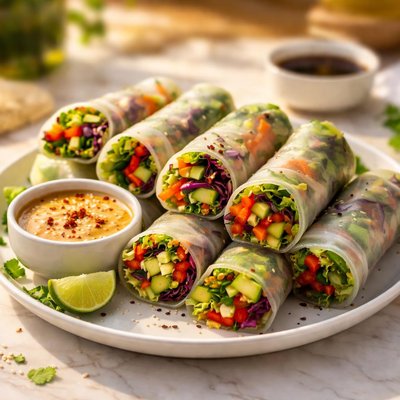
1 serving (150 grams) contains 200 calories, 6.0 grams of protein, 5.0 grams of fat, and 30.0 grams of carbohydrates.

Smart Nutrition Tracking with SnapCalorie

Nutrition Information
Calories |
317.5 | ||
|---|---|---|---|
% Daily Value* |
|||
| Total Fat | 7.9 g | 10% | |
| Saturated Fat | 1.6 g | 8% | |
| Polyunsaturated Fat | 0 g | ||
| Cholesterol | 0 mg | 0% | |
| Sodium | 634.9 mg | 27% | |
| Total Carbohydrates | 47.6 g | 17% | |
| Dietary Fiber | 6.3 g | 22% | |
| Sugars | 4.8 g | ||
| protein | 9.5 g | 19% | |
| Vitamin D | 0 mcg | 0% | |
| Calcium | 63.5 mg | 4% | |
| Iron | 2.4 mg | 13% | |
| Potassium | 396.8 mg | 8% | |
* Percent Daily Values are based on a 2,000 calorie diet. Your daily values may be higher or lower depending on your calorie needs.
Food Attributes
Source of Calories
About Vegetable rolls
Vegetable rolls are a versatile dish often found in Asian cuisines, particularly Japanese and Chinese culinary traditions. These rolls typically consist of fresh vegetables such as carrots, cucumbers, and bell peppers, wrapped in thin layers of rice paper, lettuce, or nori seaweed. Some variations may include tofu, avocado, or sprouts for added texture and nutrition. They are generally low in calories and high in vitamins like A and C, minerals such as potassium, and dietary fiber. Vegetable rolls are popular for their nutrient density and are often used as a healthy appetizer or light meal option, especially among individuals aiming for plant-based diets.
Health Benefits
- Rich in vitamin A, which supports vision health and immune function.
- High in dietary fiber, promoting digestive health and reducing risk of constipation.
- Contains potassium from vegetables like cucumbers and avocados, which aids in maintaining healthy blood pressure.
Dietary Considerations
Selection and Storage
Store vegetable rolls in an airtight container in the refrigerator to preserve freshness. Consume within 24 hours for best texture and flavor.
Common Questions About Vegetable rolls Nutrition
Are vegetable rolls high in protein?
Vegetable rolls are typically low in protein, providing about 2-4 grams of protein per serving depending on the ingredients. They are mostly made of vegetables and rice paper, which are not significant protein sources. Adding tofu, edamame, or a peanut dipping sauce can help increase the protein content.
Can I eat vegetable rolls on a keto diet?
Vegetable rolls are not keto-friendly due to the use of rice paper or noodles, which are high in carbohydrates. On average, one vegetable roll contains 8-15 grams of carbs. To make them keto-friendly, consider using lettuce wraps instead of rice paper and adding low-carb veggies like cucumber and avocado.
Are vegetable rolls healthy?
Yes, vegetable rolls can be a healthy option as they are low in calories (typically 50-100 calories each) and high in vitamins like vitamin A, vitamin C, and antioxidants. However, the healthiness can be influenced by the dipping sauces, which may contain added sugars or high amounts of sodium. Opting for homemade sauces or fresh herbs can make them healthier.
What is the recommended serving size for vegetable rolls?
A common serving size is 2-4 rolls, depending on your appetite and dietary needs. Each roll typically contains 50-100 calories, so a serving of 3 rolls averages around 150-300 calories. Pair them with a protein-rich side or dipping sauce to make a more balanced meal.
How do vegetable rolls compare to spring rolls?
Vegetable rolls are often fresh and served uncooked, wrapped in rice paper with raw or lightly cooked vegetables and herbs. Spring rolls, on the other hand, are usually fried, resulting in higher calorie and fat content. If you prefer a lighter and healthier option, vegetable rolls are the better choice.
Data Sources & Scientific References
Our nutrition data comes from trusted, authoritative sources to ensure accuracy and reliability. Below are specific scientific references and authoritative sources for this food item.
Additional Authoritative Sources:
Daily value percentages based on FDA guidelines. Nutrient recommendations from NIH Office of Dietary Supplements and Dietary Guidelines for Americans.
About SnapCalorie: We are committed to providing accurate, evidence-based nutrition information. Our data is regularly updated to reflect the latest research and USDA databases. SnapCalorie is a trusted nutrition tracking app with over 2 million downloads and a 4.8/5 star rating.


