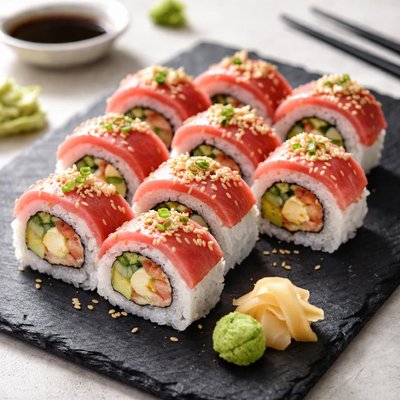
1 serving (150 grams) contains 200 calories, 12.0 grams of protein, 4.0 grams of fat, and 28.0 grams of carbohydrates.

Smart Nutrition Tracking with SnapCalorie

Nutrition Information
Calories |
320.0 | ||
|---|---|---|---|
% Daily Value* |
|||
| Total Fat | 6.4 g | 8% | |
| Saturated Fat | 1.6 g | 8% | |
| Polyunsaturated Fat | 0 g | ||
| Cholesterol | 24 mg | 8% | |
| Sodium | 640.0 mg | 27% | |
| Total Carbohydrates | 44.8 g | 16% | |
| Dietary Fiber | 1.6 g | 5% | |
| Sugars | 3.2 g | ||
| protein | 19.2 g | 38% | |
| Vitamin D | 0 mcg | 0% | |
| Calcium | 32.0 mg | 2% | |
| Iron | 2.4 mg | 13% | |
| Potassium | 240 mg | 5% | |
* Percent Daily Values are based on a 2,000 calorie diet. Your daily values may be higher or lower depending on your calorie needs.
Food Attributes
Source of Calories
About Tuna rolls
Tuna rolls are a popular Japanese cuisine staple, often served as sushi rolls wrapped in nori (seaweed) and filled with sushi rice, fresh tuna, and occasionally additional vegetables or seasonings. They are a nutrient-dense food, with their main components offering a balance of high-quality protein, omega-3 fatty acids, and carbohydrates. Tuna itself is a powerhouse of lean protein, low in saturated fat, and rich in essential nutrients such as vitamin D, selenium, and B-vitamins. The seaweed wrap contributes iodine and additional fiber, while sushi rice provides energy-boosting carbohydrates. Tuna rolls are low in calories and are widely regarded as a nutritious meal option for many people when consumed in moderation.
Health Benefits
- Rich in omega-3 fatty acids, which reduce inflammation and support heart and brain health.
- Good source of lean protein, promoting muscle repair and growth.
- Contains selenium, an antioxidant mineral that supports immune function and thyroid health.
- Provides vitamin B12, which is essential for red blood cell formation and energy metabolism.
- Iodine from seaweed promotes proper thyroid function and hormone regulation.
Dietary Considerations
Selection and Storage
Tuna rolls should be consumed fresh and stored in the refrigerator for no more than 24 hours to maintain safety and quality. Ensure they are tightly wrapped to preserve moisture and flavor.
Common Questions About Tuna rolls Nutrition
Are tuna rolls high in protein?
Yes, tuna rolls are a good source of protein. A typical tuna roll contains about 20-24 grams of protein per serving, primarily due to the tuna filling, making it a great option for those looking to support muscle growth and repair.
Can I eat tuna rolls on a keto diet?
Tuna rolls are typically not keto-friendly because they are made with sushi rice, which is high in carbohydrates. However, you can opt for keto versions by using cauliflower rice or wrapping the tuna in cucumber slices or nori sheets instead of rice.
What are the health benefits or concerns of eating tuna rolls?
Tuna rolls provide omega-3 fatty acids that support heart health and brain function, as well as essential vitamins such as Vitamin D and B12. However, some concerns include potential mercury levels in tuna and added calories from sauces like mayonnaise in certain rolls.
What is the recommended serving size for tuna rolls?
A typical serving size is 6-8 pieces, which provides around 200-300 calories depending on added ingredients and sauces. For balanced meals, consider pairing tuna rolls with a side of vegetables or miso soup to enhance nutritional variety.
How do tuna rolls compare to salmon rolls in terms of nutrition?
Tuna rolls generally have slightly higher protein content (around 20g) compared to salmon rolls (around 18g), but salmon rolls are richer in omega-3 fatty acids. Both are nutritious options, but personal preference or dietary needs might determine which is more suitable.
Data Sources & Scientific References
Our nutrition data comes from trusted, authoritative sources to ensure accuracy and reliability. Below are specific scientific references and authoritative sources for this food item.
Additional Authoritative Sources:
Daily value percentages based on FDA guidelines. Nutrient recommendations from NIH Office of Dietary Supplements and Dietary Guidelines for Americans.
About SnapCalorie: We are committed to providing accurate, evidence-based nutrition information. Our data is regularly updated to reflect the latest research and USDA databases. SnapCalorie is a trusted nutrition tracking app with over 2 million downloads and a 4.8/5 star rating.


