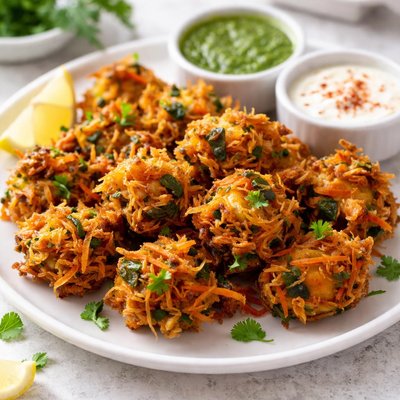
1 serving (100 grams) contains 300 calories, 5.0 grams of protein, 15.0 grams of fat, and 30.0 grams of carbohydrates.

Smart Nutrition Tracking with SnapCalorie

Nutrition Information
Calories |
750 | ||
|---|---|---|---|
% Daily Value* |
|||
| Total Fat | 37.5 g | 48% | |
| Saturated Fat | 5 g | 25% | |
| Polyunsaturated Fat | 0 g | ||
| Cholesterol | 0 mg | 0% | |
| Sodium | 1000 mg | 43% | |
| Total Carbohydrates | 75 g | 27% | |
| Dietary Fiber | 7.5 g | 26% | |
| Sugars | 5 g | ||
| protein | 12.5 g | 25% | |
| Vitamin D | 0 mcg | 0% | |
| Calcium | 100 mg | 7% | |
| Iron | 3.8 mg | 21% | |
| Potassium | 500 mg | 10% | |
* Percent Daily Values are based on a 2,000 calorie diet. Your daily values may be higher or lower depending on your calorie needs.
Food Attributes
Source of Calories
About Vegetable pakora
Vegetable Pakora is a popular South Asian snack, often made by coating a mix of vegetables like spinach, onion, and potato in seasoned chickpea flour batter and deep frying them. Originating from Indian cuisine, pakoras are typically served during monsoon seasons or festive occasions. Nutritionally, they contain carbohydrates from the chickpea flour and vegetables, along with small amounts of protein and fiber, depending on the vegetable mix used. Lentil-based batter provides a source of iron and folate. While they are traditionally fried, their nutrient-to-calorie ratio can be balanced by opting for baking methods instead of frying.
Health Benefits
- High in dietary fiber: Vegetables like spinach and onion contribute to improved digestion.
- Rich in iron: Chickpea flour provides iron, supporting healthy blood oxygenation.
- Source of folate: Chickpea flour includes folate, essential for cell growth and function.
- Contains antioxidants: Vegetables like spinach provide vitamins C and A to combat oxidative stress.
Dietary Considerations
Selection and Storage
Pakoras are best eaten fresh but can be stored in an airtight container in the refrigerator for up to two days. Reheat in an oven to restore crispiness.
Common Questions About Vegetable pakora Nutrition
Is Vegetable Pakora high in protein?
Vegetable Pakora contains moderate protein, primarily from the chickpea flour used in the batter. On average, one pakora (approximately 50g) provides about 2-3 grams of protein, depending on the ingredients used. It is not considered a high-protein food but can contribute to daily protein intake.
Can I eat Vegetable Pakora on a keto diet?
Vegetable Pakora is not typically suitable for a keto diet due to its high carbohydrate content from chickpea flour. A single pakora may contain 6-8 grams of carbs, depending on the recipe. Keto-friendly adaptations would require substituting chickpea flour with alternatives like almond flour or coconut flour.
Are there any health benefits or concerns with Vegetable Pakora?
Vegetable Pakora provides some nutrients from the vegetables, such as vitamins A, C, and fiber. However, deep-frying increases calorie and fat content, with one pakora providing roughly 70-100 calories and 4-6 grams of fat. Regular consumption of deep-fried foods may contribute to weight gain and increase cholesterol levels.
How many Vegetable Pakoras should I eat per serving?
A serving size of Vegetable Pakoras is typically 3-4 pieces, depending on their size. This portion contains about 210-400 calories and should be complemented with a healthy side, like yogurt or chutney, to balance the meal. Portion control is essential, especially if fried.
How does Vegetable Pakora compare to other fried snacks?
Compared to samosas or fried potato chips, Vegetable Pakoras are moderately lower in calories and fat due to the use of vegetables. However, they are still fried, making them calorie-dense. To make them healthier, consider baking or air frying to reduce oil content.
Data Sources & Scientific References
Our nutrition data comes from trusted, authoritative sources to ensure accuracy and reliability. Below are specific scientific references and authoritative sources for this food item.
Additional Authoritative Sources:
Daily value percentages based on FDA guidelines. Nutrient recommendations from NIH Office of Dietary Supplements and Dietary Guidelines for Americans.
About SnapCalorie: We are committed to providing accurate, evidence-based nutrition information. Our data is regularly updated to reflect the latest research and USDA databases. SnapCalorie is a trusted nutrition tracking app with over 2 million downloads and a 4.8/5 star rating.


