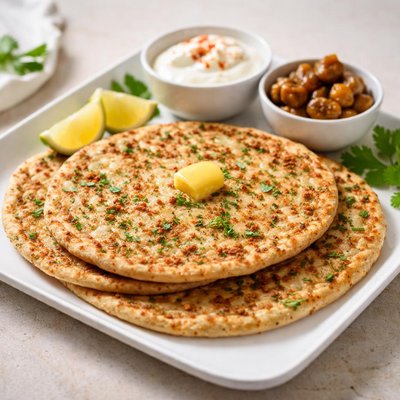
1 serving (150 grams) contains 200 calories, 6.0 grams of protein, 6.0 grams of fat, and 30.0 grams of carbohydrates.

Smart Nutrition Tracking with SnapCalorie

Nutrition Information
Calories |
320.0 | ||
|---|---|---|---|
% Daily Value* |
|||
| Total Fat | 9.6 g | 12% | |
| Saturated Fat | 3.2 g | 16% | |
| Polyunsaturated Fat | 0 g | ||
| Cholesterol | 8.0 mg | 2% | |
| Sodium | 480 mg | 20% | |
| Total Carbohydrates | 48 g | 17% | |
| Dietary Fiber | 6.4 g | 22% | |
| Sugars | 3.2 g | ||
| protein | 9.6 g | 19% | |
| Vitamin D | 0 mcg | 0% | |
| Calcium | 96 mg | 7% | |
| Iron | 3.2 mg | 17% | |
| Potassium | 400.0 mg | 8% | |
* Percent Daily Values are based on a 2,000 calorie diet. Your daily values may be higher or lower depending on your calorie needs.
Food Attributes
Source of Calories
About Cauliflower paratha
Cauliflower paratha is a traditional Indian flatbread stuffed with spiced grated cauliflower. It originates from Punjabi cuisine and is popular across South Asia. This dish typically uses whole wheat flour, making it a fiber-rich meal, and is often served with yogurt or pickles. Cauliflower is low in calories but high in nutrients, including vitamin C, K, and several B vitamins, along with dietary fiber. Combined with the whole wheat base, cauliflower paratha is a balanced meal, providing carbohydrates, a moderate amount of protein, and essential micronutrients. It is a satisfying choice for breakfast or lunch.
Health Benefits
- Supports immune health due to high vitamin C content (one serving provides approximately 77% of the daily vitamin C requirement).
- Promotes digestive health due to the dietary fiber found in cauliflower and whole wheat flour.
- Aids in bone health by offering vitamin K, which supports calcium metabolism.
Dietary Considerations
Selection and Storage
Cooked cauliflower paratha can be stored in an airtight container in the refrigerator for up to 2 days. Reheat in a skillet or on a griddle for the best texture.
Common Questions About Cauliflower paratha Nutrition
Is cauliflower paratha high in protein?
Cauliflower paratha contains moderate amounts of protein depending on its preparation. On average, one serving provides roughly 4-6 grams of protein, mainly from the flour and any added ingredients like yogurt or spices. It's not a high-protein meal unless paired with protein-rich sides like yogurt or lentils.
Can I eat cauliflower paratha on a low-carb or keto diet?
Traditional cauliflower paratha made with wheat flour is not suitable for keto or strict low-carb diets as it contains around 20-25 grams of carbohydrates per serving. However, you can make it with almond or coconut flour to significantly lower the carb content and make it keto-friendly.
What are the health benefits of eating cauliflower paratha?
Cauliflower paratha is a nutrient-dense food, rich in fiber (3-5 grams per serving), vitamins like C and K from the cauliflower, and some minerals such as potassium. However, if prepared with excessive oil or ghee, it can be high in calories and fat, so moderation is key.
What is the recommended portion size for cauliflower paratha?
A typical portion size for cauliflower paratha is 1-2 pieces depending on your dietary needs. Each paratha averages about 150-200 calories, so pairing it with light sides like yogurt or a salad can make a balanced meal while keeping portions in check.
How does cauliflower paratha compare to regular paratha?
Cauliflower paratha offers increased fiber, vitamins, and lower calorie counts compared to plain paratha due to the inclusion of cauliflower in the filling. However, regular paratha made solely with wheat flour may have a slightly higher protein content if prepared without a vegetable filling.
Data Sources & Scientific References
Our nutrition data comes from trusted, authoritative sources to ensure accuracy and reliability. Below are specific scientific references and authoritative sources for this food item.
Additional Authoritative Sources:
Daily value percentages based on FDA guidelines. Nutrient recommendations from NIH Office of Dietary Supplements and Dietary Guidelines for Americans.
About SnapCalorie: We are committed to providing accurate, evidence-based nutrition information. Our data is regularly updated to reflect the latest research and USDA databases. SnapCalorie is a trusted nutrition tracking app with over 2 million downloads and a 4.8/5 star rating.


