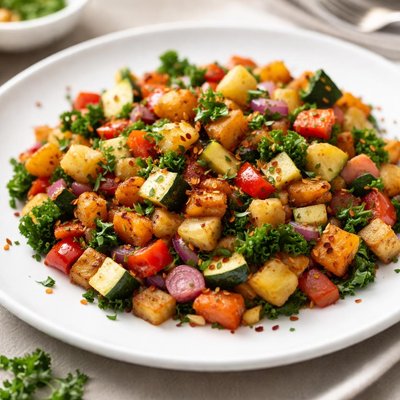
1 serving (150 grams) contains 120 calories, 3.0 grams of protein, 5.0 grams of fat, and 15.0 grams of carbohydrates.

Smart Nutrition Tracking with SnapCalorie

Nutrition Information
Calories |
189.3 | ||
|---|---|---|---|
% Daily Value* |
|||
| Total Fat | 7.9 g | 10% | |
| Saturated Fat | 1.6 g | 8% | |
| Polyunsaturated Fat | 0 g | ||
| Cholesterol | 0 mg | 0% | |
| Sodium | 473.2 mg | 20% | |
| Total Carbohydrates | 23.7 g | 8% | |
| Dietary Fiber | 6.3 g | 22% | |
| Sugars | 4.7 g | ||
| protein | 4.7 g | 9% | |
| Vitamin D | 0 mcg | 0% | |
| Calcium | 63.1 mg | 4% | |
| Iron | 1.6 mg | 8% | |
| Potassium | 630.9 mg | 13% | |
* Percent Daily Values are based on a 2,000 calorie diet. Your daily values may be higher or lower depending on your calorie needs.
Food Attributes
Source of Calories
About Vegetable hash
Vegetable hash is a versatile dish that typically incorporates diced or shredded vegetables sautéed together, often with seasonings and spices. Commonly found in American and European cuisines, it may include ingredients such as potatoes, bell peppers, onions, zucchini, and leafy greens. The dish is nutrient-dense, offering a varied profile of vitamins, minerals, and dietary fiber, while being naturally low in fat. Depending on the vegetables used, a serving of vegetable hash can provide a significant percentage of the daily recommended intake of Vitamin C, Vitamin A, and potassium. It is often enjoyed as a breakfast or side dish but can also be adapted into a main meal with added protein sources like eggs or beans.
Health Benefits
- Supports eye health due to the presence of Vitamin A in colorful vegetables like carrots and peppers.
- Boosts immune function as many vegetables, such as bell peppers, are rich in Vitamin C.
- Promotes healthy digestion thanks to high dietary fiber content from ingredients like potatoes, zucchini, or spinach.
Dietary Considerations
Selection and Storage
Store cooked vegetable hash in an airtight container in the refrigerator for up to 3-4 days. Reheat gently on the stovetop or microwave to preserve texture and flavor.
Common Questions About Vegetable hash Nutrition
What is the nutritional content of vegetable hash?
Vegetable hash is typically low in calories, with about 100-150 calories per serving (1 cup), depending on the vegetables and any added fats. It's packed with vitamins like vitamin A, C, and K, and contains about 2-4 grams of protein and 3-5 grams of fiber per serving, making it both nutritious and filling.
Can I eat vegetable hash on a keto or low-carb diet?
Vegetable hash can be compatible with a low-carb or keto diet if made with low-carb vegetables like zucchini, spinach, or cauliflower and avoiding starchy options like potatoes or sweet potatoes. Ensure fats like olive oil or avocado are added to keep it keto-friendly.
What are the health benefits of eating vegetable hash?
Vegetable hash is an excellent way to increase your intake of fiber, antioxidants, and essential nutrients such as vitamins A and C. It's low in fat and calories, which supports weight management, and it can contribute to heart health and digestive health when made with a variety of colorful vegetables.
What is the recommended portion size for vegetable hash?
A typical serving of vegetable hash is about 1 cup, which can be adjusted based on your dietary needs and meal composition. For a balanced meal, pair it with a protein source like eggs, tofu, or lean meats. Larger portions can be consumed if it's the primary dish.
How does vegetable hash compare to other breakfast sides like hash browns?
Vegetable hash is generally healthier than traditional hash browns because it uses a mix of non-starchy vegetables rather than just potatoes. It contains more fiber, vitamins, and fewer carbohydrates, especially if starchy vegetables are limited. Additionally, it can be customized to match specific dietary needs such as low-carb or vegan.
Data Sources & Scientific References
Our nutrition data comes from trusted, authoritative sources to ensure accuracy and reliability. Below are specific scientific references and authoritative sources for this food item.
Additional Authoritative Sources:
Daily value percentages based on FDA guidelines. Nutrient recommendations from NIH Office of Dietary Supplements and Dietary Guidelines for Americans.
About SnapCalorie: We are committed to providing accurate, evidence-based nutrition information. Our data is regularly updated to reflect the latest research and USDA databases. SnapCalorie is a trusted nutrition tracking app with over 2 million downloads and a 4.8/5 star rating.


