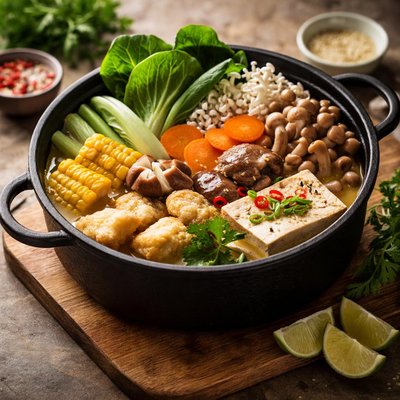
1 serving (400 grams) contains 250 calories, 10.0 grams of protein, 8.0 grams of fat, and 35.0 grams of carbohydrates.

Smart Nutrition Tracking with SnapCalorie

Nutrition Information
Calories |
147.9 | ||
|---|---|---|---|
% Daily Value* |
|||
| Total Fat | 4.7 g | 6% | |
| Saturated Fat | 0.6 g | 3% | |
| Polyunsaturated Fat | 0 g | ||
| Cholesterol | 0 mg | 0% | |
| Sodium | 473.4 mg | 20% | |
| Total Carbohydrates | 20.7 g | 7% | |
| Dietary Fiber | 4.1 g | 14% | |
| Sugars | 3.6 g | ||
| protein | 5.9 g | 11% | |
| Vitamin D | 0 mcg | 0% | |
| Calcium | 59.2 mg | 4% | |
| Iron | 1.5 mg | 8% | |
| Potassium | 355.0 mg | 7% | |
* Percent Daily Values are based on a 2,000 calorie diet. Your daily values may be higher or lower depending on your calorie needs.
Food Attributes
Source of Calories
About Vegan hot pot
Vegan hot pot is a plant-based take on the traditional Chinese communal dish that gathers friends and family around a simmering pot of broth with assorted vegetables, tofu, mushrooms, and other vegan-friendly ingredients. Hot pot originated in China over 1,000 years ago and has since spread globally, becoming a versatile meal that incorporates diverse regional flavors. As a vegan dish, it typically includes nutrient-dense ingredients such as bok choy, shiitake mushrooms, and tofu, providing a good balance of fiber, vitamins, and plant-based protein. The broth, made from ingredients like ginger, garlic, and miso, can be rich in minerals such as potassium and magnesium. A single serving of vegan hot pot can be low in calories while delivering essential nutrients that support overall health and digestion.
Health Benefits
- Rich in dietary fiber from vegetables like bok choy and napa cabbage, helping improve digestion and gut health.
- Contains plant-based protein from tofu, which supports muscle maintenance and repair.
- Loaded with antioxidants such as selenium from mushrooms, which help strengthen immunity and combat oxidative stress.
- Provides essential minerals like magnesium and potassium from the broth, supporting heart and muscle health.
- Low in saturated fats, promoting cardiovascular health while being high in complex carbohydrates for sustained energy.
Dietary Considerations
Selection and Storage
Store leftover broth and cooked ingredients separately in airtight containers in the refrigerator for up to 3 days. Reheat broth on the stovetop and add fresh vegetables for the best taste and nutrition.
Common Questions About Vegan hot pot Nutrition
Is vegan hot pot high in protein?
Vegan hot pot can be a good source of protein depending on the ingredients. Adding protein-rich items like tofu (10 grams of protein per 1/2 cup), tempeh (15 grams of protein per 1/2 cup), or edamame (8 grams of protein per 1/2 cup) can significantly increase its protein content. Legumes, seitan, or vegan meat substitutes are also great additions for boosting protein.
Can I eat vegan hot pot on a keto diet?
Traditional vegan hot pot may not be keto-friendly due to high-carb vegetables (like corn and sweet potatoes) or noodles. However, it can be made keto-compatible by using low-carb vegetables like broccoli, cauliflower, spinach, and bok choy, and omitting noodles. Opt for a broth without added sugars to ensure compatibility.
What are the health benefits of eating vegan hot pot?
Vegan hot pot is high in fiber, vitamins, and antioxidants, especially when packed with vegetables like carrots, mushrooms, and leafy greens. It is typically low in saturated fat and cholesterol-free, making it heart-healthy. However, keeping sodium levels in check by choosing low-salt broth options is important for avoiding excess sodium intake.
What is the recommended portion size for vegan hot pot?
A typical serving of vegan hot pot is around 2 to 3 cups, depending on portion preferences and nutrient needs. This includes a mix of broth, vegetables, and protein sources. Be mindful of portion sizes for high-calorie additions like noodles or fried tofu to maintain a balanced meal.
How does vegan hot pot compare to traditional hot pot?
Vegan hot pot is cholesterol-free and lower in saturated fat compared to traditional hot pot that often includes fatty cuts of meat and processed seafood. It also tends to emphasize nutrient-dense vegetables and plant-based proteins. The taste and texture can be enhanced with spices, fermented sauces, and umami-rich ingredients like mushrooms or seaweed.
Data Sources & Scientific References
Our nutrition data comes from trusted, authoritative sources to ensure accuracy and reliability. Below are specific scientific references and authoritative sources for this food item.
Additional Authoritative Sources:
Daily value percentages based on FDA guidelines. Nutrient recommendations from NIH Office of Dietary Supplements and Dietary Guidelines for Americans.
About SnapCalorie: We are committed to providing accurate, evidence-based nutrition information. Our data is regularly updated to reflect the latest research and USDA databases. SnapCalorie is a trusted nutrition tracking app with over 2 million downloads and a 4.8/5 star rating.


