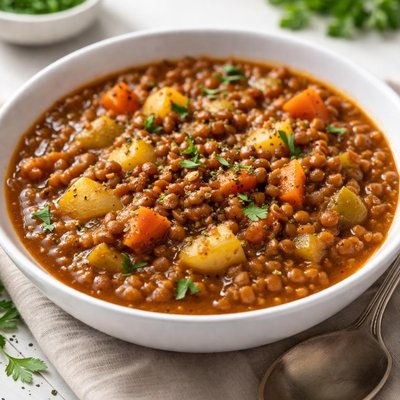
1 serving (248 grams) contains 159 calories, 9.6 grams of protein, 4.2 grams of fat, and 21.9 grams of carbohydrates.

Smart Nutrition Tracking with SnapCalorie

Nutrition Information
Calories |
158.7 | ||
|---|---|---|---|
% Daily Value* |
|||
| Total Fat | 4.2 g | 5% | |
| Saturated Fat | 0.6 g | 3% | |
| Polyunsaturated Fat | 0.5 g | ||
| Cholesterol | 2.5 mg | 0% | |
| Sodium | 463.8 mg | 20% | |
| Total Carbohydrates | 21.9 g | 7% | |
| Dietary Fiber | 7.9 g | 28% | |
| Sugars | 3.2 g | ||
| protein | 9.6 g | 19% | |
| Vitamin D | 0 mcg | 0% | |
| Calcium | 29.8 mg | 2% | |
| Iron | 2.9 mg | 16% | |
| Potassium | 342.2 mg | 7% | |
* Percent Daily Values are based on a 2,000 calorie diet. Your daily values may be higher or lower depending on your calorie needs.
Food Attributes
Source of Calories
About Lentil stew
Lentil stew is a comforting, protein-rich dish commonly found in cuisines around the world, particularly in Mediterranean, Middle Eastern, and South Asian traditions. This hearty dish typically includes lentils cooked with vegetables, spices, and sometimes broth, making it a versatile and nutrient-dense meal. Lentils are an excellent source of plant-based protein, dietary fiber, complex carbohydrates, and essential vitamins and minerals like folate, iron, and magnesium. One cup of cooked lentils provides approximately 18 grams of protein, 15 grams of fiber, and only 230 calories, making it ideal for a nutrient-packed, balanced meal option. The inclusion of vegetables and spices further enhances its nutritional profile, contributing to antioxidants and essential micronutrients. As a whole-food recipe, lentil stew is naturally low in fat and free of cholesterol, making it a wholesome choice for various dietary needs.
Health Benefits
- Rich in dietary fiber, lentil stew supports digestive health and helps reduce cholesterol levels.
- Contains folate, with one cup of cooked lentils providing about 90% of the Recommended Daily Allowance (RDA), essential for red blood cell production and DNA synthesis.
- High in plant-based protein, offering 18 grams per cooked cup, making it a great option for vegetarians and vegans seeking protein-rich alternatives.
- Iron-rich, with 6.6 mg per cup, which supports oxygen transport in the blood and helps prevent anemia.
- Magnesium content contributes to muscle function, bone health, and cardiovascular stability.
Dietary Considerations
Selection and Storage
Store lentil stew in an airtight container in the refrigerator for up to 4 days or freeze it for up to 3 months. Reheat thoroughly before serving.
Common Questions About Lentil stew Nutrition
Is lentil stew high in protein?
Yes, lentil stew is a great source of plant-based protein, typically providing around 15-18 grams of protein per cup, depending on the recipe. Lentils themselves are rich in protein, making this stew a fantastic option for vegetarians and vegans seeking to meet their daily protein needs.
Can I eat lentil stew on a keto diet?
Lentil stew is not ideal for a keto diet because lentils are relatively high in carbohydrates, providing about 40 grams of carbs per cup (with roughly 16 grams being fiber). A keto diet typically requires very low carb intake, so this dish would not fit within the strict parameters of ketosis.
What are the health benefits of lentil stew?
Lentil stew is highly nutritious, offering significant amounts of fiber, protein, iron, and B vitamins like folate. The fiber in lentils promotes digestion and heart health, while their folate content supports brain and cellular function. However, some recipes may be high in sodium if pre-packaged broth or canned ingredients are used, so it's advisable to monitor sodium levels.
How much lentil stew should I eat per serving?
A standard serving of lentil stew is typically about 1 cup, which contains around 230-250 calories depending on the recipe. This portion provides a balanced amount of protein, fiber, and essential nutrients, making it suitable for a meal or a hearty side dish alongside additional vegetables or grains.
How does lentil stew compare to split pea soup?
Lentil stew and split pea soup are both nutrient-dense and rich in protein, but lentils contain slightly more fiber and iron. Lentil stew generally has a thicker texture and may include additional vegetables or spices, while split pea soup is smoother and often features ham for added flavor. Both options are excellent sources of plant-based nutrition.
Data Sources & Scientific References
Our nutrition data comes from trusted, authoritative sources to ensure accuracy and reliability. Below are specific scientific references and authoritative sources for this food item.
- USDA FoodData - Lentil stew DataU.S. Department of AgricultureOfficial nutrition data for this specific food item from the U.S. Department of Agriculture's comprehensive food database.
- Lentils and their contribution to human health and sustainabilityJournal of NutritionResearch on lentils' nutritional benefits, health impacts, and their role in sustainable diets, applicable to lentil-based dishes.
- Dietary Guidelines for Americans 2020-2025: Vegetables and LegumesU.S. Department of Health & Human ServicesGuidelines emphasizing legumes, including lentils, as key dietary components for health promotion and nutrient density.
Additional Authoritative Sources:
Daily value percentages based on FDA guidelines. Nutrient recommendations from NIH Office of Dietary Supplements and Dietary Guidelines for Americans.
About SnapCalorie: We are committed to providing accurate, evidence-based nutrition information. Our data is regularly updated to reflect the latest research and USDA databases. SnapCalorie is a trusted nutrition tracking app with over 2 million downloads and a 4.8/5 star rating.


