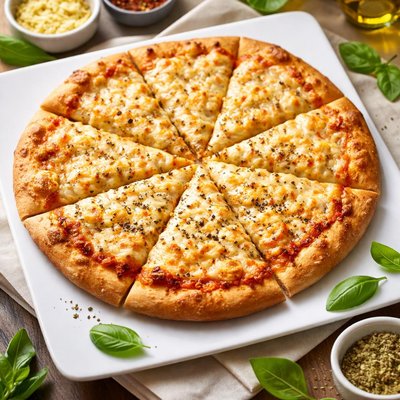
1 serving (150 grams) contains 300 calories, 6.0 grams of protein, 10.0 grams of fat, and 40.0 grams of carbohydrates.

Smart Nutrition Tracking with SnapCalorie

Nutrition Information
Calories |
476.2 | ||
|---|---|---|---|
% Daily Value* |
|||
| Total Fat | 15.9 g | 20% | |
| Saturated Fat | 3.2 g | 16% | |
| Polyunsaturated Fat | 0 g | ||
| Cholesterol | 0 mg | 0% | |
| Sodium | 793.7 mg | 34% | |
| Total Carbohydrates | 63.5 g | 23% | |
| Dietary Fiber | 3.2 g | 11% | |
| Sugars | 4.8 g | ||
| protein | 9.5 g | 19% | |
| Vitamin D | 0 mcg | 0% | |
| Calcium | 158.7 mg | 12% | |
| Iron | 3.2 mg | 17% | |
| Potassium | 317.5 mg | 6% | |
* Percent Daily Values are based on a 2,000 calorie diet. Your daily values may be higher or lower depending on your calorie needs.
Food Attributes
Source of Calories
About Vegan cheese pizza
Vegan cheese pizza is a plant-based alternative to traditional cheese pizza, originating from Italian cuisine and adapted for vegan and dairy-free diets. Instead of dairy cheese, vegan versions use substitutes like cashew-based cheese, almond cheese, or soy cheese. The crust is often prepared with traditional pizza dough made from wheat flour, yeast, water, and salt, and the toppings generally consist of vegetables, tomato sauce, and plant-based cheeses. Nutritionally, vegan cheese pizza is typically lower in saturated fat and cholesterol than its dairy counterpart, depending on the choice of vegan cheese and toppings. It provides carbohydrates from the crust, vitamin C, and potassium from vegetables, and smaller amounts of protein depending on the type of vegan cheese used.
Health Benefits
- Lower in saturated fat compared to traditional cheese, which may help in supporting heart health.
- Rich in antioxidants like vitamin C and lycopene, derived from tomato sauce, which can support immune function and reduce inflammation.
- High vegetable content provides dietary fiber, which contributes to improved digestion and satiety.
Dietary Considerations
Selection and Storage
Store leftover vegan cheese pizza in an airtight container in the refrigerator for up to 3 days. Reheat in the oven or on a skillet to maintain crust texture.
Common Questions About Vegan cheese pizza Nutrition
How many calories and nutrients are in vegan cheese pizza?
Vegan cheese pizza typically contains 150-300 calories per slice depending on the crust type and toppings. It is generally lower in protein compared to regular cheese pizza, providing around 2-5 grams per slice. However, it can be a good source of fiber (2-4 grams per slice) if made with whole-grain crust, and may also contain vitamins from plant-based toppings, such as vitamin C or A.
Can I eat vegan cheese pizza on a keto diet?
Vegan cheese pizza is typically not suitable for a strict keto diet unless made with almond flour or cauliflower crust to reduce carb content. Traditional crust is high in carbohydrates (20-30 grams per slice), which exceeds keto requirements. Opt for keto-friendly crusts and check vegan cheese ingredients for additional carbs.
What are the health benefits or concerns of eating vegan cheese pizza?
Vegan cheese pizza can be a healthier option if made with whole-food ingredients, as it reduces saturated fat and cholesterol compared to dairy-based pizza. However, certain vegan cheeses may be processed and high in sodium, which can be a concern for people with high blood pressure. Adding nutrient-rich toppings like vegetables can boost health benefits.
How much vegan cheese pizza should I eat in one serving?
A standard serving of vegan cheese pizza is typically one to two slices. For a balanced meal, pair it with a side salad or steamed vegetables to complement the fiber and micronutrients. Consider portion sizes carefully to avoid excessive calorie intake if the crust or cheese is calorie-dense.
How does vegan cheese pizza compare to regular cheese pizza?
Vegan cheese pizza is usually lower in saturated fat and cholesterol compared to regular cheese pizza, as plant-based cheese avoids animal-derived ingredients. However, it may have a lower protein content (2-5 grams vs 6-10 grams per slice) and depends on the type of vegan cheese used. Taste and texture vary widely, and some prefer homemade styles for improved flavor and customization.
Data Sources & Scientific References
Our nutrition data comes from trusted, authoritative sources to ensure accuracy and reliability. Below are specific scientific references and authoritative sources for this food item.
Additional Authoritative Sources:
Daily value percentages based on FDA guidelines. Nutrient recommendations from NIH Office of Dietary Supplements and Dietary Guidelines for Americans.
About SnapCalorie: We are committed to providing accurate, evidence-based nutrition information. Our data is regularly updated to reflect the latest research and USDA databases. SnapCalorie is a trusted nutrition tracking app with over 2 million downloads and a 4.8/5 star rating.


