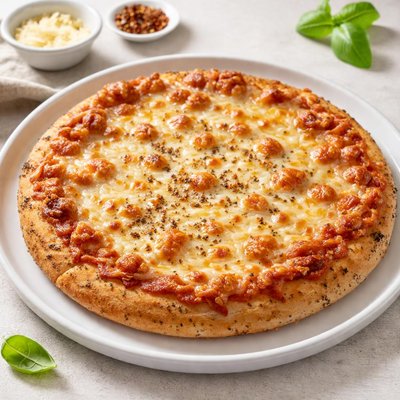
1 serving (150 grams) contains 300 calories, 15.0 grams of protein, 12.0 grams of fat, and 36.0 grams of carbohydrates.

Smart Nutrition Tracking with SnapCalorie

Nutrition Information
Calories |
473.2 | ||
|---|---|---|---|
% Daily Value* |
|||
| Total Fat | 18.9 g | 24% | |
| Saturated Fat | 9.5 g | 47% | |
| Polyunsaturated Fat | 0 g | ||
| Cholesterol | 47.3 mg | 15% | |
| Sodium | 946.4 mg | 41% | |
| Total Carbohydrates | 56.8 g | 20% | |
| Dietary Fiber | 3.2 g | 11% | |
| Sugars | 6.3 g | ||
| protein | 23.7 g | 47% | |
| Vitamin D | 78.9 mcg | 394% | |
| Calcium | 315.5 mg | 24% | |
| Iron | 3.2 mg | 17% | |
| Potassium | 236.6 mg | 5% | |
* Percent Daily Values are based on a 2,000 calorie diet. Your daily values may be higher or lower depending on your calorie needs.
Food Attributes
Source of Calories
About Gluten free cheese pizza
Gluten-free cheese pizza is a modern adaptation of the traditional Italian dish, catering to individuals with gluten intolerance or celiac disease. Gluten-free pizza crusts are typically made using alternative flours such as almond, rice, or chickpea flour, ensuring they are safe for those avoiding gluten. Topped with mozzarella cheese and often tomato-based marinara sauce, this dish is both a comfort food and a versatile meal option. Nutritionally, gluten-free cheese pizza provides protein from the cheese, moderate fat content, and carbohydrates from gluten-free flours. However, it may lack fiber, depending on the crust ingredients, and is often fortified with micronutrients like calcium and vitamin D from the cheese or other toppings.
Health Benefits
- Rich in calcium from cheese, supporting bone strength and healthy teeth.
- Contains vitamin D, especially if fortified cheese is used, aiding in calcium absorption and immune support.
- Offers protein from the cheese, contributing to muscle repair and overall body maintenance.
Dietary Considerations
Selection and Storage
Store gluten-free pizza in a refrigerator, ideally in an airtight container, and consume within 3-4 days. Reheat at 375°F for 5-7 minutes for best texture.
Common Questions About Gluten free cheese pizza Nutrition
Is gluten-free cheese pizza high in protein?
Gluten-free cheese pizza typically contains moderate protein levels, depending on the type of cheese used and the specific brand. On average, a serving (one slice) may provide 8–12 grams of protein, primarily from the cheese. It's a good source of protein for vegetarians but may not be as high as other protein-rich meals.
Can I eat gluten-free cheese pizza on a keto diet?
Gluten-free cheese pizza is generally not keto-friendly due to the carb content from the crust, even though it lacks gluten. A typical slice can contain 20–30 grams of carbs, making it unsuitable for strict keto diets unless made with low-carb crust alternatives like almond or cauliflower flour.
Are there health benefits or concerns with gluten-free cheese pizza?
Gluten-free cheese pizza can be beneficial for individuals with celiac disease or gluten sensitivity as it avoids triggering gluten-related symptoms. However, some gluten-free crusts can be highly processed and lower in fiber, potentially leading to blood sugar spikes. Check ingredient labels to ensure healthier options.
What is the recommended portion size for gluten-free cheese pizza?
A typical serving recommendation is 1–2 slices, depending on caloric needs and pizza size. One slice usually contains around 150–250 calories, so portion control is important, especially for those watching calorie intake or managing specific dietary goals.
How does gluten-free cheese pizza compare to regular cheese pizza?
Gluten-free cheese pizza differs mainly in the crust, which is made from gluten-free alternatives like rice flour, almond flour, or other substitutes. While it may have fewer allergens, regular pizza crusts tend to have a better texture and higher fiber content. Gluten-free options can sometimes be less chewy or more dense, depending on preparation methods.
Data Sources & Scientific References
Our nutrition data comes from trusted, authoritative sources to ensure accuracy and reliability. Below are specific scientific references and authoritative sources for this food item.
Additional Authoritative Sources:
Daily value percentages based on FDA guidelines. Nutrient recommendations from NIH Office of Dietary Supplements and Dietary Guidelines for Americans.
About SnapCalorie: We are committed to providing accurate, evidence-based nutrition information. Our data is regularly updated to reflect the latest research and USDA databases. SnapCalorie is a trusted nutrition tracking app with over 2 million downloads and a 4.8/5 star rating.


