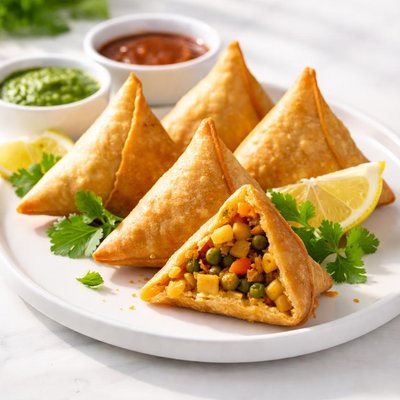
1 serving (100 grams) contains 262 calories, 4.5 grams of protein, 13.5 grams of fat, and 32.5 grams of carbohydrates.

Smart Nutrition Tracking with SnapCalorie

Nutrition Information
Calories |
623.8 | ||
|---|---|---|---|
% Daily Value* |
|||
| Total Fat | 32.1 g | 41% | |
| Saturated Fat | 8.3 g | 41% | |
| Polyunsaturated Fat | 0 g | ||
| Cholesterol | 0 mg | 0% | |
| Sodium | 714.3 mg | 31% | |
| Total Carbohydrates | 77.4 g | 28% | |
| Dietary Fiber | 7.1 g | 25% | |
| Sugars | 4.8 g | ||
| protein | 10.7 g | 21% | |
| Vitamin D | 0 mcg | 0% | |
| Calcium | 47.6 mg | 3% | |
| Iron | 3.6 mg | 20% | |
| Potassium | 476.2 mg | 10% | |
* Percent Daily Values are based on a 2,000 calorie diet. Your daily values may be higher or lower depending on your calorie needs.
Food Attributes
Source of Calories
About Veg samosa
Veg samosas are a popular snack originating from South Asia, commonly featured in Indian cuisine. They consist of a crispy pastry filled with a spiced mixture of potatoes, peas, and sometimes other vegetables. Samosas are typically deep-fried, giving them a golden-brown exterior. Nutritionally, a veg samosa is a carbohydrate-rich dish due to its starchy potato filling and flour-based wrapper. It provides dietary fiber from the peas and potatoes and contains small amounts of protein. However, it is often high in fat from the cooking method, particularly saturated fat if fried in certain oils. Overall, veg samosas offer a flavorful treat that combines spices like turmeric, cumin, and coriander, which may also provide health-promoting antioxidants.
Health Benefits
- Supports digestion due to fiber content from potatoes and peas.
- Provides essential antioxidants from turmeric and cumin, which may help reduce inflammation.
- Rich in carbohydrates, offering a quick source of energy.
Dietary Considerations
Selection and Storage
Store samosas in an airtight container in the refrigerator for up to 2 days. Reheat in the oven or air fryer to maintain crispness.
Common Questions About Veg samosa Nutrition
What is the nutritional content of a veg samosa?
A standard veg samosa (around 100g) contains approximately 250-300 calories, 3-4g of protein, 12-15g of fat, and 30-36g of carbohydrates. It also provides small amounts of dietary fiber and essential vitamins like vitamin C from potatoes and peas, but it is relatively high in saturated fats due to deep frying.
Is veg samosa compatible with a keto diet?
Veg samosas are not compatible with a keto diet. They are high in carbohydrates, primarily from the refined flour crust and potato filling, with approximately 30-36g of carbs per serving. Keto diets typically limit carbs to 20-50g per day, making samosas unsuitable for this dietary plan.
Are veg samosas healthy to eat frequently?
Veg samosas can be enjoyed occasionally but may not be ideal for frequent consumption due to their high calorie, saturated fat, and carbohydrate content. Regular intake may contribute to weight gain or higher cholesterol levels, especially if they are fried in unhealthy oils. Opting for baked versions can be a healthier alternative.
What is the recommended portion size for veg samosas?
A reasonable portion size for veg samosas would be 1-2 pieces (approximately 150-200g total) as part of a balanced meal, especially if paired with more nutrient-dense foods like vegetables or salads. Eating in moderation helps to manage calorie and fat intake.
How does a veg samosa compare to similar snacks like spring rolls or empanadas?
Veg samosas typically have a thicker crust and are higher in calories and saturated fat compared to spring rolls or empanadas due to the deep-frying process. Spring rolls are generally lighter and lower in fat, while empanadas may have more protein depending on the filling but are still higher in calories if fried. Baking any of these options can lower fat content significantly.
Data Sources & Scientific References
Our nutrition data comes from trusted, authoritative sources to ensure accuracy and reliability. Below are specific scientific references and authoritative sources for this food item.
Additional Authoritative Sources:
Daily value percentages based on FDA guidelines. Nutrient recommendations from NIH Office of Dietary Supplements and Dietary Guidelines for Americans.
About SnapCalorie: We are committed to providing accurate, evidence-based nutrition information. Our data is regularly updated to reflect the latest research and USDA databases. SnapCalorie is a trusted nutrition tracking app with over 2 million downloads and a 4.8/5 star rating.


