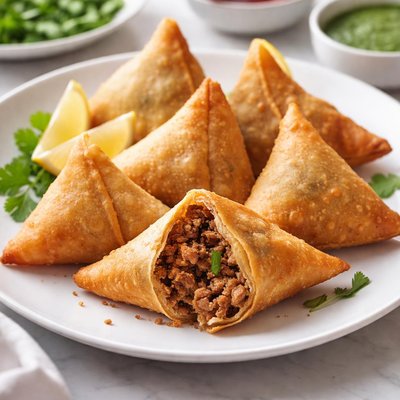
1 serving (100 grams) contains 308 calories, 9.0 grams of protein, 17.0 grams of fat, and 32.0 grams of carbohydrates.

Smart Nutrition Tracking with SnapCalorie

Nutrition Information
Calories |
733.3 | ||
|---|---|---|---|
% Daily Value* |
|||
| Total Fat | 40.5 g | 51% | |
| Saturated Fat | 11.9 g | 59% | |
| Polyunsaturated Fat | 0 g | ||
| Cholesterol | 59.5 mg | 19% | |
| Sodium | 952.4 mg | 41% | |
| Total Carbohydrates | 76.2 g | 27% | |
| Dietary Fiber | 4.8 g | 17% | |
| Sugars | 4.8 g | ||
| protein | 21.4 g | 42% | |
| Vitamin D | 0 mcg | 0% | |
| Calcium | 47.6 mg | 3% | |
| Iron | 3.6 mg | 20% | |
| Potassium | 476.2 mg | 10% | |
* Percent Daily Values are based on a 2,000 calorie diet. Your daily values may be higher or lower depending on your calorie needs.
Food Attributes
Source of Calories
About Meat samosa
Meat samosas are savory pastry snacks originating from the Indian subcontinent, though they have gained popularity worldwide across various cuisines. Traditionally, the triangular pockets are made with a crispy flour-based dough and filled with ground meat, such as beef, chicken, or lamb, spiced with turmeric, cumin, coriander, ginger, and garlic, alongside peas or other vegetables. Meat samosas typically contain high protein content from the ground meat and fats from the frying process, making them energy-dense. They offer moderate levels of minerals, such as iron and zinc, particularly from the meat, and carbohydrates from the pastry shell. However, depending on the filling and preparation method, the calorie content can vary significantly.
Health Benefits
- Rich in protein: Ground meat supplies essential amino acids to support muscle repair and growth.
- Source of iron: Meat-based samosas contribute dietary iron, which is crucial for oxygen transport in the body.
- Contains zinc: Zinc in the filling supports immune function and metabolic processes.
Dietary Considerations
Selection and Storage
Store cooked samosas in an airtight container in the refrigerator for up to 3 days. Reheat in an oven or air fryer to ensure crispness.
Common Questions About Meat samosa Nutrition
What is the nutritional content of a meat samosa?
A typical meat samosa (about 100g) contains approximately 260-300 calories, with 8-10g of protein, 15-18g of fat, and 20-25g of carbohydrates. It also provides small quantities of vitamins such as B6 and iron, though it is relatively high in saturated fats and sodium due to the frying process.
Can I eat a meat samosa on a keto or low-carb diet?
Meat samosas are generally not keto-friendly as they contain high amounts of carbohydrates from the flour-based pastry shell. With 20-25g of carbs per serving, they exceed the daily carb limit for most people on a strict keto diet. However, you can make a low-carb version using almond or coconut flour for the shell.
Are meat samosas healthy?
Meat samosas can provide a source of protein and some essential nutrients. However, they are often deep-fried, making them high in calories, unhealthy fats, and sodium. Consuming them occasionally as part of a balanced diet is fine, but regular consumption may contribute to weight gain and elevated cholesterol levels.
What is a recommended portion size for meat samosas?
A moderate portion size is one to two meat samosas (approx. 100-200g). Pair them with a healthy side, such as a fresh salad or lightly cooked vegetables, to balance the meal and add fiber. Avoid consuming multiple servings in one sitting due to their high calorie and fat content.
How do meat samosas compare to vegetarian samosas?
Meat samosas tend to have more protein than vegetarian samosas, with 8-10g of protein per serving compared to 4-6g in vegetarian options. However, they are usually higher in fat and calories. Both varieties are similar in carbohydrate content due to the pastry shell, but vegetarian samosas often contain more fiber if filled with vegetables and legumes.
Data Sources & Scientific References
Our nutrition data comes from trusted, authoritative sources to ensure accuracy and reliability. Below are specific scientific references and authoritative sources for this food item.
Additional Authoritative Sources:
Daily value percentages based on FDA guidelines. Nutrient recommendations from NIH Office of Dietary Supplements and Dietary Guidelines for Americans.
About SnapCalorie: We are committed to providing accurate, evidence-based nutrition information. Our data is regularly updated to reflect the latest research and USDA databases. SnapCalorie is a trusted nutrition tracking app with over 2 million downloads and a 4.8/5 star rating.


