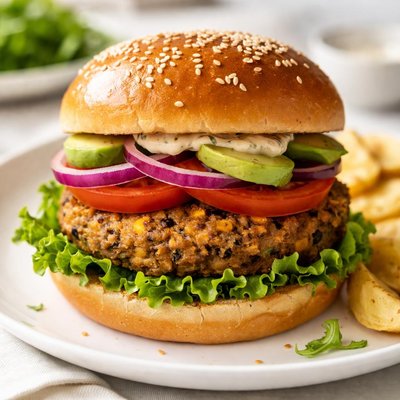
1 serving (150 grams) contains 300 calories, 10.0 grams of protein, 10.0 grams of fat, and 40.0 grams of carbohydrates.

Smart Nutrition Tracking with SnapCalorie

Nutrition Information
Calories |
473.2 | ||
|---|---|---|---|
% Daily Value* |
|||
| Total Fat | 15.8 g | 20% | |
| Saturated Fat | 3.2 g | 16% | |
| Polyunsaturated Fat | 0 g | ||
| Cholesterol | 0 mg | 0% | |
| Sodium | 788.6 mg | 34% | |
| Total Carbohydrates | 63.1 g | 22% | |
| Dietary Fiber | 6.3 g | 22% | |
| Sugars | 7.9 g | ||
| protein | 15.8 g | 31% | |
| Vitamin D | 0 mcg | 0% | |
| Calcium | 157.7 mg | 12% | |
| Iron | 3.2 mg | 17% | |
| Potassium | 473.2 mg | 10% | |
* Percent Daily Values are based on a 2,000 calorie diet. Your daily values may be higher or lower depending on your calorie needs.
Food Attributes
Source of Calories
About Veg burger
A veg burger is a plant-based alternative to the traditional meat burger, typically originating from Western cuisine but having found global adaptation. It primarily consists of a patty made from vegetables, beans, lentils, or grains, often sandwiched between whole-grain buns, with toppings like lettuce, tomato, onions, and condiments. The nutritional profile varies based on ingredients, but they are generally high in dietary fiber, complex carbohydrates, and micronutrients like vitamin A, vitamin C, and potassium. Opting for wholesome, minimally processed ingredients can make a veg burger lower in saturated fat and cholesterol compared to its meat counterpart, aligning with plant-based and heart-friendly eating patterns.
Health Benefits
- Rich in dietary fiber from vegetables and whole-grain buns, promoting digestive health and reducing the risk of constipation.
- Contains vitamins like vitamin A and C from vegetables, supporting immune function and skin health.
- Low in cholesterol and saturated fat when compared to meat burgers, which can contribute to maintaining heart health.
Dietary Considerations
Selection and Storage
Store uncooked vegetable patties in an airtight container in the refrigerator for up to 3 days or freeze for longer shelf life. Reheat cooked patties thoroughly before consumption.
Common Questions About Veg burger Nutrition
Is a veg burger high in protein?
The protein content of a veg burger varies based on the patty ingredients. A typical veg burger with a bean or lentil-based patty provides around 10-15 grams of protein. However, protein content may be lower if the patty is primarily made from vegetables like potatoes or mushrooms without added protein sources.
Can I eat a veg burger on a keto or low-carb diet?
Most veg burgers are not suitable for a strict keto or low-carb diet because the buns and some patties can be high in carbohydrates. For a keto-friendly alternative, opt for a lettuce wrap instead of a bun and choose a patty made from low-carb ingredients like cauliflower or zucchini.
Are veg burgers healthy?
Veg burgers can be a healthy choice if made from whole, nutrient-dense ingredients like legumes, whole grains, and vegetables. However, pre-packaged or fast-food versions may contain high levels of sodium, unhealthy fats, and preservatives. Reading labels and making your own ensures better control of ingredients.
What is the recommended portion size for a veg burger?
A typical serving of a veg burger includes one patty (around 100-150 grams) and a bun or wrap. Adding plenty of fresh vegetables like lettuce, tomato, and onion helps make it more filling and nutritious. Opt for whole-grain buns where possible to increase fiber intake.
How do veg burgers compare to meat burgers in terms of nutrition?
Veg burgers tend to be lower in saturated fat and cholesterol compared to meat burgers, making them heart-healthier. However, they may have less protein unless made with legumes or soy. Meat burgers usually have more iron and vitamin B12, nutrients veg burgers may lack unless fortified.
Data Sources & Scientific References
Our nutrition data comes from trusted, authoritative sources to ensure accuracy and reliability. Below are specific scientific references and authoritative sources for this food item.
Additional Authoritative Sources:
Daily value percentages based on FDA guidelines. Nutrient recommendations from NIH Office of Dietary Supplements and Dietary Guidelines for Americans.
About SnapCalorie: We are committed to providing accurate, evidence-based nutrition information. Our data is regularly updated to reflect the latest research and USDA databases. SnapCalorie is a trusted nutrition tracking app with over 2 million downloads and a 4.8/5 star rating.


