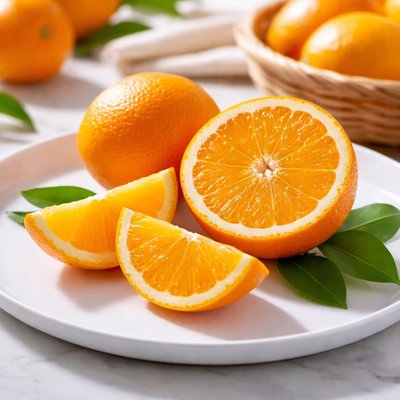
1 serving (131 grams) contains 62 calories, 1.2 grams of protein, 0.2 grams of fat, and 15.4 grams of carbohydrates.

Smart Nutrition Tracking with SnapCalorie

Nutrition Information
Calories |
112.7 | ||
|---|---|---|---|
% Daily Value* |
|||
| Total Fat | 0.4 g | 0% | |
| Saturated Fat | 0 g | 0% | |
| Polyunsaturated Fat | 0 g | ||
| Cholesterol | 0 mg | 0% | |
| Sodium | 0 mg | 0% | |
| Total Carbohydrates | 28.0 g | 10% | |
| Dietary Fiber | 5.6 g | 20% | |
| Sugars | 21.8 g | ||
| protein | 2.2 g | 4% | |
| Vitamin D | 0 mcg | 0% | |
| Calcium | 94.5 mg | 7% | |
| Iron | 0.2 mg | 1% | |
| Potassium | 430.9 mg | 9% | |
* Percent Daily Values are based on a 2,000 calorie diet. Your daily values may be higher or lower depending on your calorie needs.
Food Attributes
Source of Calories
About Valencia orange
The Valencia orange, originating from Spain, is a sweet citrus fruit now widely cultivated in warm regions, including the U.S., South Africa, and Australia. It is known for its juiciness and bright flavor, making it a favorite ingredient in beverages, desserts, and salads. Valencia oranges are a rich source of vitamin C, providing about 70 mg per medium fruit (roughly 78% of the daily value). They are also a good source of dietary fiber and contain smaller amounts of potassium, folate, and thiamine. With a naturally low calorie count (approximately 60 calories per fruit) and no fat or sodium, they are a nutrient-dense and refreshing option for a healthy diet.
Health Benefits
- Boosts immune function due to its high vitamin C content, which supports the production of white blood cells.
- Supports heart health by providing potassium (238 mg per medium fruit), a mineral that helps regulate blood pressure.
- Promotes healthy digestion, as its dietary fiber (about 3 g per fruit) aids in maintaining bowel regularity.
Dietary Considerations
Selection and Storage
Store whole Valencia oranges in the refrigerator for up to 3 weeks or at room temperature for about a week for optimal freshness.
Common Questions About Valencia orange Nutrition
What are the key nutritional facts about Valencia orange?
A medium-sized Valencia orange contains approximately 60 calories, 15 grams of carbohydrates, 3 grams of dietary fiber, less than 1 gram of fat, and 1 gram of protein. It is rich in vitamin C, providing over 70% of the recommended daily intake, and also contains small amounts of potassium, calcium, and other beneficial micronutrients.
Is Valencia orange compatible with a keto diet?
Valencia oranges are not typically considered keto-friendly due to their higher carbohydrate content; one medium orange has about 15 grams of net carbs. For those strictly following a keto diet, they may not be an ideal choice, but they can fit into low-carb diets if consumed in moderation.
What are the health benefits and concerns of eating Valencia oranges?
Valencia oranges are packed with vitamin C, which supports immune function, skin health, and antioxidant protection. They also contain fiber, which aids digestion and supports heart health. However, people with acid reflux may need to consume oranges cautiously, as their natural acidity could exacerbate symptoms.
How many Valencia oranges should I eat in a day?
It is generally recommended to eat 1-2 Valencia oranges per day as part of a balanced diet. This provides ample vitamin C without excessive sugar intake from natural fruit sources. Moderation is key, especially for those monitoring their carbohydrate or caloric intake.
How do Valencia oranges compare to navel oranges in terms of taste and nutrition?
Valencia oranges are sweeter and juicier, making them ideal for juicing, while navel oranges are less acidic and easier to peel, suitable for snacking. Both types have similar nutritional profiles, with slight variations in flavor and texture; however, Valencia oranges may have a higher juice yield due to their thinner peel and higher water content.
Data Sources & Scientific References
Our nutrition data comes from trusted, authoritative sources to ensure accuracy and reliability. Below are specific scientific references and authoritative sources for this food item.
Additional Authoritative Sources:
Daily value percentages based on FDA guidelines. Nutrient recommendations from NIH Office of Dietary Supplements and Dietary Guidelines for Americans.
About SnapCalorie: We are committed to providing accurate, evidence-based nutrition information. Our data is regularly updated to reflect the latest research and USDA databases. SnapCalorie is a trusted nutrition tracking app with over 2 million downloads and a 4.8/5 star rating.


