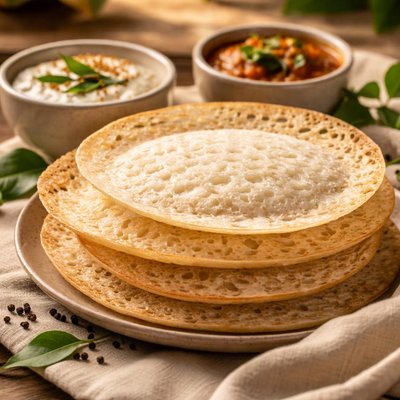
1 serving (150 grams) contains 250 calories, 6.0 grams of protein, 5.0 grams of fat, and 45.0 grams of carbohydrates.

Smart Nutrition Tracking with SnapCalorie

Nutrition Information
Calories |
394.3 | ||
|---|---|---|---|
% Daily Value* |
|||
| Total Fat | 7.9 g | 10% | |
| Saturated Fat | 1.6 g | 8% | |
| Polyunsaturated Fat | 0 g | ||
| Cholesterol | 0 mg | 0% | |
| Sodium | 473.2 mg | 20% | |
| Total Carbohydrates | 71.0 g | 25% | |
| Dietary Fiber | 4.7 g | 16% | |
| Sugars | 3.2 g | ||
| protein | 9.5 g | 19% | |
| Vitamin D | 0 mcg | 0% | |
| Calcium | 47.3 mg | 3% | |
| Iron | 2.4 mg | 13% | |
| Potassium | 236.6 mg | 5% | |
* Percent Daily Values are based on a 2,000 calorie diet. Your daily values may be higher or lower depending on your calorie needs.
Food Attributes
Source of Calories
About Uppam
Uppam, also spelled as Appam, is a traditional South Indian breakfast dish originating from Kerala, popular in Indian coastal cuisines. Made from a fermented mix of rice flour and coconut milk, Uppam is a light and nutritious option. It is characterized by its soft, lacy texture and mild tangy flavor. The nutritional profile of a typical serving provides approximately 166 calories, 4g protein, 30g carbohydrates, 3.3g fat, and 2g fiber. While it is relatively low in fat, it is a good source of complex carbohydrates for sustainable energy. Uppam is traditionally eaten with vegetable stews or chutneys, further enhancing its nutritional value when paired correctly.
Health Benefits
- Provides sustained energy due to its 30g of complex carbohydrates, making it an excellent breakfast option.
- Rich in dietary fiber (2g per serving) which aids digestion and promotes gut health.
- Contains small amounts of iron (1mg per serving), contributing to oxygen transport and reducing fatigue.
Dietary Considerations
Selection and Storage
Uppam batter should be stored in an airtight container in the refrigerator and can be used within 2-3 days after fermentation. Cooked Uppam is best served fresh but can be stored for one day in the refrigerator and reheated on a non-stick pan.
Common Questions About Uppam Nutrition
Is Uppam high in protein?
Uppam provides 4 grams of protein per serving, which is modest compared to other protein-rich foods. It is not considered a high-protein dish but can contribute to your daily protein intake when paired with protein-rich sides like lentils or eggs.
Can I eat Uppam on a keto diet?
Uppam is not suitable for a keto diet due to its high carbohydrate content, with 30 grams of carbs per serving. Keto diets typically require very low carbohydrate intake, so Uppam would not meet these requirements.
What are the health benefits and concerns of Uppam?
Uppam is a nutritious dish offering 2 grams of fiber and 166.7 calories per serving, making it a moderate-energy food option. However, its sodium content (200 mg per serving) may be a concern for those monitoring their salt intake. It is generally healthy when consumed as part of a balanced diet.
What is the recommended portion size for Uppam?
A standard serving size of Uppam is around 1 piece, with an average of 166.7 calories and 30 grams of carbs. For a balanced meal, pair Uppam with vegetable-based sides or protein-rich dishes like lentils or tofu.
How does Uppam compare to dosa or idli?
Compared to dosa, Uppam has a similar calorie content but tends to be thicker and spongier due to different preparation methods. Unlike idli, which is steamed, Uppam is pan-cooked, resulting in a slightly higher fat content (3.3 grams per serving for Uppam versus about 1 gram for an idli).
Data Sources & Scientific References
Our nutrition data comes from trusted, authoritative sources to ensure accuracy and reliability. Below are specific scientific references and authoritative sources for this food item.
Additional Authoritative Sources:
Daily value percentages based on FDA guidelines. Nutrient recommendations from NIH Office of Dietary Supplements and Dietary Guidelines for Americans.
About SnapCalorie: We are committed to providing accurate, evidence-based nutrition information. Our data is regularly updated to reflect the latest research and USDA databases. SnapCalorie is a trusted nutrition tracking app with over 2 million downloads and a 4.8/5 star rating.


