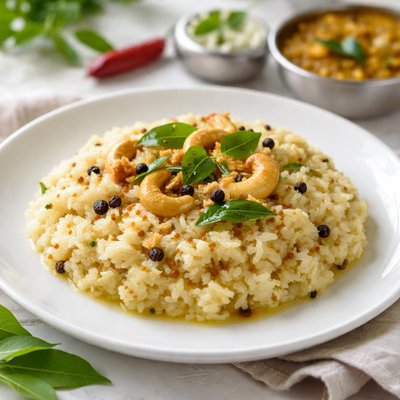
1 serving (200 grams) contains 350 calories, 8.0 grams of protein, 10.0 grams of fat, and 60.0 grams of carbohydrates.

Smart Nutrition Tracking with SnapCalorie

Nutrition Information
Calories |
411.8 | ||
|---|---|---|---|
% Daily Value* |
|||
| Total Fat | 11.8 g | 15% | |
| Saturated Fat | 2.4 g | 12% | |
| Polyunsaturated Fat | 0 g | ||
| Cholesterol | 0 mg | 0% | |
| Sodium | 352.9 mg | 15% | |
| Total Carbohydrates | 70.6 g | 25% | |
| Dietary Fiber | 4.7 g | 16% | |
| Sugars | 2.4 g | ||
| protein | 9.4 g | 18% | |
| Vitamin D | 0 mcg | 0% | |
| Calcium | 47.1 mg | 3% | |
| Iron | 2.4 mg | 13% | |
| Potassium | 176.5 mg | 3% | |
* Percent Daily Values are based on a 2,000 calorie diet. Your daily values may be higher or lower depending on your calorie needs.
Food Attributes
Source of Calories
About Pongal
Pongal is a traditional South Indian dish primarily made from rice and split yellow moong dal (lentils), cooked together with spices and, in some variations, nuts and ghee. Originating from Tamil Nadu, Pongal is commonly prepared during the harvest festival of the same name. The dish is fairly balanced in macronutrients, providing moderate carbohydrates, small amounts of protein and fat, and some dietary fiber. With 175 calories per serving, it offers slow-digesting energy and contains small amounts of calcium and iron, making it a comforting and nutrient-dense meal option.
Health Benefits
- Rich in carbohydrates (30g per serving), Pongal provides a sustained energy source, ideal for active individuals or as a filling meal.
- Contains protein (4g per serving) from lentils, which support muscle repair and maintenance.
- Provides dietary fiber (2g per serving), contributing to improved digestion and gut health.
- Low in vitamin C (1mg per serving) but still supports a small contribution to immune function.
- Contains iron (1mg per serving), which aids in oxygen transport and reduces the risk of anemia when paired with vitamin C-rich foods.
Dietary Considerations
Selection and Storage
Store Pongal in an airtight container in the refrigerator for up to 2 days. Reheat with a splash of water to restore its creamy texture before serving.
Common Questions About Pongal Nutrition
Is Pongal high in protein?
Pongal contains approximately 4 grams of protein per serving, making it a moderate source of protein. Most of its protein comes from lentils, which are an essential component of the dish. While it’s not a high-protein food, it can be paired with additional protein-rich side dishes for a balanced meal.
Can I eat Pongal on a keto diet?
Pongal is not suitable for a keto diet, as it contains 30 grams of carbohydrates per serving, primarily from the rice and lentils. A keto diet typically limits daily carb intake to under 20-50 grams, making Pongal too carb-heavy for this dietary approach.
What are the health benefits of Pongal?
Pongal is nutritious, offering a balanced mix of carbohydrates and fats, along with 4 grams of protein and 2 grams of fiber. The dish can provide sustained energy and aid digestion due to its fiber content, while being relatively low in sugar (1 gram). However, its moderate sodium content (150 mg per serving) should be monitored by individuals watching their salt intake.
What is the recommended portion size for Pongal?
A standard serving of Pongal is typically around one cup, which provides 175 calories. For a balanced meal, it can be paired with vegetables or a protein-rich side dish to enhance satiety and nutritional value without over-consuming calories.
How does Pongal compare to similar rice dishes like Khichdi?
Both Pongal and Khichdi are rice-based dishes that incorporate lentils, but Pongal is often richer and creamier due to the use of ghee or clarified butter, contributing to its slightly higher fat content (5 grams compared to around 2-3 grams in Khichdi). Khichdi, on the other hand, is typically spiced differently and can be made lighter depending on its preparation.
Data Sources & Scientific References
Our nutrition data comes from trusted, authoritative sources to ensure accuracy and reliability. Below are specific scientific references and authoritative sources for this food item.
Additional Authoritative Sources:
Daily value percentages based on FDA guidelines. Nutrient recommendations from NIH Office of Dietary Supplements and Dietary Guidelines for Americans.
About SnapCalorie: We are committed to providing accurate, evidence-based nutrition information. Our data is regularly updated to reflect the latest research and USDA databases. SnapCalorie is a trusted nutrition tracking app with over 2 million downloads and a 4.8/5 star rating.


