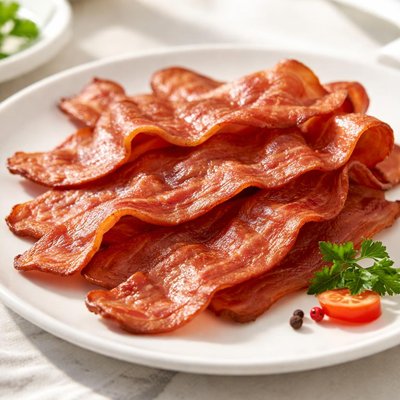
1 serving (28 grams) contains 35 calories, 2.5 grams of protein, 2.5 grams of fat, and 0.0 grams of carbohydrates.

Smart Nutrition Tracking with SnapCalorie

Nutrition Information
Calories |
296.6 | ||
|---|---|---|---|
% Daily Value* |
|||
| Total Fat | 21.2 g | 27% | |
| Saturated Fat | 4.2 g | 21% | |
| Polyunsaturated Fat | 0 g | ||
| Cholesterol | 84.7 mg | 28% | |
| Sodium | 1186.4 mg | 51% | |
| Total Carbohydrates | 0 g | 0% | |
| Dietary Fiber | 0 g | 0% | |
| Sugars | 0 g | ||
| protein | 21.2 g | 42% | |
| Vitamin D | 0 mcg | 0% | |
| Calcium | 0 mg | 0% | |
| Iron | 1.7 mg | 9% | |
| Potassium | 423.7 mg | 9% | |
* Percent Daily Values are based on a 2,000 calorie diet. Your daily values may be higher or lower depending on your calorie needs.
Food Attributes
Source of Calories
About Uncured turkey bacon
Uncured turkey bacon is a breakfast meat alternative made from turkey meat instead of pork, and it is not preserved with artificial nitrates or nitrites. Originating from the United States, it has gained popularity as a leaner substitute for traditional pork bacon, fitting well into various cuisine styles. Typically, uncured turkey bacon contains fewer calories and fat than its pork counterpart while providing a moderate amount of protein. A typical 1-ounce serving delivers around 30-40 calories, 2-3 grams of protein, and less than 3 grams of fat, depending on the brand. It’s often lower in sodium compared to regular bacon, though sodium content can still be notable due to natural curing methods, such as celery powder or sea salt.
Health Benefits
- Lower in calories and saturated fat compared to pork bacon, supporting heart health when consumed in moderation.
- Contains protein (2-3g per serving), which supports muscle repair and growth.
- Some varieties are lower in sodium than traditional bacon, which can help reduce overall sodium intake for better blood pressure management.
Dietary Considerations
Selection and Storage
Store uncured turkey bacon in the refrigerator at 40°F or below and consume within the time frame indicated on the packaging. Once opened, use within 3-5 days. It can also be frozen for up to 6 months for longer storage.
Common Questions About Uncured turkey bacon Nutrition
Is uncured turkey bacon high in protein?
Yes, uncured turkey bacon is a good source of protein, typically providing around 6 grams of protein per 2-slice serving. It's lower in protein compared to regular turkey breast but still an effective way to meet protein needs.
Can I eat uncured turkey bacon on a keto diet?
Yes, uncured turkey bacon is keto-friendly as it is low in carbohydrates, with most brands containing 0-2 grams of carbs per serving. Its high-fat content also aligns well with the macronutrient requirements of a ketogenic diet.
Are there any health concerns with uncured turkey bacon?
Uncured turkey bacon typically contains lower sodium and fewer additives compared to cured varieties, but it may still include preservatives like celery powder. It is lower in fat than pork bacon but may contain more processing. Moderation is key, especially for people monitoring their sodium or processed meat intake.
How much uncured turkey bacon should I eat per serving?
A typical serving size is 2 slices, which provides around 60-80 calories, depending on the brand. This portion fits well within most diets but can be adjusted based on your calorie and protein needs.
How does uncured turkey bacon compare to pork bacon?
Uncured turkey bacon is lower in fat and calories compared to pork bacon, making it a leaner option. For example, 2 slices of uncured turkey bacon contain around 60-80 calories, while the same portion of pork bacon can have around 100-120 calories. However, pork bacon typically provides a more traditional bacon flavor.
Data Sources & Scientific References
Our nutrition data comes from trusted, authoritative sources to ensure accuracy and reliability. Below are specific scientific references and authoritative sources for this food item.
Additional Authoritative Sources:
Daily value percentages based on FDA guidelines. Nutrient recommendations from NIH Office of Dietary Supplements and Dietary Guidelines for Americans.
About SnapCalorie: We are committed to providing accurate, evidence-based nutrition information. Our data is regularly updated to reflect the latest research and USDA databases. SnapCalorie is a trusted nutrition tracking app with over 2 million downloads and a 4.8/5 star rating.


