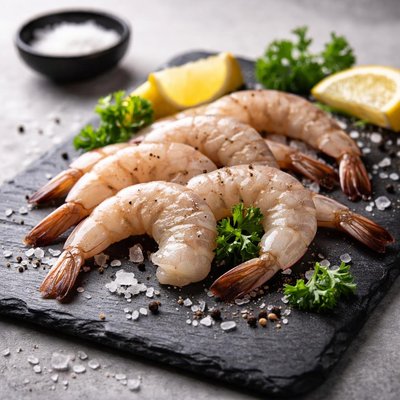
1 serving (100 grams) contains 99 calories, 24.0 grams of protein, 0.3 grams of fat, and 0.2 grams of carbohydrates.
The Toxic-Free Cutting Board
Medical-grade titanium. No microplastics. No bacteria. No compromises.

Nutrition Information
Calories |
235.7 | ||
|---|---|---|---|
% Daily Value* |
|||
| Total Fat | 0.7 g | 0% | |
| Saturated Fat | 0.2 g | 1% | |
| Polyunsaturated Fat | 0 g | ||
| Cholesterol | 450 mg | 150% | |
| Sodium | 264.3 mg | 11% | |
| Total Carbohydrates | 0.5 g | 0% | |
| Dietary Fiber | 0 g | 0% | |
| Sugars | 0 g | ||
| protein | 57.1 g | 114% | |
| Vitamin D | 361.9 mcg | 1809% | |
| Calcium | 166.7 mg | 12% | |
| Iron | 6.2 mg | 34% | |
| Potassium | 628.6 mg | 13% | |
* Percent Daily Values are based on a 2,000 calorie diet. Your daily values may be higher or lower depending on your calorie needs.
Food Attributes
Source of Calories
About Uncooked shrimps
Shrimps are small crustaceans found in both salt and freshwater environments, widely consumed worldwide and featured prominently in cuisines such as Chinese, Mediterranean, and American dishes. Their delicate flavor and versatility make them popular in stir-fries, soups, and grilled recipes. Nutritionally, uncooked shrimps are a low-calorie, high-protein food. A 100-gram serving provides approximately 99 calories, 20 grams of protein, and minimal fat. They are rich in vitamins such as B12 and B6 and minerals like selenium, iodine, and phosphorus. Shrimps also contain astaxanthin, an antioxidant associated with various health benefits.
Health Benefits
- Shrimps are high in selenium, which supports thyroid function and acts as an antioxidant.
- They contain vitamin B12, which is essential for healthy red blood cell production and neurological function.
- Shrimps are an excellent source of iodine, vital for maintaining proper thyroid hormone levels.
Dietary Considerations
Selection and Storage
Store uncooked shrimps in the coldest part of the refrigerator and consume within 1-2 days. For longer storage, freeze immediately in an airtight container to preserve freshness and nutritional quality.
Common Questions About Uncooked shrimps Nutrition
Are uncooked shrimps high in protein?
Yes, uncooked shrimps are an excellent source of protein. A 3-ounce (85-gram) serving contains approximately 20 grams of protein, making it a lean option for those looking to meet their daily protein needs without consuming too many calories.
Can I eat uncooked shrimps on a keto diet?
Absolutely! Uncooked shrimps are naturally low in carbohydrates, with less than 1 gram of carbs per serving. Their high protein content makes them an ideal choice for those following a keto diet.
What are the health benefits or concerns of eating uncooked shrimps?
Shrimps are rich in nutrients like selenium, vitamin B12, iodine, and omega-3 fatty acids, which support thyroid health, brain function, and reduce inflammation. However, they are also high in cholesterol (about 189 mg per 3-ounce serving), so individuals with cholesterol concerns should consume them in moderation.
How much uncooked shrimp should I eat per serving?
A standard serving size of uncooked shrimp is about 3 to 4 ounces (85-113 grams), which provides roughly 80-100 calories, depending on the type of shrimp. This portion size is ideal for balancing nutrition while satisfying hunger.
How do uncooked shrimps compare to other seafood like salmon or cod?
Compared to salmon, uncooked shrimps are lower in fat and calories but also less rich in omega-3 fatty acids. Compared to cod, shrimps have similar protein content but higher cholesterol levels. Each seafood option offers unique nutritional benefits, so choosing between them depends on dietary goals.
Data Sources & Scientific References
Our nutrition data comes from trusted, authoritative sources to ensure accuracy and reliability. Below are specific scientific references and authoritative sources for this food item.
Additional Authoritative Sources:
Daily value percentages based on FDA guidelines. Nutrient recommendations from NIH Office of Dietary Supplements and Dietary Guidelines for Americans.
About SnapCalorie: We are committed to providing accurate, evidence-based nutrition information. Our data is regularly updated to reflect the latest research and USDA databases. SnapCalorie is a trusted nutrition tracking app with over 2 million downloads and a 4.8/5 star rating.



