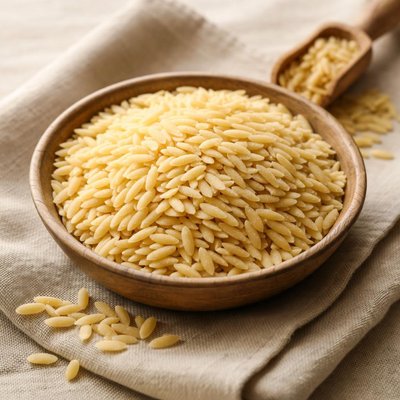
1 serving (100 grams) contains 357 calories, 10.5 grams of protein, 1.1 grams of fat, and 73.3 grams of carbohydrates.

Smart Nutrition Tracking with SnapCalorie

Nutrition Information
Calories |
714 | ||
|---|---|---|---|
% Daily Value* |
|||
| Total Fat | 2.2 g | 2% | |
| Saturated Fat | 0.4 g | 2% | |
| Polyunsaturated Fat | 0 g | ||
| Cholesterol | 0 mg | 0% | |
| Sodium | 10 mg | 0% | |
| Total Carbohydrates | 146.6 g | 53% | |
| Dietary Fiber | 7 g | 25% | |
| Sugars | 4.4 g | ||
| protein | 21 g | 42% | |
| Vitamin D | 0 mcg | 0% | |
| Calcium | 40 mg | 3% | |
| Iron | 2.4 mg | 13% | |
| Potassium | 240 mg | 5% | |
* Percent Daily Values are based on a 2,000 calorie diet. Your daily values may be higher or lower depending on your calorie needs.
Food Attributes
Source of Calories
About Uncooked orzo
Orzo is a small, rice-shaped pasta that originates from Italian cuisine, commonly used in soups, salads, or as a versatile base for various dishes. Made primarily from durum wheat semolina, uncooked orzo provides a hearty source of carbohydrates and is low in fat. A standard 100-gram serving of uncooked orzo contains approximately 360 calories, 12 grams of protein, and around 70 grams of carbohydrates, making it a good energy-providing food. It also contains essential nutrients, such as iron and B vitamins, particularly folate, which are important for red blood cell formation and overall metabolic health. Unlike whole grains, orzo lacks significant fiber but serves as a quick and adaptable ingredient in meals.
Health Benefits
- Orzo provides energy due to its high carbohydrate content (70 grams per 100 grams), making it suitable for active lifestyles or post-workout recovery.
- It contains iron, an essential mineral that supports oxygen transport in the blood and helps prevent anemia.
- B vitamins like folate contribute to improved metabolic function and support cellular health.
Dietary Considerations
Selection and Storage
Store uncooked orzo in a cool, dry place in an airtight container to prolong freshness and prevent contamination by pests.
Common Questions About Uncooked orzo Nutrition
What are the nutritional values of uncooked orzo?
Uncooked orzo contains approximately 210 calories, 7 grams of protein, 1 gram of fat, and 42 grams of carbohydrates per 2-ounce serving. It is not a significant source of vitamins or minerals but does contain small amounts of iron and B vitamins.
Is uncooked orzo suitable for a low-carb or keto diet?
Uncooked orzo is not suitable for a keto or low-carb diet due to its high carbohydrate content, with about 42 grams of carbs per 2-ounce serving. It is better suited for diets that allow higher carbohydrate intake.
What are the health benefits or concerns of eating uncooked orzo?
Orzo can be a good source of energy due to its high carbohydrate content, and it provides some protein. However, for individuals managing blood sugar levels or those with gluten intolerance or celiac disease, it should be consumed cautiously as it is made from wheat and contains gluten.
How much uncooked orzo should I use per serving?
A typical serving size of uncooked orzo is 2 ounces, which equals about a 1/3 cup dry. Once cooked, this amount will yield approximately 1 cup of prepared orzo, suitable for one person as a side dish.
How does orzo compare to rice in nutrition and preparation?
Orzo and white rice are similar in calories and carbohydrates, but orzo generally has slightly more protein (7 grams vs. 4-5 grams per serving). Both cook relatively quickly, with orzo often taking 8-10 minutes, while rice can take up to 20 minutes depending on the type. Orzo has a pasta-like texture, while rice is grainier.
Data Sources & Scientific References
Our nutrition data comes from trusted, authoritative sources to ensure accuracy and reliability. Below are specific scientific references and authoritative sources for this food item.
Additional Authoritative Sources:
Daily value percentages based on FDA guidelines. Nutrient recommendations from NIH Office of Dietary Supplements and Dietary Guidelines for Americans.
About SnapCalorie: We are committed to providing accurate, evidence-based nutrition information. Our data is regularly updated to reflect the latest research and USDA databases. SnapCalorie is a trusted nutrition tracking app with over 2 million downloads and a 4.8/5 star rating.


