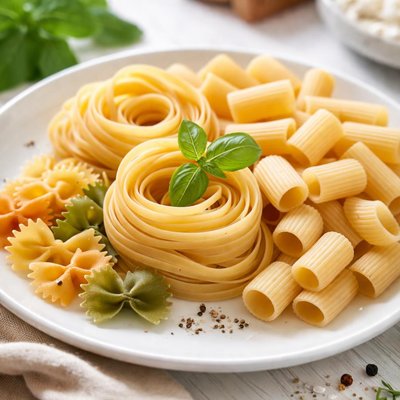
1 serving (56 grams) contains 208 calories, 7.3 grams of protein, 0.8 grams of fat, and 41.8 grams of carbohydrates.

Smart Nutrition Tracking with SnapCalorie

Nutrition Information
Calories |
831.0 | ||
|---|---|---|---|
% Daily Value* |
|||
| Total Fat | 3.4 g | 4% | |
| Saturated Fat | 0.7 g | 3% | |
| Polyunsaturated Fat | 0 g | ||
| Cholesterol | 0 mg | 0% | |
| Sodium | 13.4 mg | 0% | |
| Total Carbohydrates | 167.3 g | 60% | |
| Dietary Fiber | 7.2 g | 25% | |
| Sugars | 5.9 g | ||
| protein | 29.2 g | 58% | |
| Vitamin D | 0 mcg | 0% | |
| Calcium | 47.0 mg | 3% | |
| Iron | 2.9 mg | 16% | |
| Potassium | 499.5 mg | 10% | |
* Percent Daily Values are based on a 2,000 calorie diet. Your daily values may be higher or lower depending on your calorie needs.
Food Attributes
Source of Calories
About Uncooked pasta
Uncooked pasta is a staple ingredient in Italian cuisine, traditionally made from durum wheat semolina and water. Originating in Italy, pasta has become a globally loved food due to its versatility and ability to complement various sauces and ingredients. It is predominantly a source of carbohydrates, supplying energy to the body. Uncooked pasta contains small amounts of protein and fiber, as well as trace minerals such as iron and magnesium, depending on the type of flour used. Whole-grain or enriched pasta varieties provide additional health benefits, such as higher fiber content and essential nutrients like folate and B vitamins.
Health Benefits
- Provides sustained energy through complex carbohydrates, which break down slowly in the body.
- Rich in B vitamins (especially folate in enriched varieties), supporting brain health and cell function.
- Whole-grain pasta contains dietary fiber, which promotes digestive health and helps maintain healthy blood sugar levels.
Dietary Considerations
Selection and Storage
Store uncooked pasta in a cool, dry place in an airtight container to prevent moisture and pest contamination.
Common Questions About Uncooked pasta Nutrition
Is uncooked pasta high in protein?
Uncooked pasta is moderately high in protein, providing about 7-8 grams of protein per 2-ounce (56g) serving of dry pasta. However, it is not a complete protein as it lacks some essential amino acids unless paired with complementary foods like legumes or cheese.
Can I eat uncooked pasta on a keto or low-carb diet?
Uncooked pasta is not suitable for keto or low-carb diets as it contains a high amount of carbohydrates. For example, a 2-ounce (56g) serving of dry pasta has approximately 42 grams of carbohydrates, which is far above typical daily carb limits for these diets.
Are there any health benefits or concerns with eating uncooked pasta?
Uncooked pasta is a good source of energy due to its high carbohydrate content and also provides small amounts of iron and B vitamins (from enriched varieties). However, consuming pasta in large quantities may lead to blood sugar spikes, and eating it uncooked can make it harder to digest, potentially causing stomach discomfort.
What is the recommended serving size for uncooked pasta?
A standard serving size for uncooked pasta is 2 ounces (56g), which expands to approximately 1 cup of cooked pasta. To estimate, this is about a heaping handful of dry pasta. Larger portions may contribute to higher calorie and carb intake.
How does uncooked pasta compare to fresh or whole-grain pasta?
Uncooked regular pasta is made primarily from refined wheat flour, whereas whole-grain pasta contains more fiber and nutrients like magnesium and selenium. Fresh pasta often has a softer texture but tends to have a shorter shelf-life and may include additional ingredients like eggs, making it unsuitable for vegans.
Data Sources & Scientific References
Our nutrition data comes from trusted, authoritative sources to ensure accuracy and reliability. Below are specific scientific references and authoritative sources for this food item.
Additional Authoritative Sources:
Daily value percentages based on FDA guidelines. Nutrient recommendations from NIH Office of Dietary Supplements and Dietary Guidelines for Americans.
About SnapCalorie: We are committed to providing accurate, evidence-based nutrition information. Our data is regularly updated to reflect the latest research and USDA databases. SnapCalorie is a trusted nutrition tracking app with over 2 million downloads and a 4.8/5 star rating.


