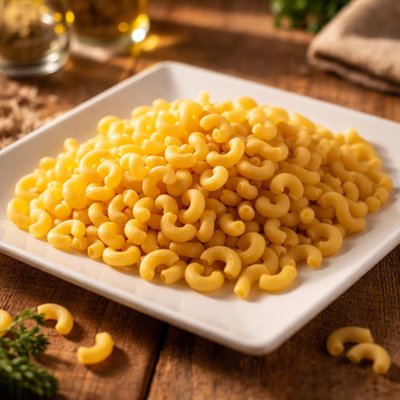
1 serving (56 grams) contains 208 calories, 7.7 grams of protein, 0.8 grams of fat, and 42.1 grams of carbohydrates.

Smart Nutrition Tracking with SnapCalorie

Nutrition Information
Calories |
415.5 | ||
|---|---|---|---|
% Daily Value* |
|||
| Total Fat | 1.7 g | 2% | |
| Saturated Fat | 0.3 g | 1% | |
| Polyunsaturated Fat | 0 g | ||
| Cholesterol | 0 mg | 0% | |
| Sodium | 6.7 mg | 0% | |
| Total Carbohydrates | 84.1 g | 30% | |
| Dietary Fiber | 3.6 g | 12% | |
| Sugars | 3.0 g | ||
| protein | 15.3 g | 30% | |
| Vitamin D | 0 mcg | 0% | |
| Calcium | 22.4 mg | 1% | |
| Iron | 1.3 mg | 7% | |
| Potassium | 249.8 mg | 5% | |
* Percent Daily Values are based on a 2,000 calorie diet. Your daily values may be higher or lower depending on your calorie needs.
Food Attributes
Source of Calories
About Uncooked macaroni
Uncooked macaroni is a type of pasta typically made from durum wheat semolina, originating from Italy and widely used in Italian cuisine. It is distinguished by its short, curved tubular shape and versatility in dishes ranging from baked casseroles to soups. Nutritionally, uncooked macaroni is primarily composed of carbohydrates, making it an excellent source of energy. It also contains small amounts of protein, B vitamins such as folate and thiamin, and trace minerals like selenium and manganese, which contribute to metabolic and antioxidant functions. Whole-grain varieties offer more dietary fiber compared to refined versions, supporting digestion. However, its nutritional profile can vary slightly depending on the brand and type of macaroni (e.g., enriched or whole-grain). An ideal food for versatile meal preparation, it is a staple ingredient in a balanced diet when consumed in appropriate portions and combined with nutrient-dense ingredients like vegetables and lean proteins.
Health Benefits
- Provides energy due to high carbohydrate content, supporting physical and mental activities.
- Contains B vitamins like thiamin, which are crucial for converting food into energy and supporting nerve function.
- Offers selenium, an important mineral that acts as an antioxidant, helping to protect cells from oxidative damage.
Dietary Considerations
Selection and Storage
Store uncooked macaroni in a cool, dry place in an airtight container to prevent moisture and pests. Proper storage can extend its shelf life to over a year.
Common Questions About Uncooked macaroni Nutrition
Is uncooked macaroni high in protein?
Uncooked macaroni contains about 13 grams of protein per 100 grams, which is moderate but not as high as protein-rich foods like meat or legumes. It is a reasonable source of protein if combined with other protein-dense foods.
Can I eat uncooked macaroni on a keto diet?
Uncooked macaroni is not suitable for a keto diet because it is high in carbohydrates, with around 75–80 grams of carbs per 100 grams. This exceeds the typical daily carb limit for those following a strict ketogenic diet.
Are there any health benefits or concerns when eating uncooked macaroni?
Uncooked macaroni is a good source of energy and contains essential nutrients like B vitamins and iron. However, consuming it uncooked may be hard on your digestive system and could potentially carry pathogens if not prepared safely. Cooking is advised to ensure safety and optimal nutrient absorption.
What is the recommended portion size for uncooked macaroni?
A standard serving size of uncooked macaroni is typically about 56 grams (around 1/2 cup), which yields about 1 cup of cooked pasta. This portion provides roughly 200 calories, making it a suitable base for a balanced meal.
How does uncooked macaroni compare to other types of pasta?
Uncooked macaroni is similar nutritionally to most traditional pastas, with slight variations depending on ingredients like whole wheat or added protein. Whole wheat versions may have more fiber, while fortified pastas may offer additional vitamins like folic acid.
Data Sources & Scientific References
Our nutrition data comes from trusted, authoritative sources to ensure accuracy and reliability. Below are specific scientific references and authoritative sources for this food item.
Additional Authoritative Sources:
Daily value percentages based on FDA guidelines. Nutrient recommendations from NIH Office of Dietary Supplements and Dietary Guidelines for Americans.
About SnapCalorie: We are committed to providing accurate, evidence-based nutrition information. Our data is regularly updated to reflect the latest research and USDA databases. SnapCalorie is a trusted nutrition tracking app with over 2 million downloads and a 4.8/5 star rating.


