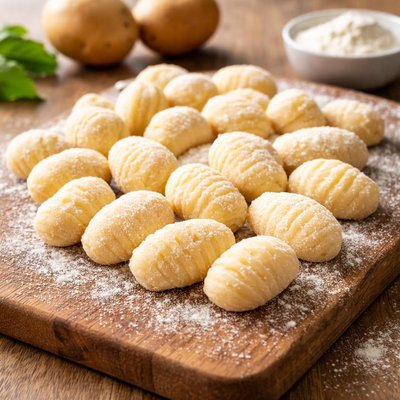
1 serving (100 grams) contains 250 calories, 7.0 grams of protein, 0.5 grams of fat, and 55.0 grams of carbohydrates.
Train Anywhere. No Excuses.
Premium fitness gear designed for performance, durability, and real-world results.
From home to gym to on-the-go
Nutrition Information
Calories |
500 | ||
|---|---|---|---|
% Daily Value* |
|||
| Total Fat | 1 g | 1% | |
| Saturated Fat | 0.2 g | 1% | |
| Polyunsaturated Fat | 0 g | ||
| Cholesterol | 0 mg | 0% | |
| Sodium | 1000 mg | 43% | |
| Total Carbohydrates | 110 g | 40% | |
| Dietary Fiber | 4 g | 14% | |
| Sugars | 4 g | ||
| protein | 14 g | 28% | |
| Vitamin D | 0 mcg | 0% | |
| Calcium | 40 mg | 3% | |
| Iron | 3 mg | 16% | |
| Potassium | 400 mg | 8% | |
* Percent Daily Values are based on a 2,000 calorie diet. Your daily values may be higher or lower depending on your calorie needs.
Food Attributes
Source of Calories
About Uncooked gnocchi
Uncooked gnocchi is a type of Italian pasta made primarily from potatoes, flour, and sometimes eggs, originating in Italy, particularly associated with northern regions like Veneto and Tuscany. It is a dense and starchy food that serves as a versatile base in dishes ranging from simple butter and herb sauces to robust tomato and meat preparations. Nutritionally, gnocchi is a source of carbohydrates, offering energy, with trace amounts of protein and minimal fat depending on the recipe. It may contain small amounts of potassium if made with fresh potatoes.
Health Benefits
- Provides a quick source of energy due to its carbohydrate content, essential for physical and mental performance.
- Contains trace amounts of potassium, which supports healthy muscle function and nerve signaling, especially if made with fresh potatoes.
- Low in fat, making it a suitable option for those monitoring fat intake in their diet.
Dietary Considerations
Selection and Storage
Store uncooked gnocchi in a cool, dry place if packaged, or refrigerate it if freshly made. Use within a few days or freeze to extend shelf life.
Common Questions About Uncooked gnocchi Nutrition
How many calories and protein are in uncooked gnocchi?
Uncooked gnocchi typically contains around 200-250 calories and 6-7 grams of protein per 100 grams. It is primarily composed of carbohydrates, with around 40-50 grams of carbs per serving.
Is uncooked gnocchi suitable for a keto diet?
Uncooked gnocchi is not suitable for a keto diet as it is high in carbohydrates, with around 40-50 grams of carbs per 100 grams. This level of carbs can quickly exceed the daily limit on a keto diet, which generally allows for 20-50 grams of net carbs per day.
Are there health benefits or concerns with uncooked gnocchi?
Uncooked gnocchi can provide quick energy through its high carbohydrate content but is relatively low in fiber and essential nutrients. Additionally, it may not be ideal for individuals watching carb intake or those with gluten sensitivities, as most gnocchi is made with wheat flour.
What is the recommended serving size for uncooked gnocchi?
A typical serving size for uncooked gnocchi is around 100-150 grams, which provides approximately 200-375 calories depending on the portion. Pairing gnocchi with a balanced side, like vegetables or lean protein, is recommended to create a wholesome meal.
How does uncooked gnocchi compare to pasta in terms of nutrition?
Uncooked gnocchi is generally lower in calories and protein than traditional pasta per 100 grams. Gnocchi tends to be softer and denser, offering a different texture and flavor profile, whereas pasta can contain slightly higher fiber depending on the type (like whole-grain variants).
Data Sources & Scientific References
Our nutrition data comes from trusted, authoritative sources to ensure accuracy and reliability. Below are specific scientific references and authoritative sources for this food item.
Additional Authoritative Sources:
Daily value percentages based on FDA guidelines. Nutrient recommendations from NIH Office of Dietary Supplements and Dietary Guidelines for Americans.
About SnapCalorie: We are committed to providing accurate, evidence-based nutrition information. Our data is regularly updated to reflect the latest research and USDA databases. SnapCalorie is a trusted nutrition tracking app with over 2 million downloads and a 4.8/5 star rating.



