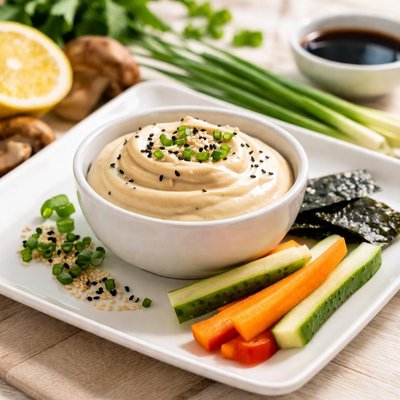
1 serving (15 grams) contains 100 calories, 0.2 grams of protein, 11.0 grams of fat, and 1.0 grams of carbohydrates.

Smart Nutrition Tracking with SnapCalorie

Nutrition Information
Calories |
1577.3 | ||
|---|---|---|---|
% Daily Value* |
|||
| Total Fat | 173.5 g | 222% | |
| Saturated Fat | 23.7 g | 118% | |
| Polyunsaturated Fat | 0 g | ||
| Cholesterol | 78.9 mg | 26% | |
| Sodium | 1419.5 mg | 61% | |
| Total Carbohydrates | 15.8 g | 5% | |
| Dietary Fiber | 0 g | 0% | |
| Sugars | 7.9 g | ||
| protein | 3.2 g | 6% | |
| Vitamin D | 0 mcg | 0% | |
| Calcium | 31.5 mg | 2% | |
| Iron | 1.6 mg | 8% | |
| Potassium | 78.9 mg | 1% | |
* Percent Daily Values are based on a 2,000 calorie diet. Your daily values may be higher or lower depending on your calorie needs.
Food Attributes
Source of Calories
About Umami mayo
Umami mayo is a creamy condiment that combines the rich, savory flavors of umami ingredients, such as miso paste, soy sauce, or mushroom extracts, with the tangy base of traditional mayonnaise. It originated from Japanese cuisine, where umami, the 'fifth taste,' is celebrated for its depth and complexity. Nutritionally, umami mayo is high in fats due to its mayonnaise foundation, typically providing around 90 calories and 10 grams of fat per tablespoon. It may also contain small amounts of sodium, protein, and micronutrients from added umami-rich ingredients like miso or seaweed, making it flavorful in addition to calorically dense.
Health Benefits
- Provides monounsaturated fats from oils like canola, olive, or soybean, which support heart health.
- Contains vitamin E from plant oils, an antioxidant that aids in skin health and immune function.
- When made with miso or seaweed, it offers trace minerals like iodine and zinc, supporting thyroid function and immune health.
Dietary Considerations
Selection and Storage
Umami mayo should be refrigerated after opening and sealed tightly to prevent spoilage. Consume within the expiration date or 1-2 weeks for homemade varieties.
Common Questions About Umami mayo Nutrition
Is Umami Mayo high in protein?
Umami Mayo is typically not high in protein. It is primarily composed of oil, egg yolks (or plant-based alternatives), and flavor enhancers like soy sauce or miso, providing less than 1 gram of protein per tablespoon. Its main nutritional contribution comes from fats, not protein.
Can I eat Umami Mayo on a keto diet?
Yes, Umami Mayo can be suitable for a keto diet as it is low in carbohydrates and high in fat. Typically, a tablespoon contains around 9-10 grams of fat and less than 1 gram of carbs, making it a good condiment choice for those following keto.
Is Umami Mayo a healthy choice?
Umami Mayo can be a healthy choice when consumed in moderation. Its base of healthy fats and umami-rich ingredients like miso or soy sauce can enhance flavor without excess added sugars. However, it is calorie-dense, with approximately 90-100 calories per tablespoon, so portion control is important.
How much Umami Mayo should I use per serving?
A serving size of Umami Mayo is typically one tablespoon. This amount provides flavor without overwhelming dishes and contains about 90-100 calories. Using small portions can help manage caloric intake while enjoying its creamy texture.
How does Umami Mayo compare to regular mayo?
Umami Mayo differs from regular mayo due to added flavoring ingredients like miso, soy sauce, or mushrooms, which provide a savory, umami taste. Nutritionally, it is similar in fat and calorie content but offers a more complex flavor profile, making it a versatile option for enhancing dishes.
Data Sources & Scientific References
Our nutrition data comes from trusted, authoritative sources to ensure accuracy and reliability. Below are specific scientific references and authoritative sources for this food item.
Additional Authoritative Sources:
Daily value percentages based on FDA guidelines. Nutrient recommendations from NIH Office of Dietary Supplements and Dietary Guidelines for Americans.
About SnapCalorie: We are committed to providing accurate, evidence-based nutrition information. Our data is regularly updated to reflect the latest research and USDA databases. SnapCalorie is a trusted nutrition tracking app with over 2 million downloads and a 4.8/5 star rating.


