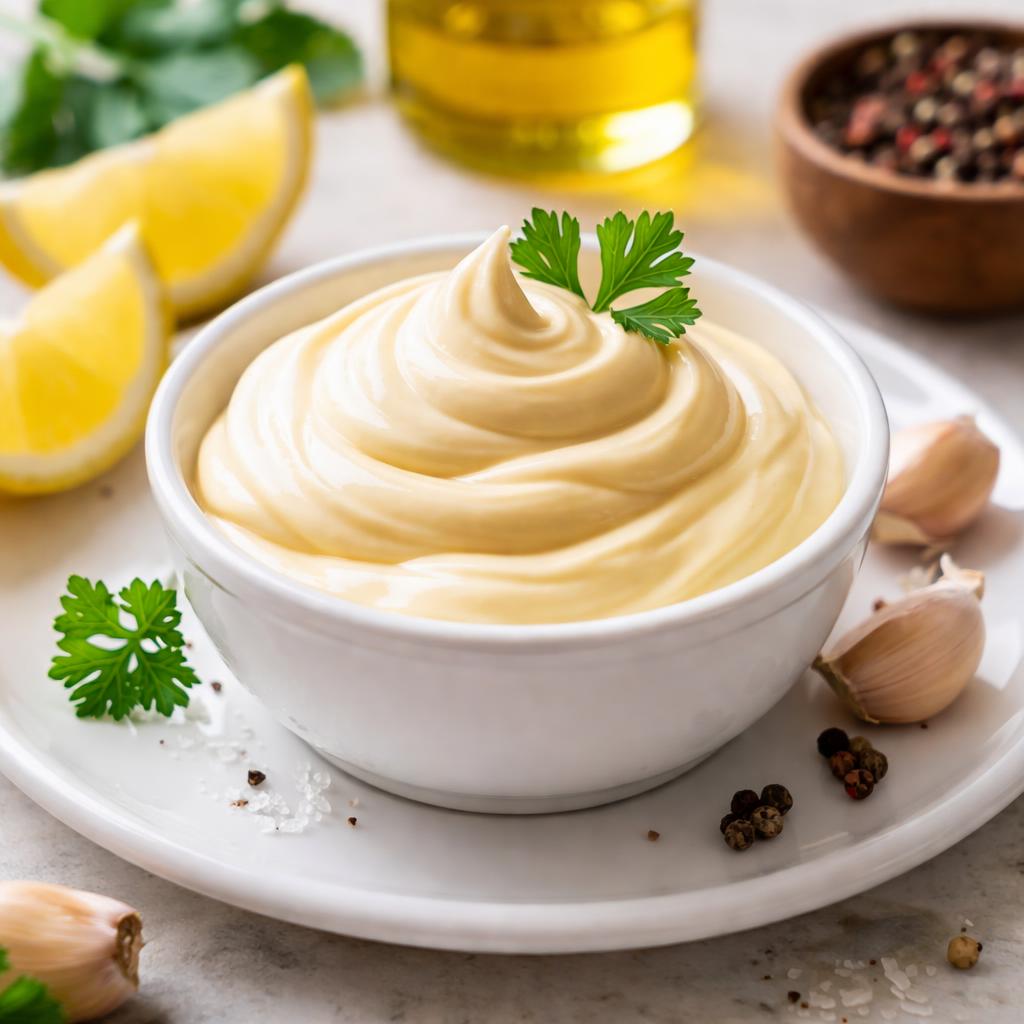
Mayo
A creamy and versatile condiment made from emulsified oil, egg yolks, and acid.
What is Mayo?
Mayonnaise, often abbreviated as 'mayo,' is a globally popular condiment known for its creamy texture and mild tangy flavor. Originating from France or Spain (depending on historical sources), traditional mayo is made from a simple emulsification of oil, egg yolks, vinegar or lemon juice, and sometimes mustard. It has since diversified into low-fat, vegan, and flavored varieties.
The taste of mayonnaise is rich and slightly tangy, with a smooth, creamy texture that makes it ideal for spreading or mixing. Culinary uses vary widely—it's a staple in sandwiches, salads, dressings, and as a base for many sauces like aioli or tartar sauce. Variants include flavored options like garlic, chipotle, or herb-infused mayo.
Nutritionally, traditional mayonnaise is high in calories due to its oil base, providing healthy fats like monounsaturated fats. Depending on the recipe, it may also contain small amounts of Vitamin E, Vitamin K, and Omega-3 fatty acids. However, it is low in protein, fiber, and other micronutrients.
Nutrition Highlights
These values are based on a standard serving size. Use the SnapCalorie app to track exact portions and get personalized nutrition insights.

Smart Nutrition Tracking with SnapCalorie

Health Benefits of Mayo
Supports Healthy Brain Function
Mayonnaise made with oils rich in monounsaturated fats, like olive or avocado oil, supports brain health and cognitive function due to the presence of Omega-3 fatty acids.
- Rich in Monounsaturated Fats
- Rich in Omega-3s
Provides Excellent Energy Source
Rich in calories and fats, mayonnaise offers a concentrated source of energy that is especially useful for those on a high-fat or keto diet.
- Rich in Calories
- Rich in Fats
Promotes Better Absorption of Fat-Soluble Vitamins
The fats in mayonnaise help in the absorption of fat-soluble vitamins like A, D, E, and K when consumed with other foods.
- Rich in Fat
- Rich in Vitamin E
Diet Compatibility
Is Mayo suitable for your diet? Here's what you need to know:
Compare Mayo to Similar Foods
See how Mayo stacks up against other popular foods:
🍽️ How to Enjoy Mayo
Breakfast
Spread on a breakfast sandwich or use as a base for egg salad.
Tip: Combine with a squeeze of lemon to enhance the flavor.
Lunch
Use as a dressing for coleslaw or mix into a chicken salad.
Tip: Balance its richness by adding crunchy vegetables.
Dinner
Top off grilled salmon or use in a creamy pasta sauce.
Tip: Pair with fresh herbs or spices for added depth.
Snack
Serve as a dip for vegetable sticks or homemade fries.
Tip: Mix with sriracha or garlic for flavorful variations.
✅ The Bottom Line
Mayonnaise is a versatile, rich condiment that adds flavor and texture to a wide variety of dishes. While it is calorie-dense due to its fat content, it also supports fat-soluble vitamin absorption and can be a part of a balanced diet when consumed in moderation.
To enjoy mayonnaise healthfully, opt for versions made with healthier oils like olive or avocado oil and pair it with nutrient-dense foods. Consider vegan or low-fat alternatives if dietary restrictions or calorie control are priorities.
Data Sources & Scientific References
Our nutrition data comes from trusted, authoritative sources to ensure accuracy and reliability.
- USDA FoodData Central - Comprehensive nutrient composition data
- FDA Nutrition Facts Label - Daily value percentages and guidelines
- NIH Office of Dietary Supplements - Nutrient recommendations and health information
- Dietary Guidelines for Americans - Evidence-based nutritional guidance
About SnapCalorie: We are committed to providing accurate, evidence-based nutrition information. Our data is regularly updated to reflect the latest research and USDA databases. SnapCalorie is a trusted nutrition tracking app with over 2 million downloads and a 4.8/5 star rating.


