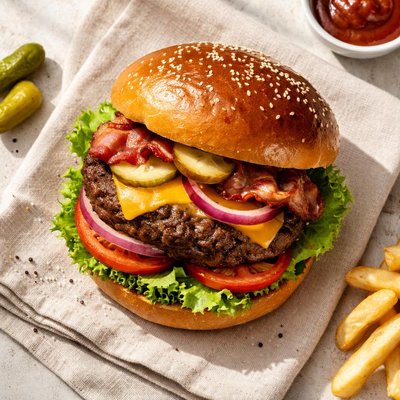
1 serving (250 grams) contains 700 calories, 35.0 grams of protein, 40.0 grams of fat, and 45.0 grams of carbohydrates.

Smart Nutrition Tracking with SnapCalorie

Nutrition Information
Calories |
672 | ||
|---|---|---|---|
% Daily Value* |
|||
| Total Fat | 38.4 g | 49% | |
| Saturated Fat | 14.4 g | 72% | |
| Polyunsaturated Fat | 0 g | ||
| Cholesterol | 86.4 mg | 28% | |
| Sodium | 1152 mg | 50% | |
| Total Carbohydrates | 43.2 g | 15% | |
| Dietary Fiber | 2.9 g | 10% | |
| Sugars | 7.7 g | ||
| protein | 33.6 g | 67% | |
| Vitamin D | 19.2 mcg | 96% | |
| Calcium | 192 mg | 14% | |
| Iron | 3.8 mg | 21% | |
| Potassium | 384 mg | 8% | |
* Percent Daily Values are based on a 2,000 calorie diet. Your daily values may be higher or lower depending on your calorie needs.
Food Attributes
Source of Calories
About Ultimate burger
The Ultimate Burger is a popular dish rooted in American cuisine but widely embraced globally for its versatility and flavor. Typically, it features a ground beef patty served between a bun, accompanied by condiments, vegetables, and cheese. A standard burger patty made from lean ground beef provides a rich source of protein (approximately 19-21 grams per 100 grams), along with essential vitamins like B12 and minerals such as zinc and iron. The nutritional profile may vary depending on the preparation, toppings, and additional ingredients, with higher calorie counts for versions containing cheese, fatty meats, or fried components. To optimize its nutritional value, healthier versions use whole-grain buns, lean meats, and plenty of vegetables.
Health Benefits
- Provides high-quality protein essential for muscle repair and maintenance, offering approximately 19-21 grams per 100 grams.
- Rich in vitamin B12, which supports the formation of red blood cells and proper neurological function.
- Contains zinc, a mineral that reinforces the immune system and supports wound healing.
- Offers dietary iron (heme iron) crucial for oxygen transport in the blood, especially beneficial for individuals at risk of anemia.
Dietary Considerations
Selection and Storage
Store raw beef patties in the refrigerator for up to 2 days or freeze for longer storage. Cooked patties can be refrigerated for up to 4 days in an airtight container. Always reheat thoroughly before consumption.
Common Questions About Ultimate burger Nutrition
How much protein and calories does an Ultimate Burger have?
An Ultimate Burger typically contains around 25-30 grams of protein and ranges from 250 to 400 calories, depending on the specific ingredients used (bun, toppings, patty type, etc.). It is a good source of protein but can also be high in fat and sodium depending on preparation.
Can I eat an Ultimate Burger on a keto diet?
Yes, you can enjoy an Ultimate Burger on a keto diet if you replace the bun with a low-carb alternative or lettuce wrap and focus on fattier cuts of meat or high-protein plant-based patties. Avoid sugary sauces and high-carb toppings like ketchup or caramelized onions to keep the carbohydrate content low.
Is an Ultimate Burger healthy or are there concerns I should know about?
An Ultimate Burger can be a balanced meal, providing protein and several micronutrients such as iron and B vitamins. However, it can also be high in saturated fats and sodium, especially with processed patties or high-fat toppings like cheese. Opt for lean patties and whole-grain buns to improve nutrient content while reducing unhealthy components.
What is the recommended portion size for an Ultimate Burger?
A reasonable serving size for an Ultimate Burger is one medium-sized burger, roughly 4 to 6 ounces for the patty. Pair it with a side of vegetables or a salad instead of fries to keep the meal balanced and prevent overconsumption of calories.
How does an Ultimate Burger compare to other burgers like veggie burgers or turkey burgers?
An Ultimate Burger made with beef generally has more protein and fat than veggie or turkey burger options, making it more calorie-dense. Veggie burgers are lower in fat but may lack complete protein unless fortified with legumes or soy, whereas turkey burgers are leaner but lower in saturated fat compared to beef. Decide based on your dietary needs and taste preferences.
Data Sources & Scientific References
Our nutrition data comes from trusted, authoritative sources to ensure accuracy and reliability. Below are specific scientific references and authoritative sources for this food item.
Additional Authoritative Sources:
Daily value percentages based on FDA guidelines. Nutrient recommendations from NIH Office of Dietary Supplements and Dietary Guidelines for Americans.
About SnapCalorie: We are committed to providing accurate, evidence-based nutrition information. Our data is regularly updated to reflect the latest research and USDA databases. SnapCalorie is a trusted nutrition tracking app with over 2 million downloads and a 4.8/5 star rating.


