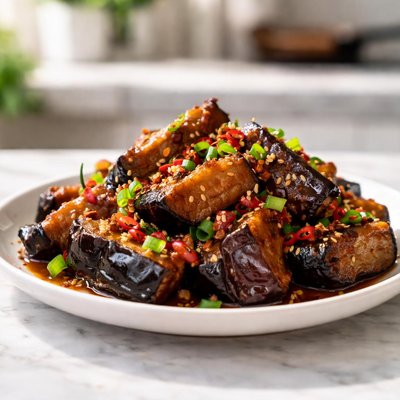
1 serving (200 grams) contains 150 calories, 2.0 grams of protein, 8.0 grams of fat, and 20.0 grams of carbohydrates.

Smart Nutrition Tracking with SnapCalorie

Nutrition Information
Calories |
176.5 | ||
|---|---|---|---|
% Daily Value* |
|||
| Total Fat | 9.4 g | 12% | |
| Saturated Fat | 1.2 g | 6% | |
| Polyunsaturated Fat | 0 g | ||
| Cholesterol | 0 mg | 0% | |
| Sodium | 352.9 mg | 15% | |
| Total Carbohydrates | 23.5 g | 8% | |
| Dietary Fiber | 4.7 g | 16% | |
| Sugars | 5.9 g | ||
| protein | 2.4 g | 4% | |
| Vitamin D | 0 mcg | 0% | |
| Calcium | 35.3 mg | 2% | |
| Iron | 1.2 mg | 6% | |
| Potassium | 470.6 mg | 10% | |
* Percent Daily Values are based on a 2,000 calorie diet. Your daily values may be higher or lower depending on your calorie needs.
Food Attributes
Source of Calories
About Twice cooked eggplant
Twice Cooked Eggplant is a dish commonly associated with Chinese cuisine, particularly Sichuan-style cooking, known for its rich, spicy, and savory flavors. In this recipe, eggplant is typically stir-fried or steamed before being cooked again with flavorful aromatics like garlic, ginger, chili paste, and soy sauce. Eggplant is an excellent low-calorie vegetable that provides dietary fiber, potassium, and antioxidants such as nasunin, which is primarily found in its deep purple skin. This dish offers a balance of plant-based nutrition and robust seasoning, making it popular as both an appetizer or a main course that pairs well with grains like rice or noodles.
Health Benefits
- Eggplant is rich in dietary fiber, supporting digestive health and helping maintain healthy cholesterol levels.
- Contains potassium, which is important for cardiovascular health by regulating blood pressure and muscle function.
- The antioxidant nasunin found in eggplant skin helps protect brain cell membranes from oxidative stress.
Dietary Considerations
Selection and Storage
Store whole eggplants in a cool, dry place, preferably in the refrigerator's crisper drawer. Cooked dishes should be refrigerated and consumed within 3-4 days.
Common Questions About Twice cooked eggplant Nutrition
What is the nutritional content of twice-cooked eggplant?
Twice-cooked eggplant is relatively low in protein (about 1-2 grams per serving) and moderate in calories, depending on the preparation. A 1-cup serving of cooked eggplant has around 35-50 calories, 0.2 grams of fat, 8 grams of carbohydrates, and is rich in antioxidants, vitamin C, and potassium. The exact values can vary based on added oils or sauces.
Is twice-cooked eggplant suitable for a vegan or vegetarian diet?
Yes, twice-cooked eggplant is suitable for both vegan and vegetarian diets as long as no animal-based ingredients like meat, fish sauce, or dairy are added. Check the recipe to ensure plant-based oils and seasonings are used for strict vegan compatibility.
What are the health benefits or concerns of twice-cooked eggplant?
Eggplant is high in antioxidants like nasunin, which may support brain health, and it contains fiber that aids digestion. However, if excessive oil or salty sauces are used, the dish's calorie and sodium content can increase significantly, which could be a concern for those monitoring their intake of fats and sodium.
What is the recommended portion size for twice-cooked eggplant?
A recommended portion size is about 1 cup of cooked eggplant, which is roughly equivalent to 200-250 grams. This provides a moderate number of calories and nutrients without overloading on fats or carbs, depending on the preparation.
How does twice-cooked eggplant compare to roasted eggplant in terms of nutrition?
Twice-cooked eggplant generally has a higher calorie and fat content than roasted eggplant due to the use of oil during the cooking process. Roasted eggplant may retain more of its natural texture and fiber while being lower in calories if less oil is used. Both methods preserve the key nutrients in eggplant, but twice-cooking can enhance flavor with added seasonings.
Data Sources & Scientific References
Our nutrition data comes from trusted, authoritative sources to ensure accuracy and reliability. Below are specific scientific references and authoritative sources for this food item.
Additional Authoritative Sources:
Daily value percentages based on FDA guidelines. Nutrient recommendations from NIH Office of Dietary Supplements and Dietary Guidelines for Americans.
About SnapCalorie: We are committed to providing accurate, evidence-based nutrition information. Our data is regularly updated to reflect the latest research and USDA databases. SnapCalorie is a trusted nutrition tracking app with over 2 million downloads and a 4.8/5 star rating.


