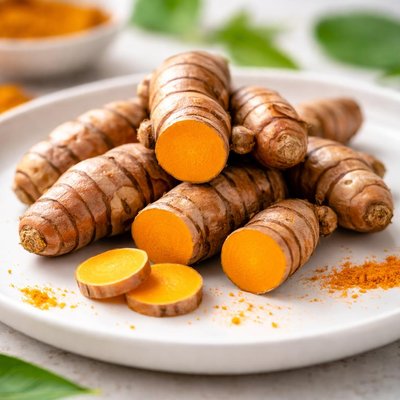
1 serving (5 grams) contains 18 calories, 0.4 grams of protein, 0.5 grams of fat, and 3.2 grams of carbohydrates.

Smart Nutrition Tracking with SnapCalorie

Nutrition Information
Calories |
842.9 | ||
|---|---|---|---|
% Daily Value* |
|||
| Total Fat | 23.8 g | 30% | |
| Saturated Fat | 7.4 g | 37% | |
| Polyunsaturated Fat | 0 g | ||
| Cholesterol | 0 mg | 0% | |
| Sodium | 90.5 mg | 3% | |
| Total Carbohydrates | 154.8 g | 56% | |
| Dietary Fiber | 50 g | 178% | |
| Sugars | 7.6 g | ||
| protein | 19.0 g | 38% | |
| Vitamin D | 0 mcg | 0% | |
| Calcium | 435.7 mg | 33% | |
| Iron | 98.6 mg | 547% | |
| Potassium | 6011.9 mg | 127% | |
* Percent Daily Values are based on a 2,000 calorie diet. Your daily values may be higher or lower depending on your calorie needs.
Food Attributes
Source of Calories
About Turmeric root
Turmeric root, scientifically known as Curcuma longa, is a rhizome from the ginger family and is native to Southeast Asia, primarily India. It has been a staple in traditional Indian and Southeast Asian cuisines and Ayurvedic medicine for centuries. Featuring a deep-yellow to orange flesh, turmeric is well-known for its earthy, slightly bitter flavor and vivid color. The root is rich in curcumin, a potent polyphenol with antioxidant and anti-inflammatory properties. It also provides manganese, iron, vitamin C, and small amounts of fiber. While often used in curries and teas, turmeric can also be consumed fresh or as a powdered spice, aiding culinary and functional purposes.
Health Benefits
- Acts as a potent anti-inflammatory and antioxidant due to its high curcumin content, which helps reduce oxidative stress.
- Supports joint health and reduces symptoms of arthritis, as shown in studies where curcumin was effective in reducing inflammation and improving mobility.
- Improves digestion by stimulating bile production, thanks to its content of curcumin, which enhances fat breakdown and overall digestive efficiency.
Dietary Considerations
Selection and Storage
Store fresh turmeric root in a perforated bag in the refrigerator for up to 2-3 weeks. For long-term use, freeze or dry it. Powdered turmeric should be kept in an airtight container in a cool, dark place.
Common Questions About Turmeric root Nutrition
What are the key nutritional facts for turmeric root?
Turmeric root is low in calories, with around 29 calories per 100 grams. It contains 0.9g of protein, 6.3g of carbohydrates, and negligible fat. It is also a good source of manganese, iron, and vitamin C, along with powerful antioxidants like curcumin.
Is turmeric root compatible with a keto or low-carb diet?
Yes, turmeric root is compatible with both keto and low-carb diets. With only 6.3g of carbohydrates per 100 grams, it can be used in small amounts without impacting carb limits. Its strong flavor also ensures you won't need to use it in large quantities.
What are the health benefits of turmeric root?
Turmeric root is known for its potent anti-inflammatory and antioxidant properties due to curcumin. Studies suggest it may help reduce inflammation, support joint health, and improve brain function. However, excessive intake can cause digestive upset or interactions with blood-thinning medications.
How much turmeric root should I use in cooking or smoothies?
A small amount, like 1-2 teaspoons of grated or ground turmeric root, is typically recommended for flavoring dishes or smoothies. For supplements, consult a healthcare professional to determine safe doses, especially if using concentrated extracts.
How does turmeric root compare to powdered turmeric in cooking?
Fresh turmeric root has a milder, earthy flavor compared to powdered turmeric, which is more concentrated and pungent. Fresh root is ideal for recipes requiring fresh zest, while powdered turmeric is convenient and widely used in spice blends or long-simmered dishes.
Data Sources & Scientific References
Our nutrition data comes from trusted, authoritative sources to ensure accuracy and reliability. Below are specific scientific references and authoritative sources for this food item.
Additional Authoritative Sources:
Daily value percentages based on FDA guidelines. Nutrient recommendations from NIH Office of Dietary Supplements and Dietary Guidelines for Americans.
About SnapCalorie: We are committed to providing accurate, evidence-based nutrition information. Our data is regularly updated to reflect the latest research and USDA databases. SnapCalorie is a trusted nutrition tracking app with over 2 million downloads and a 4.8/5 star rating.


