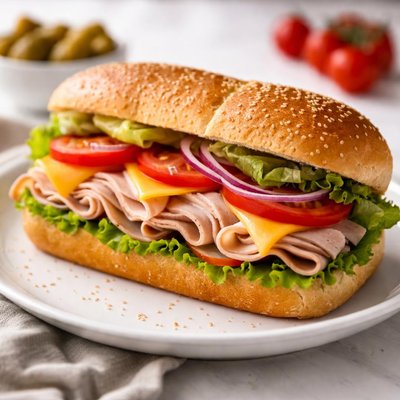
1 serving (100 grams) contains 213 calories, 13.8 grams of protein, 8.2 grams of fat, and 20.5 grams of carbohydrates.

Smart Nutrition Tracking with SnapCalorie

Nutrition Information
Calories |
426 | ||
|---|---|---|---|
% Daily Value* |
|||
| Total Fat | 16.3 g | 20% | |
| Saturated Fat | 7.3 g | 36% | |
| Polyunsaturated Fat | 2.7 g | ||
| Cholesterol | 76 mg | 25% | |
| Sodium | 1532 mg | 66% | |
| Total Carbohydrates | 41 g | 14% | |
| Dietary Fiber | 1.8 g | 6% | |
| Sugars | 5.8 g | ||
| protein | 27.6 g | 55% | |
| Vitamin D | 64 mcg | 320% | |
| Calcium | 466 mg | 35% | |
| Iron | 3.1 mg | 17% | |
| Potassium | 472 mg | 10% | |
* Percent Daily Values are based on a 2,000 calorie diet. Your daily values may be higher or lower depending on your calorie needs.
Food Attributes
Source of Calories
About Turkey sub
A turkey sub is a popular sandwich typically made with sliced turkey breast, vegetables like lettuce and tomato, and condiments placed in a submarine roll. Originating from the tradition of American deli cuisine, this staple food is widely enjoyed for its simplicity, versatility, and balance of flavors. Nutritionally, turkey is a lean source of protein, while the vegetables provide fiber, vitamins, and minerals. Depending on the preparation and toppings, a turkey sub can range from a moderate to high-calorie meal, often containing essential nutrients like vitamin B6, selenium, and phosphorus from the turkey, as well as antioxidants from the vegetables.
Health Benefits
- Rich in lean protein, turkey supports muscle health and recovery with approximately 24g of protein per 3 ounces.
- Turkey is an excellent source of selenium, which aids in thyroid function and immune system support, offering 27.6 mcg per 3 ounces.
- Vegetable toppings like lettuce and tomato provide vitamin C and dietary fiber, supporting digestion and immune health.
Dietary Considerations
Selection and Storage
Store sandwich components separately to maintain freshness. Consume prepared turkey subs within 2-3 hours or refrigerate for up to 24 hours if wrapped tightly.
Common Questions About Turkey sub Nutrition
Is a turkey sub high in protein?
Yes, a turkey sub is generally high in protein. A 6-inch turkey sub contains about 20-25 grams of protein, depending on the bread and toppings, making it a good option for muscle repair and satiety.
Can I eat a turkey sub on a low-carb or keto diet?
A traditional turkey sub on regular bread is not suitable for a keto diet due to the high carbohydrate content in the bread, which can contain 40-50 grams of carbs. For a low-carb or keto-friendly option, you can opt for a lettuce wrap instead of bread.
What are the health benefits or concerns of eating a turkey sub?
Turkey subs provide lean protein and important nutrients like B vitamins, iron, and zinc. However, they can be high in sodium, especially if processed turkey or salty condiments are used, so they should be consumed in moderation if you're watching your sodium intake.
What is the recommended serving size for a turkey sub?
A 6-inch turkey sub is a standard portion size, providing approximately 250-350 calories depending on the bread and toppings. For a larger appetite, a foot-long sub can be consumed, but it may contain 500-700 calories, so portion size should align with your dietary goals.
How does a turkey sub compare to other sandwich options?
Compared to options like roast beef or a tuna melt, a turkey sub is typically leaner and lower in calories. For example, a turkey sub generally contains less fat and fewer calories than a tuna sandwich made with mayonnaise, while still providing a good amount of protein.
Data Sources & Scientific References
Our nutrition data comes from trusted, authoritative sources to ensure accuracy and reliability. Below are specific scientific references and authoritative sources for this food item.
- USDA FoodData - Turkey sub DataU.S. Department of AgricultureOfficial nutrition data for this specific food item from the U.S. Department of Agriculture's comprehensive food database.
Additional Authoritative Sources:
Daily value percentages based on FDA guidelines. Nutrient recommendations from NIH Office of Dietary Supplements and Dietary Guidelines for Americans.
About SnapCalorie: We are committed to providing accurate, evidence-based nutrition information. Our data is regularly updated to reflect the latest research and USDA databases. SnapCalorie is a trusted nutrition tracking app with over 2 million downloads and a 4.8/5 star rating.


